The arbiter of the governmental crisis should not be sought in Bucharest, but in another capital

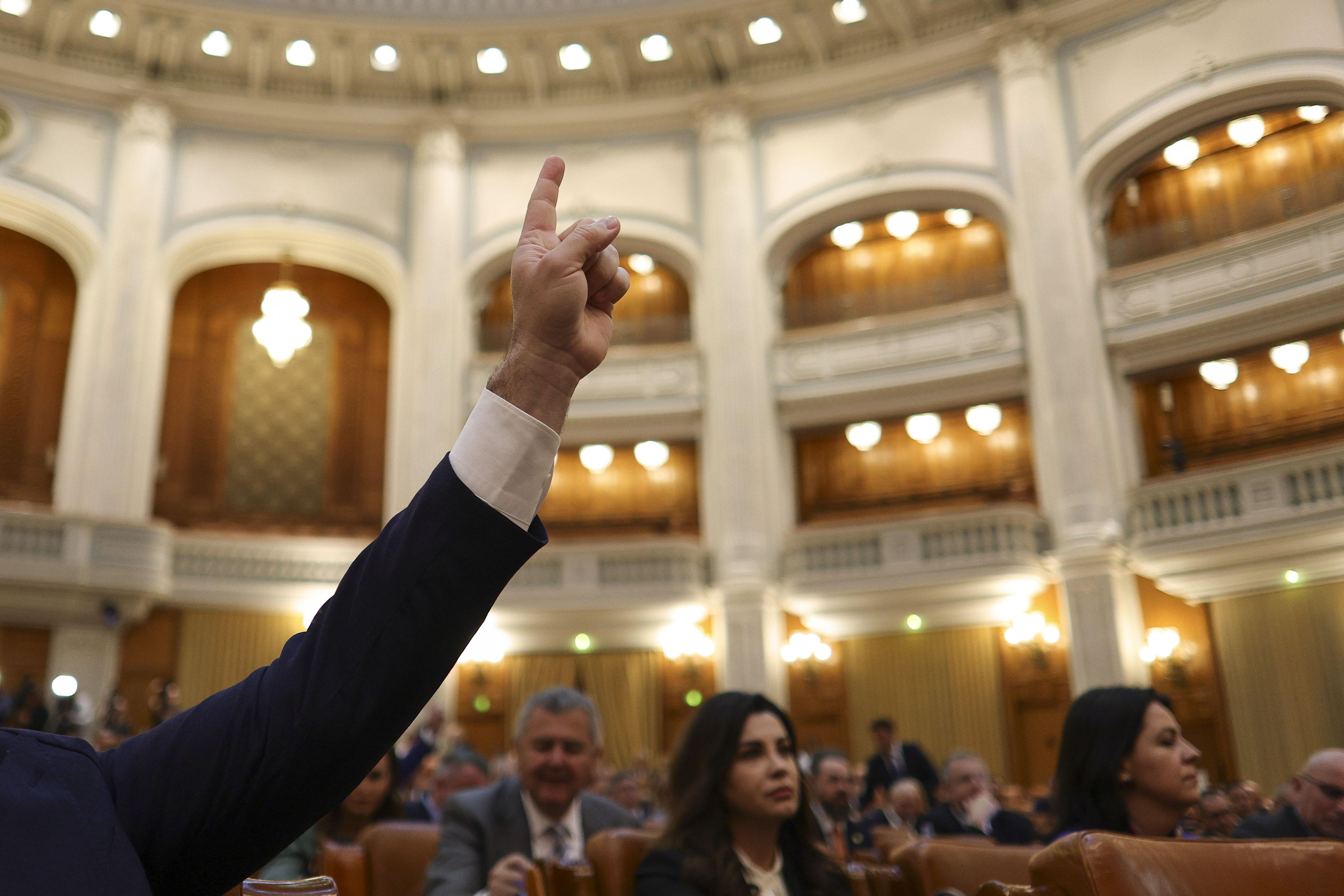
The governmental crisis in Bucharest is “arbitrated” not by the political decision-makers in our country, but “from Moscow”, believes Mircea Toma, member of the National Audiovisual Council (CNA) and former president of the ActiveWatch organization, in an opinion article published today by HotNews. And his conclusion is the following: while Russia is in a hybrid war with Romania, our country is “in hybrid peace” with Russia.
In its political existence, Romania has experienced conflicts between governing allies, crises that have been passed reasonably, with minority governments. In 2000, Prime Minister Adrian Năstase led a minority PSD government with support from the UDMR. He stood firm for 4 years. In 2007, Călin Popescu Tăriceanu also managed to secure a second term as prime minister for a liberal minority government, with the support of the votes of the opposition PSD parliamentarians.
With cross-party support, Ludovic Orban also managed to lead two minority liberal governments in 2019 and 2020, respectively. With such a track record, it seems that there should be no major reasons for concern now, when looking for solutions for yet another, probably minority, government.
However, it seems that today the difficulties encountered by politicians in the effort to obtain support for a minority government are greater than in the rounds evoked above.
One of the reasons, little debated in the studios, is the limitation of room for maneuver. I am not referring to ideological or psychological limitations – which have always been overcome in the past.
Limited maneuvering space
It is about the parliamentary weight of the parties. None of the political actors involved in the dispute, the former government partners, accepts (at least until the time I am writing this text) alliances with parliamentarians from the populist parties, namely AUR, SOS and POT. These parties are qualified as “infrequent”. Parties with a similar discourse have been present in the Romanian parliament almost continuously since the first legislature, the one from 1990: PUNR, PRM or PP-DD.
Never, from then until today, however, have they been accepted in government by the other protagonists of the local political scene. However, for the first time in parliamentary history after communism, populist parties occupy 35% of the total number of seats in parliament. A third.
Nastase's PSD occupied, in 2000, more than 43% of the seats in the parliament, it did not need more than the 8% of the UDMR to govern in minority. When the right-wing alliances were breaking into smaller formations, the PSD was a sufficient source of support to keep a party in government that did not exceed 20% – the amount occupied by PNL-Tăriceanu in the parliament in 2007.
A single precedent in post-December history
In this finding, the fact that populist parties have, today, a parliamentary weight that seems to exceed a Romanian historical maximum, draws attention. In 30 years, only once did the “non-regulars” win more than 25% of the seats in the parliament: in 2000, the PRM led by Corneliu Vadim Tudor.
It was the year in which the parliamentary elections took place simultaneously with those for the election of the president, and the PRM candidate – Corneliu Vadim Tudor – obtained, in the presidential race, the second place after the PSD candidate, Ion Iliescu. The electoral performance in the presidential campaign obviously had a major traction for the party, which may explain the exceptional share obtained by the PRM in the parliament. In the previous electoral years, the PRM did not win more than 6% of the seats in the parliament, and after the electoral episode in 2000, it dropped to 15%, and then disappeared altogether.
In 2012, another journalist – Dan Diaconescu – manages to recover the electorate vulnerable to the populist discourse and wins 12% of the seats in the parliament.
Explanations for the rise of populist movements
On the scale of the entire historical interval – 1990-2026 – a possible relationship between moments of economic decline and the political success of populist movements can be traced: the PUNR and PRM parties gained access to parliament in periods when the average real salary in Romania was lower than before 1990.
Later, with the entry into the European Union, the salary was increasing almost constantly, and the populist parties disappeared from the Parliament (2008 and 2016).
During the years of the global economic crisis, triggered in 2008, the real salary registered a relative decline in Romania, which could explain the episodic success of populism, capitalized on by the PP-DD – which stormed into parliament for a single parliamentary season.
A study dedicated to the identification of the motivational levers that propelled, in 2020, the AUR party into parliament, eliminates the hypothesis of the influence of the economic vector, political reasons (e.g. “elite corruption”) and cultural (e.g. “protection of national identity”) prevailing.
The pandemic was an exceptional event, which produced social and economic effects exactly in the 2020 election year. The epidemiological crisis fueled the populist campaign by capitalizing on specific themes (eg: the anti-mask campaign).
It can be found that, until the 2020 elections, explanations can be identified for the episodes of increase in the electoral performance of populist parties. The precariousness of the economic condition, the accentuation of economic gaps, the corruption of political elites, nationalism, “cultural threats”, etc. it is reflected in the dynamics of these political movements.
The rupture of 2024
What happened in 2024, however, does not seem to fit into the same explanatory paradigm.
The year 2024 was, from the point of view of the economic condition, the second consecutive year of real wage growth. Two years had passed since the last emotionally intense moments related to the pandemic and its fight. There were no demographic pressures of a migratory type that provoked acute xenophobic discourses. In short, there were no special economic, political, or cultural moments that fueled populist exaltation.
What can explain, then, the exceptional propulsion of populist parties in parliament to a record level for the last 35 years?
The only major event accompanying the run-up to the 2024 election is the war in Ukraine. The war in Ukraine does not, however, have direct effects on any of the pedals that can determine the acceleration of electoral support. In any case, not in such an unprecedented proportion.
The case of Călin Georgescu
In search of an explanation, we have the experience offered by the case of Călin Georgescu (CG), a political actor who manages to register a spectacular electoral score, without having a campaign to have carried out in the regulated political communication space.
With the help of several investigations, today we know that CG's performance was the product of communication mechanisms that involved digital tools and human actors and that capitalized on an electoral pool preselected according to the criterion of critical thinking inefficiency.
Moreover, we know that this process was initiated from outside Romania. In addition to the particular case of CG, the Superior Council of National Defense identified Romania as the target of an informational war supported by the Russian Federation.
The domestic informational space is invaded by Russia's war propaganda, propaganda that also involves local redistributors of the Kremlin's speech.
In this context, the hypothesis that the extraordinary weight of populist parties in the Romanian parliament is the result of the informational war waged by Russia against Romania must be taken into account.
Who took over Moscow's rhetoric
Until this proposition is confirmed by legally admissible evidence, some contextual arguments can be considered.
On the one hand, the rhetoric of the populist parties takes 1 to 1 the war rhetoric of Moscow: discrediting Ukraine, the president of Ukraine, the president of the Republic of Moldova, undermining any form of support for Ukraine and the Republic of Moldova are just some of the most blatant themes.
Moreover, an example that illustrates how these parties act even against strengthening Romania's military resilience is edifying: AUR, SOS and POT voted against the legislation necessary to protect the country's airspace from drones coming from outside Romania; and after the laws passed the parliament, they challenged them in the Constitutional Court. What were these parliamentarians defending? Romania by Russian drones, or Romanian drones?
The main beneficiary
On the other hand, the electoral course of these parties was not the subject of a serious analysis regarding its legality, although there are indications that would have justified such an investigation.
The POT party, for example, started its career shortly before the election campaign and had a similar evolution to that of the CG. POT associated its campaign with the support of CG, which could explain not only its own electoral success, but also the equally illegal character of CG's campaign.
Like Georgescu, POT benefited from promotion mechanisms parallel to the legal ones. The press exposed the party's electoral campaign on the TikTok platform where it accumulated, in November 2024, 7 million views for audiovisual content with messages accompanied by hashtags such as #partiduloamenilortineri or #pot and with the message “POT votes for Călin Georgescu”.
We note that, despite the evidence, the TikTok platform declares that it does not accept electoral campaigns; on the other hand, we find that the posts do not comply with the laws of the state – the mandatory information (identification label, financial trustee code, etc.) is not specified. Finally, the huge volume of views betrays the fact that artificial promotion mechanisms were used just like in the case of CG.
I believe that these symptoms are telling to claim that the oversized presence of the AUR, SOS and POT parties in the Romanian parliament is the effect of illegal interventions in the informational space that seriously distorted the electoral process.
There are also sufficient arguments to attribute these interventions to the main beneficiary of the policies promoted by the three parties, namely the Russian Federation.
The moment that Romania almost missed
Returning to the topic of the day – the government crisis – it must be taken into account that any disruption of the functioning of the state is to the indirect benefit of the aggressor state. A benefit facilitated by the simple fact that a third of the parliament is occupied by populist parties. Implicitly, it can be appreciated that the Russian Federation arbitrates the relations between the pro-Western parties in the Romanian parliament.
That's it for now. As, at this moment, there is no structure in Romania that can effectively counter external informational attacks, we can expect that the effectiveness of this type of aggression will increase and become critical in the case of future electoral processes. In other words, it is not the right time to organize early elections.
On the other hand, it is almost past the time when Romania could still develop an informational security body for society.
For now, the Russian Federation is at hybrid war with Romania, and Romania is at hybrid peace with the Russian Federation.