Eurovision 2026. Strongly contested, Israel enters today's semi-final. The Republic of Moldova opens the show in Vienna

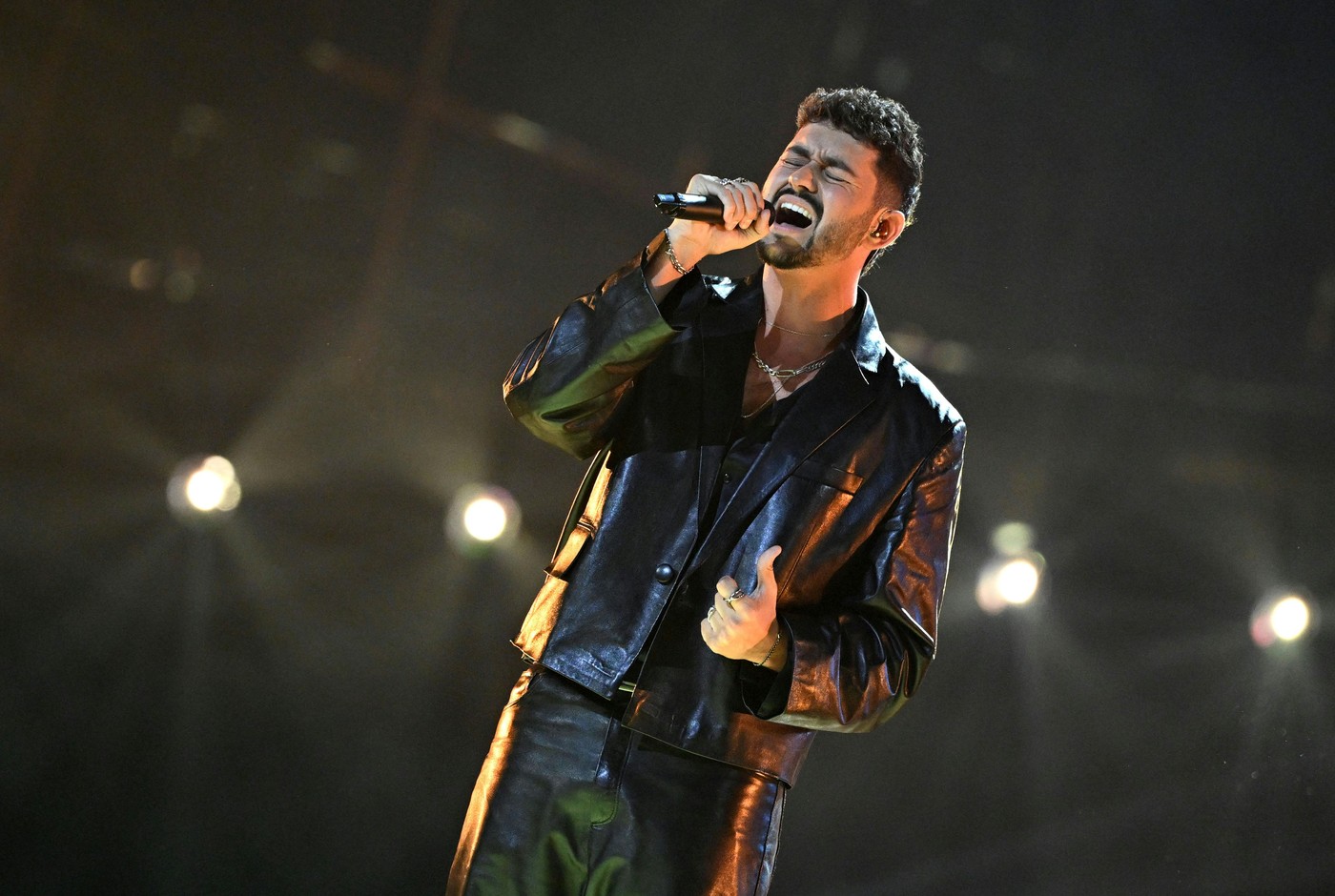
The competition starts on Tuesday evening with the representative of the Republic of Moldova, Satoshi, who entered the competition with the song “Viva, Moldova!”. Also on the first night of the show, the representative of Israel will take the stage, whose presence is strongly contested due to the war in Gaza, which followed the Hamas attack in October 2023.
Eurovision 2026. When does the first semi-final take place
The first semi-final of Eurovision 2026, which takes place in Vienna, will be broadcast on Tuesday, May 12, by TVR from 22.00, but also on the official YouTube channel of the contest.
15 countries will try to win over the public for one of the 10 places reserved, at this stage, for a place in the grand final on 16 May.
Another 15 contestants, including Alexandra Căpitănescu, representing Romania, will perform in the second semi-final, scheduled for Thursday, May 14, when ten more finalists will be selected.
Satoshi will enter the competition first, immediately after the opening ceremony, alongside two of the favorites of the edition, Finland and Greece.
Although they are automatically qualified for the final, being contributors to the organization of the contest, the representatives of Germany, Sarah Engles with the song “Fire”, and Italy, Sal Da Vinci, the winner of San Remo, with the song “Per Semper Si”, will also evaluate on Tuesday evening.
The 20 countries that will qualify for the Eurovision 2026 final will be joined by the representatives of Germany and Italy and France, Great Britain and Austria, the winner of last year's trophy.
Eurovision 2026. Israel enters the first semi-final
Satoshi, under his real name, Vlad Sabajuc, represented the Republic of Moldova with the song “Viva, Moldova!”, a song that combines modern rhythms with influences from local folklore, rooted in Moldova1. According to estimates, the young man from Cahul has a chance to win the grand final on May 16.
Moldovan Prime Minister Alexandru Munteanu sent him a message of support before going on stage in Vienna. “We're holding our fists, Vlad! And to all Moldovans at home and in the diaspora – let's be united and support the Republic of Moldova tonight,” urged the leader from Chisinau.
Also on Tuesday evening, Israel participates in the first semi-final of the Eurovision 2026 contest, which is shaken this year by the most important boycott in its 70-year history, due to the presence of this country, AFP also notes.
Pro-Palestinian activists announced they would protest Tuesday afternoon, placing coffins in the center of the Austrian capital.
Among the contest's favorites is the song “Michelle” sung by Israeli representative Noam Bettan, with lyrics in Hebrew, French and English, according to France Presse.
Eurovision 2026. Unprecedented tensions
Although fans are mostly excited about the start of the contest, due to boycotts related to Israel's participation, the musical show that marks its 70th edition is at risk of being overshadowed by the political disputes surrounding it.
Eurovision 2026 will be held without the participation of Spain and the Netherlands, who are traditionally the fifth and sixth largest financial contributors to the contest. Ireland, the joint record holder for the most winning contributions, Slovenia and Iceland will not participate either, The Guardian notes.
It is an “unprecedented moment” in the contest's seven-decade history, the source said, and could have long-term consequences for a show under pressure to justify its costs at a time of cuts to public broadcaster funding.
“In the long term, funding Eurovision will become increasingly difficult as publicly funded broadcasting is under attack across Europe,” said Irving Wolther, a cultural historian and observer of the music contest. “In this context, political disputes do not help, of course,” he added.
Although last year's Eurovision final was watched by a record number of people compared to 2024, this year's edition is likely to suffer after the embargo of public television in Spain, Ireland and Slovenia, which reconfirmed on Monday that they will not broadcast the anniversary edition of the competition, which they are boycotting because of Israel's participation.
Spanish broadcaster RTVE will broadcast its own special music programme, while viewers in Ireland will enjoy the animated comedy Mummies, and those in Slovenia a series of programs on Palestine.
Audiences are also expected to drop in the Netherlands and Iceland, where national broadcasters broadcast the event but have refused to send their own representatives to the contest.
Eurovision 2026. Protests expected in Vienna
The Guardian also writes that three countries are returning to the music contest for the 2026 edition, Romania, the Republic of Moldova and Bulgaria, “they will probably not give the European Broadcasting Union (EBU), the organizer of the contest, another moment of televised glory to brag about”.
In addition to the two semi-finals of the contest on Tuesday and Thursday, the Austrian capital will also witness rallies both in support and in protest of Israel's participation.
About 3,000 people are expected at a rally in Resselpark on Friday to mark Palestinian Nakba Day, commemorating the more than 700,000 Palestinians who fled or were expelled from their homes during the 1948 war that preceded the creation of the state of Israel.
On the day of the grand finale, Vienna police said they expected around 3,000 people to take part in a protest march under the motto “Solidarity with Palestine”.
A counter-demonstration titled “12 points against anti-Zionism – for Israel's participation in Eurovision” has also been announced, with between 50 and 100 participants expected.
Eurovision 2026. Voting method, changed
According to a recent poll for the Austrian newspaper Der Standard, only 26% of those surveyed agreed with the statement that Eurovision “brought Europe closer”, while 52% said hosting the event was too expensive for Austria.
In the past two editions of the contest, Israel has scored very well in the public vote, but the Israeli government's heavy promotion of artists through social media channels has drawn criticism.
Thus, the organizers decided to change the rules for the 2026 edition. The maximum number of votes was reduced from 20 to 10 per each paid option, such as online, SMS or phone call.
The bookies place Israel's song in fifth place in the top favourites, while the Finnish dramatic ballad “Liekinheitin”, performed by Linda Lampenius and Pete Parkkonen, is the main favorite to win the Eurovision 2026 trophy.
Greek rapper Akylas' song “Ferto” and Danish singer Søren Torpegaard Lund's “Før Vi Går Hjem” are also on the shortlist for the possible winner.