The Caspian Sea, the discreet “highway” through which Russia and Iran defy Western sanctions

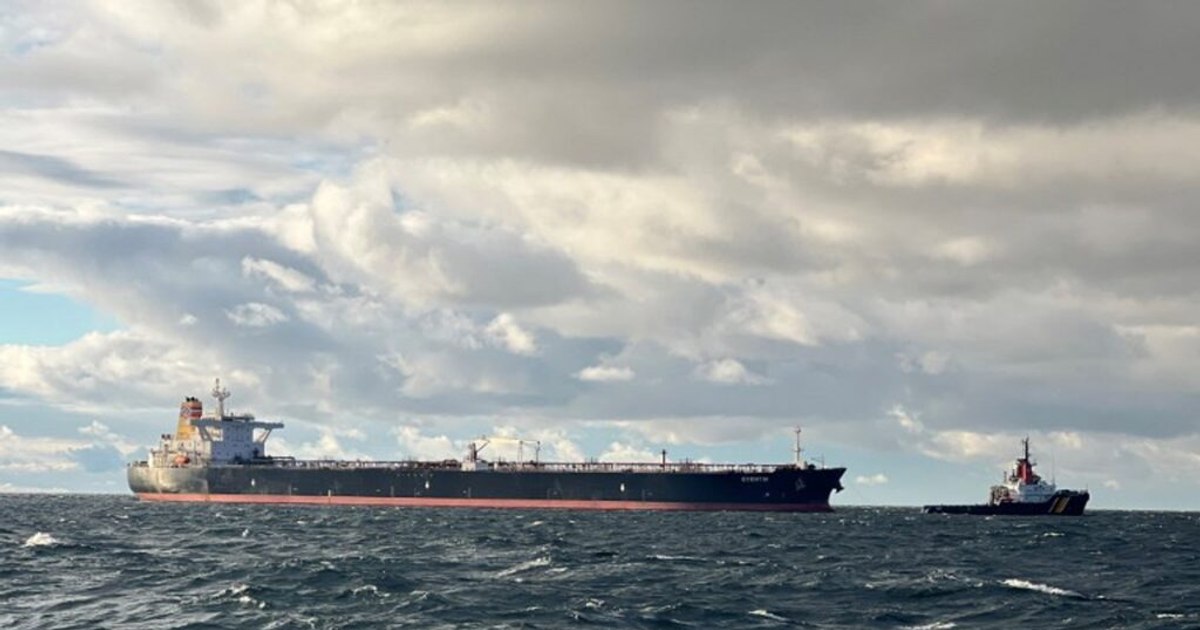
The world's largest expanse of enclosed water has become a vital point on today's geopolitical map. An investigation by The New York Times reveals how the Caspian Sea has become a key logistics corridor for Moscow and Tehran, providing a safe route for grain trade as well as sensitive military technology.
The Caspian route has become much safer for Moscow and Tehran/FOTO:X
A sanctuary hidden from the eyes of the West
At a time when both nations are under pressure from unprecedented international sanctions, the Caspian Sea offers a unique strategic advantage: isolation. Unlike the Strait of Hormuz or the Mediterranean Sea, where the US Navy and its allies can monitor and intercept shipping, the Caspian is controlled exclusively by the five riparian states.
“It's almost the perfect place to evade sanctions”says Nicole Grajewski, an expert in Russian-Iranian relations at Sciences Po University in Paris. This isolation turns the sea into a “black box” of global trade, where international maritime transparency rules are frequently ignored.
Components for drones under grain cover
US officials claim that Moscow uses this route to deliver critical components to Tehran's arms industry.
The objective: Rebuilding Iran's aerial capabilities after its forces reportedly lost about 60 percent of their drone inventory in recent clashes.
Tactics: Ships plying between Russian and Iranian ports frequently turn off their identification transponders (AIS system), making satellite monitoring extremely difficult.
While drones and military technology fly “under the radar,” civilian commerce is booming. About two million tons of Russian wheat, which previously transited the Black Sea, is now diverted through the Caspian to Iranian ports, which operate around the clock to process the massive flow of food and raw materials.
Redrawing trade routes
The redirection of logistics is not only an ideological choice, but also a security one. Instability in the Middle East has made traditional routes through the Persian Gulf risky.
Vitali Cernov, an analyst at PortNews Media Group, notes that the Caspian route has become much safer for Moscow. However, analysts warn that this “defensive integration” has its limits. Although the Russian parts help to reintegrate the Iranian arsenal, American specialists believe that they will not fundamentally change the balance of forces in an eventual direct confrontation with Israel or the US.
The reaction of the international community
The impact of this corridor has not gone unnoticed. Experts suggest that recent attacks on port infrastructure in the region reflect the degree of concern among Iran's adversaries about this steady flow of Russian aid.
“Russia and Iran have found ways to circumvent the sanctions regime,” explains Anna Borshchevskaya, an expert at the Washington Institute. “This is precisely why this trade route, although small in volume compared to global routes, has become a strategic target.”
In response, the US Treasury Department recently expanded its list of sanctions, targeting companies and individuals — including from China — accused of facilitating the production of Iran's notorious Shahed drones and ballistic missiles.
In this cat-and-mouse game on the waters of the Caspian, the success of Moscow and Tehran in keeping this route open could determine how quickly two of the world's most isolated regimes can rebuild their strength.