
Alerts regarding possible incursions of drones on Romanian territory have become a habit for the citizens of Tulcea county. In four years of war, in these areas of southeastern Romania, the locals have become accustomed, although some still call 112 in panic, to be alerted on their mobile phones, especially at night, regarding the risk of falling drone debris, reports the American newspaper New York Times, in a report made in Romania.
The article signed by Lara Yakes, a New York Times reporter specializing in conflicts and diplomacy, and Andrada Lăutaru, a journalist from Romania, shows how drones have changed the face of contemporary wars and, although the conflict did not reach NATO space, Russian drones did in the more than four years since Russia invaded Ukraine.
This reality has forced NATO and the European Union to draw up plans for a coordinated “drone wall” along the eastern flank. Also, the constant evolution of drone technology has forced the alliance to rush to upgrade its air defense systems and operate in a state of constant alert.
“NATO has traditionally focused on conventional defense, but this is now happening in peacetime,” Brigadier General Chris Gent, deputy chief of staff of NATO's Allied Land Command, was quoted as saying by the US newspaper.
In Romania, data from the Ministry of Defense show that the frequency of alerts regarding possible incursions into the country's airspace is increasing. The most recent alert occurred on May 2, when Romanian F-16 fighter jets were mobilized during the night to ensure that the 20 Russian drones approaching the border did not reach the Tulcea area. A few days before, a Russian drone with an explosive charge crashed in the city of Galati, an incident that resulted in material damage but no casualties.
What the Romanians say
“We are neighbors with the war,” said the mayor of Tulcea, Ștefan Ilie, in an interview for the New York Times.
Also, Daniel Năstase, spokesman for ISU Tulcea, said that the emergency service receives calls from people who panic after drone incursion alerts are issued or after they hear the noise of planes raised from the ground for possible interception. He described the situation as a wake-up call about the risk of becoming “a potential target or a wrong target”.
Journalists also spoke to ordinary citizens of the city with an estimated population of 70,000. “We are part of NATO,” said Dumitru Cerneaga, a 74-year-old Romanian. “All NATO countries must defend us,” he continued.
The journalists were also in some localities located near the border with Ukraine where the Romanian government built new anti-aircraft shelters to protect the population against air attacks or debris from intercepted drones.
Not all residents of Plauru, the town neighboring the Ukrainian port of Ismail, say they feel safe. “If I go there and the drone falls on me, what does it matter?” said Maria Nedelcu, a 66-year-old woman.
Pointing to one of the bunkers, located in a weedy field just a few steps from her door, she said the alerts usually come after midnight, “and it's very cold outside. I stay in bed and say, 'Whatever happens, it happens.'”
The concrete effects of frequent alerts
Tourism in Tulcea will drop by 40% between 2023 and 2025, the mayor of Tulcea told the New York Times. He said the ongoing risk of drones is to blame for this decline.
The mayor also says that he tried to reassure the residents, telling them that NATO is there to protect them. “We are NATO. You see, do you hear the F-16 plane two minutes or one minute after the alarm? That is for us,” says Ștefan Ilie.
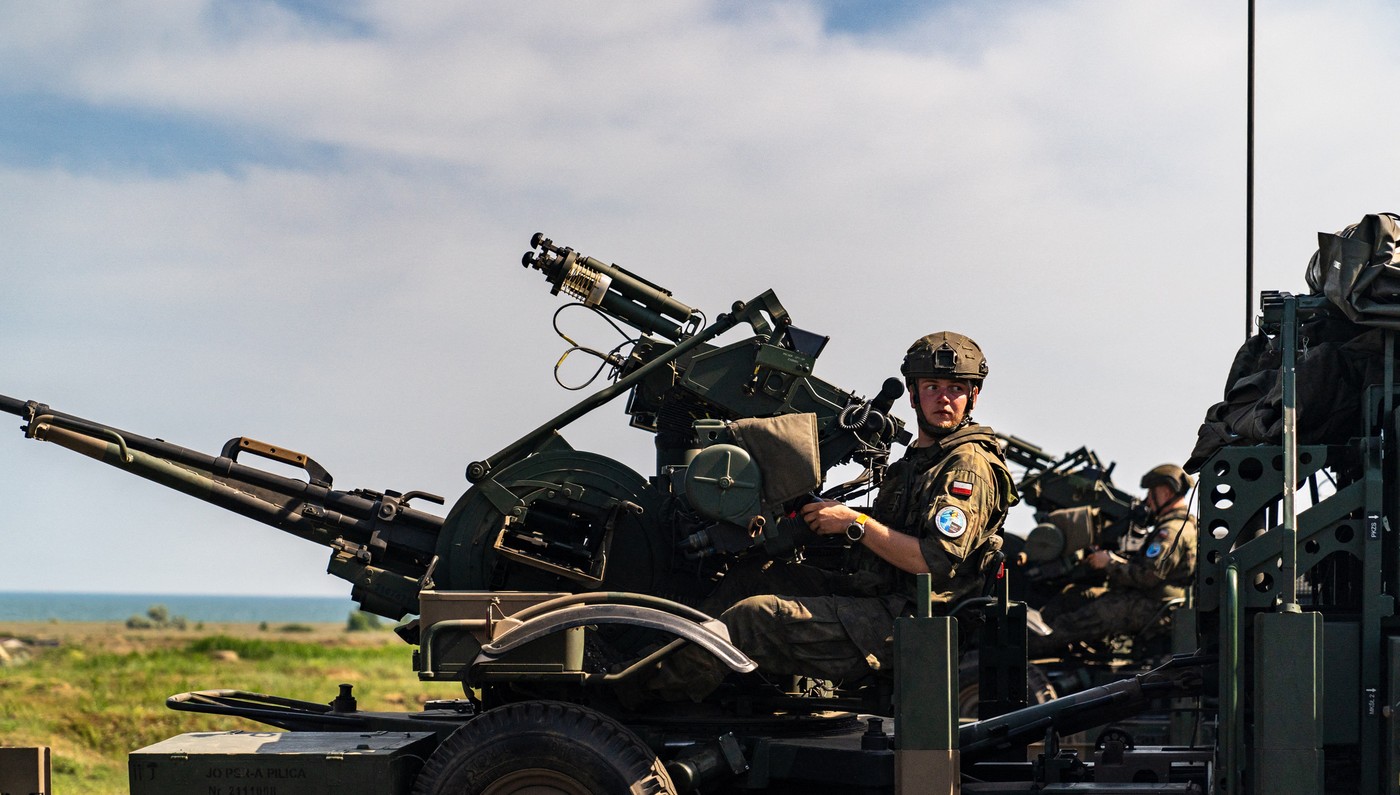
The American newspaper recalls that during last month's NATO exercise, held at Capu Midia, a training ground near Constanța, five of the nine anti-drone systems hit their targets. A sixth system, the US-made and low-cost Merops interceptor drone, was deemed “neutral” because it identified the target but did not hit it.
“This is the reason why we are conducting the tests,” said the Romanian Minister of Defense, Radu Miruță. “After these tests, we will have a better understanding of what could be improved.”
The U.S. military began training Romanian and Polish soldiers last fall in the use of the Merops system, which has intercepted about 90 percent of Russian drones in Ukraine, U.S. Defense Department officials said. Poland and Lithuania have acquired an undisclosed number of systems, and Romania is on the verge of officially introducing them to its military equipment.
During the Capu Midia exercise, attack helicopters, electronic jamming devices, artillery and shoulder-launched missiles were also tested, an exercise which Minister Miruță stated was aimed at “exceeding the limits” of the weapons' capabilities.
However, he said, “you're not going to see a drone wall that provides complete protection all the time.”


