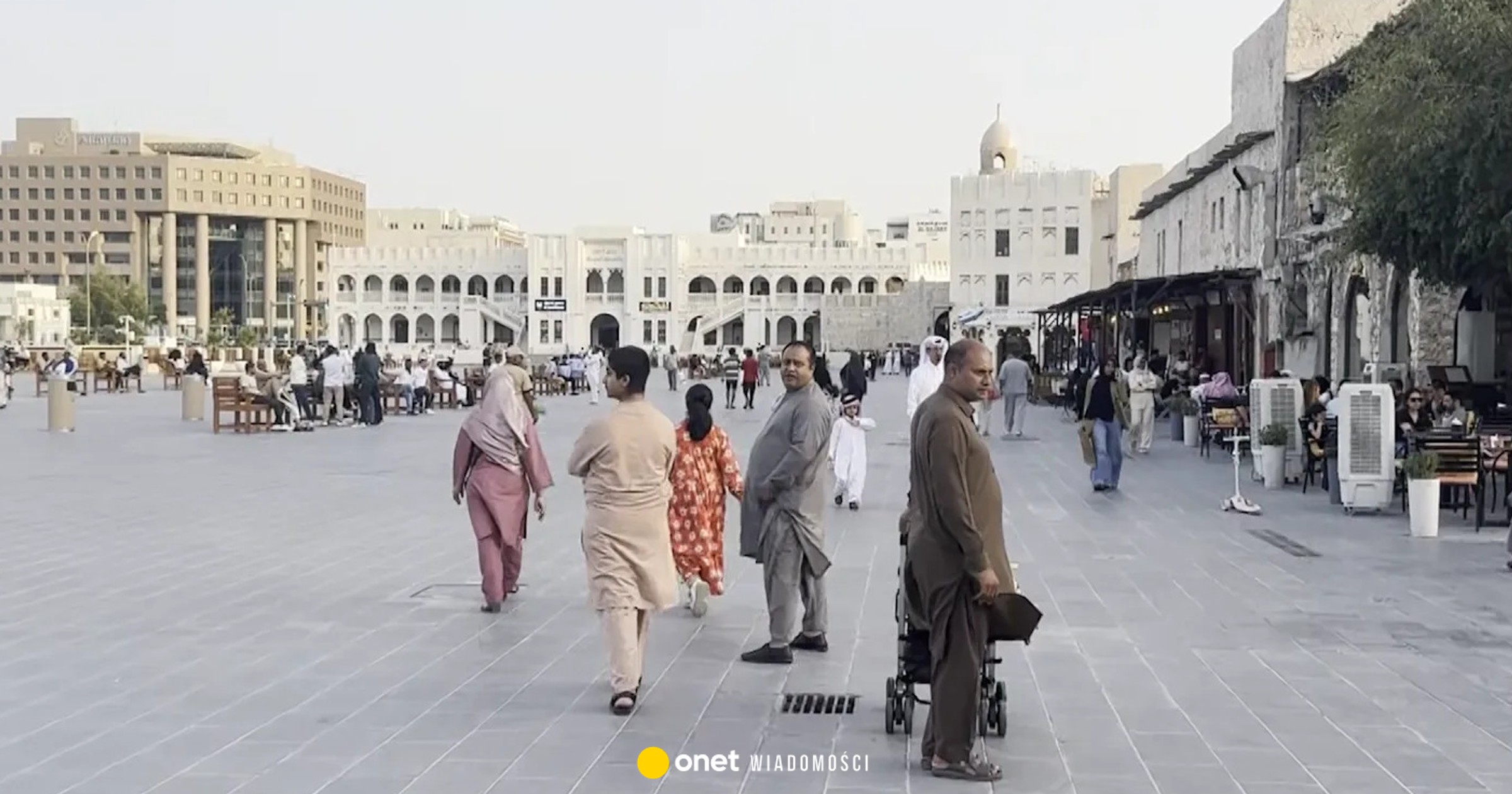
Souk Waqif is one of the oldest and most traditional bazaars in Doha. In the past it was a meeting place for Bedouins and merchants, today it is probably the most important tourist point in the capital of Qatar. In hundreds of shops and stalls, traders offer jewelry and traditional Arab clothes, spices and sweets from the Orient, perfumes and incense, small souvenirs and large carpets. Usually, tourists from Europe and the USA squeeze through the narrow streets in crowds. To find a place in one of the restaurants or cafes on the main avenue, you need to be lucky and have a lot of patience. At least that's how it used to be.
Since February 28, nothing is normal here anymore. When American and Israeli bombs first fell on Iran, and in retaliation Iranian missiles and drones hit Qatar, tourism suddenly stopped.
There are no more cruise ships that dock in the huge port of Doha, no wealthy couples or families who wanted to indulge in something special once in a while. In March and April of previous years, approximately 400,000 people visited this Persian Gulf country. tourists per month. From Europe, they were mainly British, Germans and French who came here to enjoy the sun and spend money. Now it's a thing of the past.
– We earn 50 percent. less and even with optimistic estimates. It is becoming more and more difficult to pay rent and salaries every week, says seller Ahmed Miqdhad.
On this Friday evening, he stands somewhat lost in front of his jewelry and souvenir shop, right at the entrance to the souk (traditional Arab market). It has an ideal location – there is a metro station less than 150 meters from his shop. Anyone who comes here goes straight to his shop and can enjoy souvenirs long before their eyes and legs get tired of a long walk through the Arab market. The 26-year-old runs a small family business employing four employees. The store has been operating for 10 years, and so far the turnover has been constantly increasing year by year.
This Friday, it takes almost 15 minutes for the two women from Saudi Arabia to show up at Miqdhad's. They look at display cases full of gold and pearl jewelry, necklaces and rings. They are not interested in hand-painted cups and plates, sculptures or acrylic paintings. After all, they buy four fridge magnets – that's something.
Ahmed MiqdhadDie Welt
“The last few months should be the best period for us,” sighs Miqdhad. — But not a single cruise ship has docked here, a [turyści] these are usually our wealthiest clients. Practically no one comes by plane anymore, especially not from Europe.
Walking through the market, I can clearly see what Miqdhad is talking about. There are practically no tourists there – there are main traders who have a lot of free time and spend it playing games on their phones, and restaurant owners who look anxiously at the empty chairs in their establishments. The guests who appear there come almost exclusively from Arab countries. I rarely see people with Western facial features, except for two German women. – It's wonderful how empty it is. No crowds, no jostling, no stress. I should come here more often, says one of them. They are embassy employees.
Crippling damage
Dimas, Naufal, Zaki and Reza have been living in Doha for a year. They work in one of the luxury hotels on the Corniche, the seaside promenade. They do not reveal their names.
— Our bosses, as well as the Qatari government, are extremely generous. Even though there are significantly fewer guests and we have much less work, we maintain our positions and residence permits, says Reza. But who knows if this will be the case in the coming months? – he adds anxiously.
The hotel manager, who did not want to publicly reveal his name or the name of the property, says the number of guests at the property has recently dropped by at least a quarter. However, thanks to businessmen and weekend guests, this can be balanced. For now.
The article continues below the video
The war in this desert country affects not only the hotel industry – its consequences are much more serious. Qatar is one of the world's three largest exporters of liquefied natural gas, but its best-selling products also include chemicals, fertilizers, construction materials and, increasingly, helium. They are transported by sea – but currently the Strait of Hormuz remains closed, Europe and Asia as important recipients are going out of business, and only limited regional exports remain.
As a result of missile and drone attacks launched from Iran, the Ras Laffan industrial complex was so severely damaged that the government in Doha had to declare the worst-case scenario – the “force majeure” clause, i.e. the international clause on natural disasters (it exempts parties from liability for non-performance or improper performance of an obligation if it was caused by external circumstances).
This means that Qatar will not be able to fulfill its LNG supply contracts with China, South Korea, Italy and Belgium in the long term. Qatar Energy, the operator of the installation, informed in March about repair works that could take up to five years. The two production lines destroyed here alone so far satisfied 17 percent. export capacity of the state-owned enterprise. Since then, however, there has been a striking silence in terms of government announcements. For weeks now, there has been no information on the progress of repairs, no data on economic losses.
Journalists are strictly prohibited from filming and photographing state energy facilities, as well as government institutions and offices – it is prohibited. Anyone who does not sign the appropriate document will not receive accreditation.
The desire to de-escalate
Majed bin Mohammed Al Ansari appears in front of the cameras once a week. His official title is: advisor to the prime minister and spokesman of the Ministry of Foreign Affairs – so he is, in a sense, the face of the government.
Listening to his statements, one may get the impression that Qatar is seeking de-escalation, not confrontation with Iran. — Using the Strait of Hormuz as a means of pressure in the context of military or political disputes is unacceptable. This passage must remain free, regardless of other considerations, he said recently. This is a warning that – although unspoken – is probably addressed to both sides: both Iran and the US.
The government in Doha remains in close contact with Pakistan, a country that took over the role of mediator between the parties to the conflict a few weeks ago. He assures that he will “continue to engage in diplomatic initiatives.” It is also in Qatar's economic interest.
Al Ansari almost indignantly rejects the suggestion that Qatar should pay Iran to open the Strait of Hormuz. – These claims are false! – he said. He added that the countries maintain direct contacts – this weekend, Qatari Foreign Minister Sheikh Mohammed bin Abdulrahman Al-Thani spoke by phone with his Iranian counterpart Abbas Aragchi.
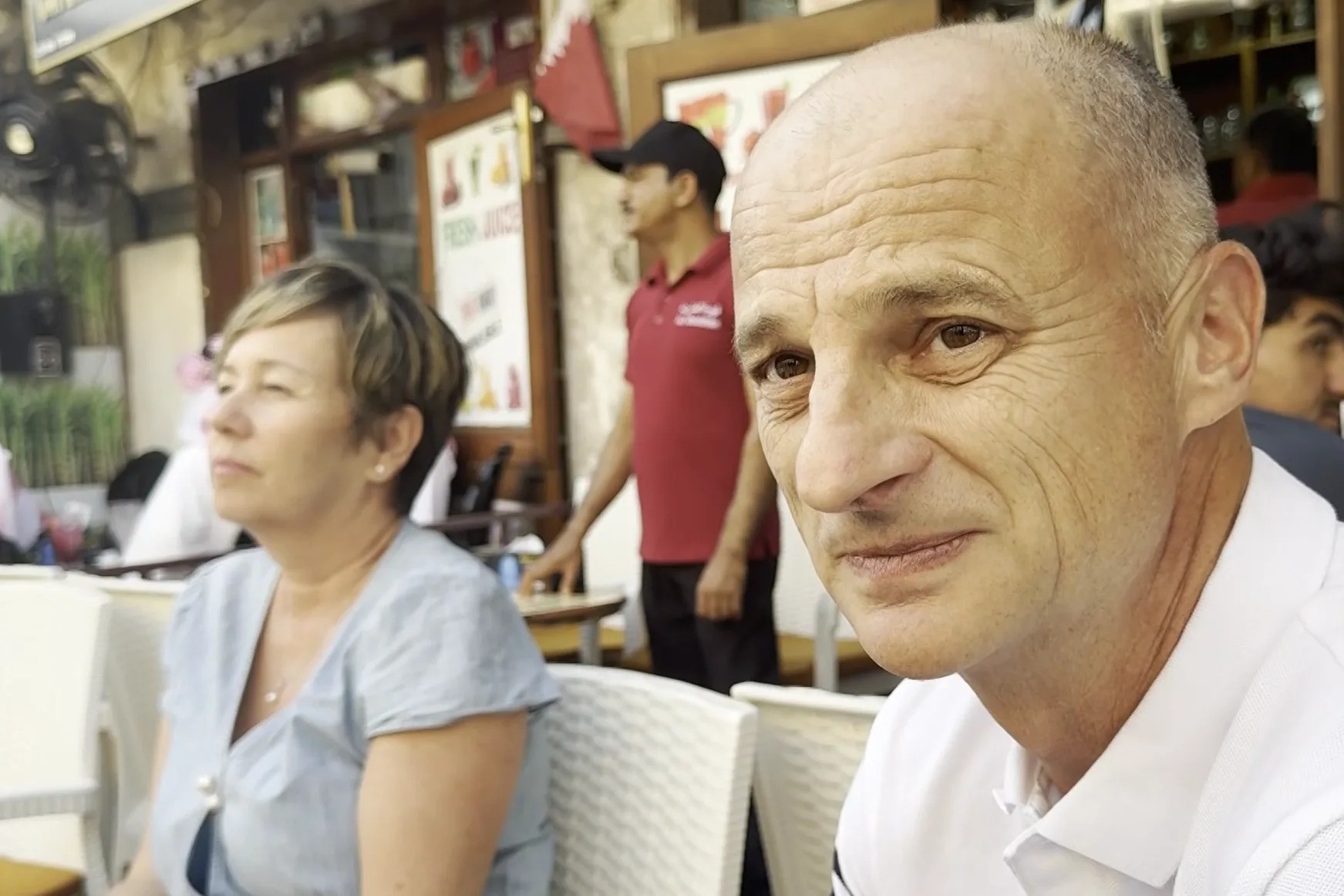
Csaba and Zsuzsanna HeggesDie Welt
Some of the country's highly qualified economic migrants also want to end the period of uncertainty and resolve the conflict through negotiations. In the glow of the setting sun, Csaba Hegges and his wife Zsuzsanna sit in a restaurant on the outskirts of town.
The temperature is approaching a tolerable level – it is no longer 35, but 32 degrees Celsius. However, Orange Fizz in their glasses warms up quickly. The couple came to this Arab country from Hungary 12 years ago, the man works in the IT industry.
— These were difficult weeks. Attacks, explosions. We were afraid it might get even worse, says Csaba Hegess.
Is he worried that rockets will start falling again soon?
“I always hope for the best,” says the 52-year-old. — People in Washington and Tehran should sit down again and find a solution that is acceptable to everyone.
However, recent weeks have shown that this is easier said than done.
I’m Ashley Davis as an editor, I’m committed to upholding the highest standards of integrity and accuracy in every piece we publish. My work is driven by curiosity, a passion for truth, and a belief that journalism plays a crucial role in shaping public discourse. I strive to tell stories that not only inform but also inspire action and conversation.