What can Nicușor Dan do in reality in front of a PSD-AUR majority. A former president of the CCR clarifies the theory that the president can reject only one proposal from the prime minister

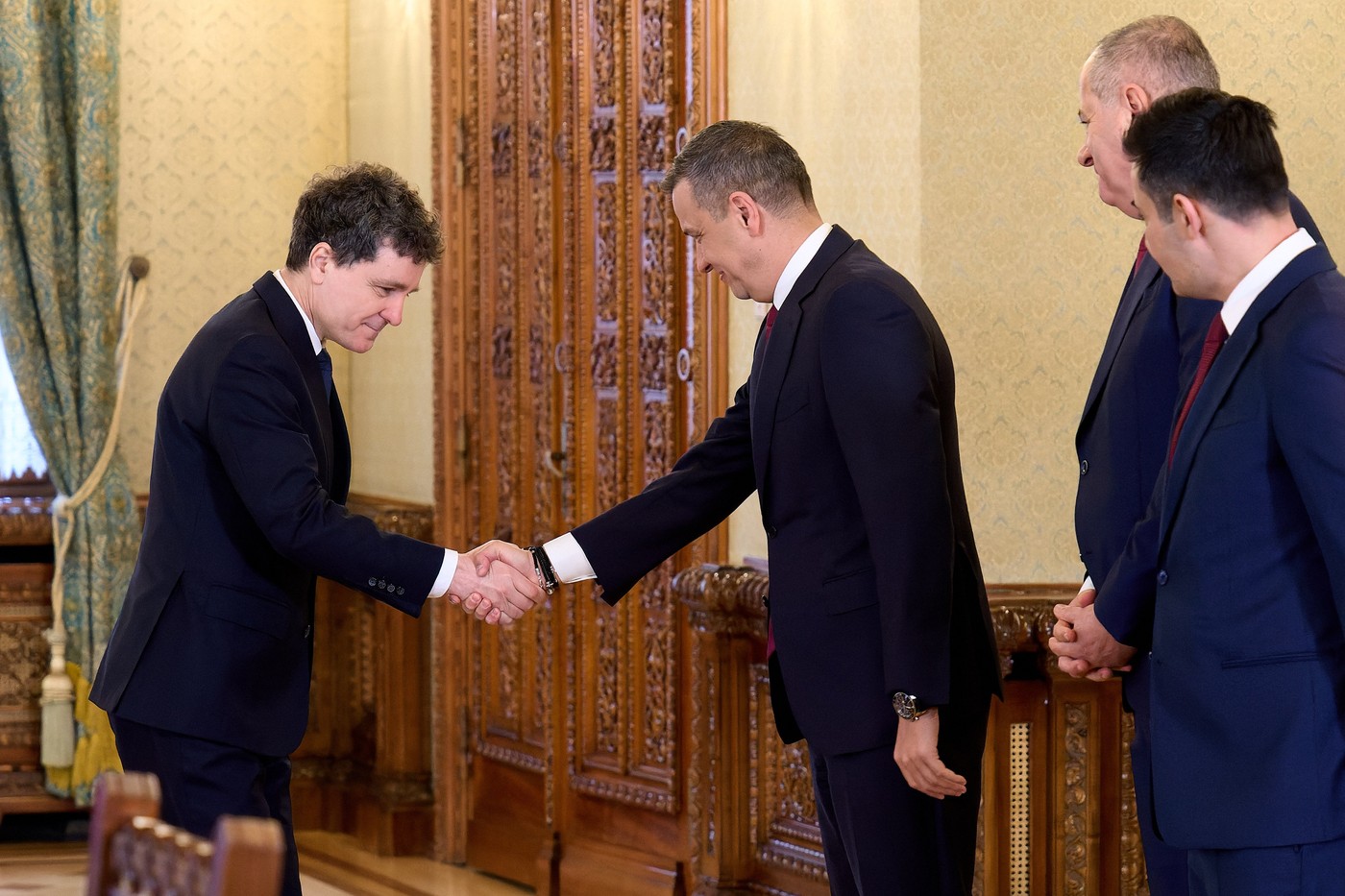
PSD and AUR announced that they will sign and vote together on a no-confidence motion to dismiss the Bolojan Government. Marian Neacșu claimed that “every road begins with a first step”. What can President Dan do if PSD and AUR, together with their allies in Parliament, form a majority and propose a prime minister? Is the president bound to take this proposal into account?
Romania's presidents have rejected, so far, two prime ministerial proposals that had a political majority behind them. Traian Băsescu did not take into account the majority formed in 2009 for the proposal of Klaus Iohannis prime minister. The second moment happened in 2017, when Sevil Shaidehh, supported by a parliamentary majority, was not accepted by President Iohannis.
What happens if a parliamentary majority proposes a prime minister to President Dan, if the Bolojan Government is dismissed by a motion of no confidence?
“The president is not obliged to propose the prime minister desired by a parliamentary majority. He is obliged to consult with Cotroceni and he decides further. He is not obliged to appoint the one proposed by the majority. It is not punishable to refuse to appoint the one desired by a parliamentary majority,” Augustin Zegrean, former president of the Constitutional Court, told HotNews.
In this case, the rule for the replacement of a minister does not apply, which, according to the CCR decisions, must be done only once and with reasons.
“It is different with the minister. The rule applies when a prime minister proposes a minister to the president. Then the president can refuse only once, with reasons. The case started with Norica Nicolai in 2008. With the prime minister it is a different situation, articles 85 and 103 of the Constitution. You cannot compel the president, as he is not a notary, to sign documents. The president has the right to his own thinking,” added the former CCR judge.
President Dan claimed that he would not entrust the mandate of prime minister to a PSD-AUR majority.
The party led by Sorin Grindeanu has announced that it will sign and submit a no-confidence motion alongside AUR to dismiss Ilie Bolojan, but has not yet announced its intention to form a government with the party it considers “extremist”.
Can a new majority force the suspension of the president?
“I cannot suspend the president because he refuses a proposal, it is not a serious violation of the Constitution. This is not a serious act because he does not have this obligation. If there is no party that has a majority in Parliament, the president decides”, explained Augustin Zegrean.
Political sources told HotNews.ro that the president does not have the obligation to appoint the prime minister desired by a parliamentary majority, but he is not safe from the risk of suspension.
“The president can be accused of being responsible for the deadlock. He can propose a prime minister, but he has to pass the Parliament. There is a risk that the majority will ask for his suspension, even if there is no explicit provision in the Constitution that he is obliged to nominate for the position of prime minister the person desired by a parliamentary majority. The discussion of the suspension in the Parliament is political, not legal”, said the cited sources.
Article 85 of the Constitution provides that:
- The President of Romania nominates a candidate for the position of Prime Minister and appoints the Government based on the vote of confidence granted by the Parliament.
ARTICLE 103
(1) The President of Romania appoints a candidate for the position of Prime Minister, following the consultation of the party that has the absolute majority in the Parliament or, if there is no such majority, of the parties represented in the Parliament.
(2) The candidate for the position of prime minister will request, within 10 days from the nomination, the vote of confidence of the Parliament on the program and the entire list of the Government.
(3) The Government's program and list are debated by the Chamber of Deputies and the Senate, in a joint session. The Parliament gives confidence to the Government with the vote of the majority of deputies and senators.