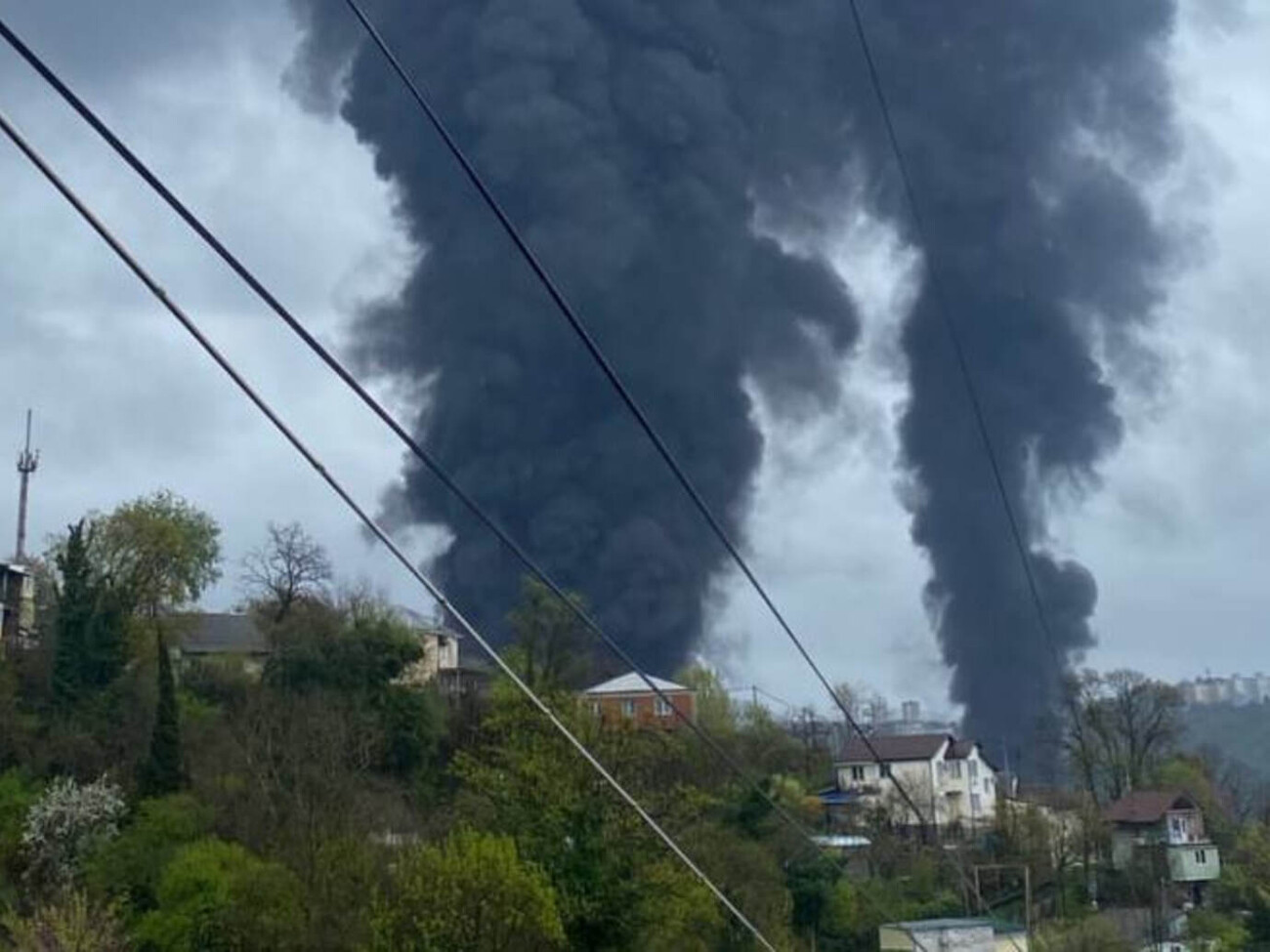
Mirzayanov’s statement regarding the danger of fires at oil depots during the war appeared against the backdrop of the defeat of the Tuapse oil refinery in the Krasnodar Territory (RF). On the morning of April 20, after the second strike, the so-called oil rain was recorded in the city.
According to the chemist, such fires pose a serious chemical threat to the population.
“This criminal war must be stopped immediately. Because now we are talking about mass poisoning of the population with chemical agents under conditions where they are not protected and are sentenced to slow but inevitable death,” Mirzayanov wrote.
He noted that when oil burns, polyaromatic compounds are formed, among which there are strong carcinogens.
“These fumes are not innocent – they bring death with them. The main thing is that if they get into the body, then there is no way to get rid of them,” the chemist emphasized.
He also drew attention to the lack of open data on air analysis after such incidents and called on scientists to conduct relevant research.
“Carrying out these analyzes using modern gas chromatography-mass spectrometers is not a difficult task, and these devices are available in almost all countries,” added Mirzayanov.
In addition, the scientist emphasized that toxic combustion products can spread over long distances, rising into the upper layers of the atmosphere and being transported hundreds and thousands of kilometers, depending on weather conditions.
“Here [президент США Дональд] Trump is threatening to set fire to all of Iran's oil and gas fields. The consequences will be catastrophic for the inhabitants of this country. However, there is no guarantee that combustion products will not end up in the atmosphere above the United States itself. We should think carefully before committing such crimes,” the chemist emphasizes.