According to Citrinowicz, neither economic nor military pressure will persuade Tehran to make concessions.
“The sooner Washington realizes that pressure alone is a dead-end strategy, the greater the chances of avoiding endless conflict,” he says.
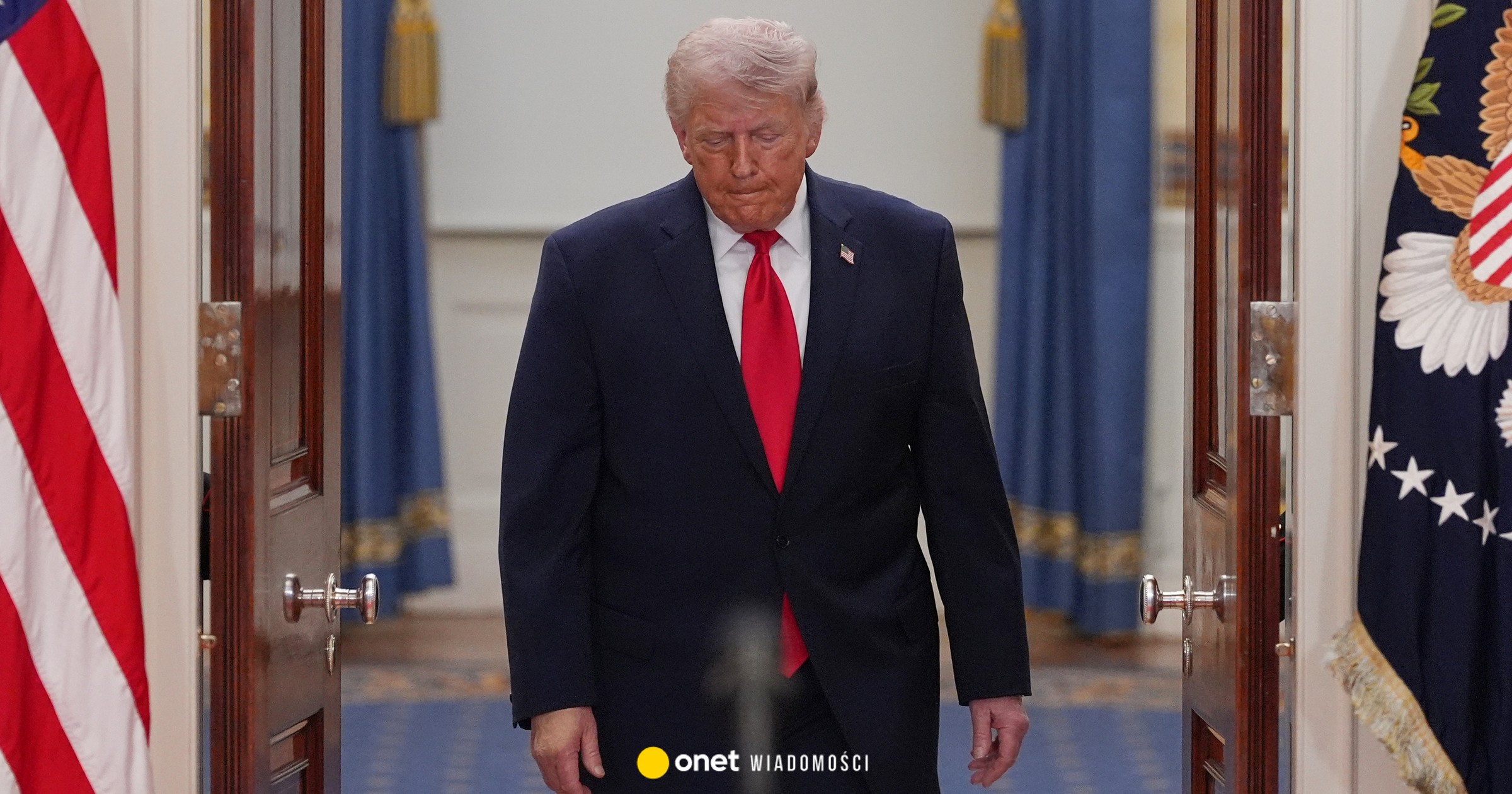
Donald Trump, despite his threats – “there will be many explosions” – extended the ceasefire with Iran. Officially, the US president denies that he “broke.” However, experts suspect that Donald Trump is afraid to resume hostilities with Iran for fear of oil prices, the economy and poll results.
The US president wants to quickly get out of the war – and for this reason he may be the first to resign and, therefore, make concessions. In such a situation, Tehran may declare itself the winner of the war with the United States and Israel.
Meanwhile, Trump maintains that Tehran will soon surrender due to the US blockade of Iranian ports, which is allegedly costing Iran $500 million. (approx. PLN 1,813 million at the current exchange rate).
Recognized experts, however, have a different opinion. The world-famous British historian Niall Ferguson, who is not an opponent of the US president on other issues, also negatively assesses the way Trump is conducting this war. He predicts that an agreement will ultimately be reached that will be assessed worse than the nuclear agreement concluded with Iran in 2015.
How does Trump justify extending the ceasefire? The US president says Iran has no internal agreement on how to proceed. Trump administration officials maintain that the Islamic Revolutionary Guard Corps (IRGC) prevented politicians willing to negotiate from making concessions.
The article continues below the video
US Finance Secretary Scott Bessent also emphasizes that Iran is under pressure. According to him, oil storage facilities on Khark Island will be full in a few days and it will be impossible to fill them further. This, in turn, means that the regime will have to limit oil production itself – and thus deprive itself of huge revenues from the sale of the raw material.
Meanwhile, the Islamic Revolutionary Guard Corps appears to have little regard for American threats. On Wednesday, April 22, the IRGC fired on several merchant ships and confiscated two of them.
The Islamic Revolutionary Guard Corps has thus demonstrated that it takes the blockade of the Strait of Hormuz seriously. “We do not accept negotiations in the shadow of threats, and over the last two weeks we have been preparing to play new cards on the battlefield. Trump, by imposing a blockade and violating the ceasefire, is trying, in his opinion, to turn the negotiating table into a table of surrender or to justify renewed incitement to war,” said the Speaker of the Iranian Parliament, Mohammed Bagher Ghalibaf, on Monday, April 20.
Speaker of the Iranian Parliament Mohammed Bagher GhalibafHamed Malekpour/Iranian Parliament Communication Office/Handout via Getty Images / Contributor / Getty Images
The regime in Tehran, despite losses at sea and in the air, has not been completely disarmed and has shown that, thanks to its control over the Strait of Hormuz, it has an effective bargaining chip that – unlike nuclear bombs – can not only be used as a threat, but also effectively applied in practice.
Does Trump need to apply even more pressure?
Military analyst Mark Dubowitz of the American pro-Israel think tank Foundation for the Defense of Democracies is considered a hawk on Iran.
“It is better to act now against a weakened regime than later against a regime equipped with nuclear weapons, intercontinental ballistic missiles, 10,000 missiles, a huge number of drones and battle-tested allies,” he claims.
Dubowitz believes the regime could collapse in the coming months if the Americans and Israel increase pressure even further.
I’m Ashley Davis as an editor, I’m committed to upholding the highest standards of integrity and accuracy in every piece we publish. My work is driven by curiosity, a passion for truth, and a belief that journalism plays a crucial role in shaping public discourse. I strive to tell stories that not only inform but also inspire action and conversation.