Election results in Bulgaria. Rumen Radev's coalition, in first place in exit polls, a long way from former prime minister Boiko Borisov

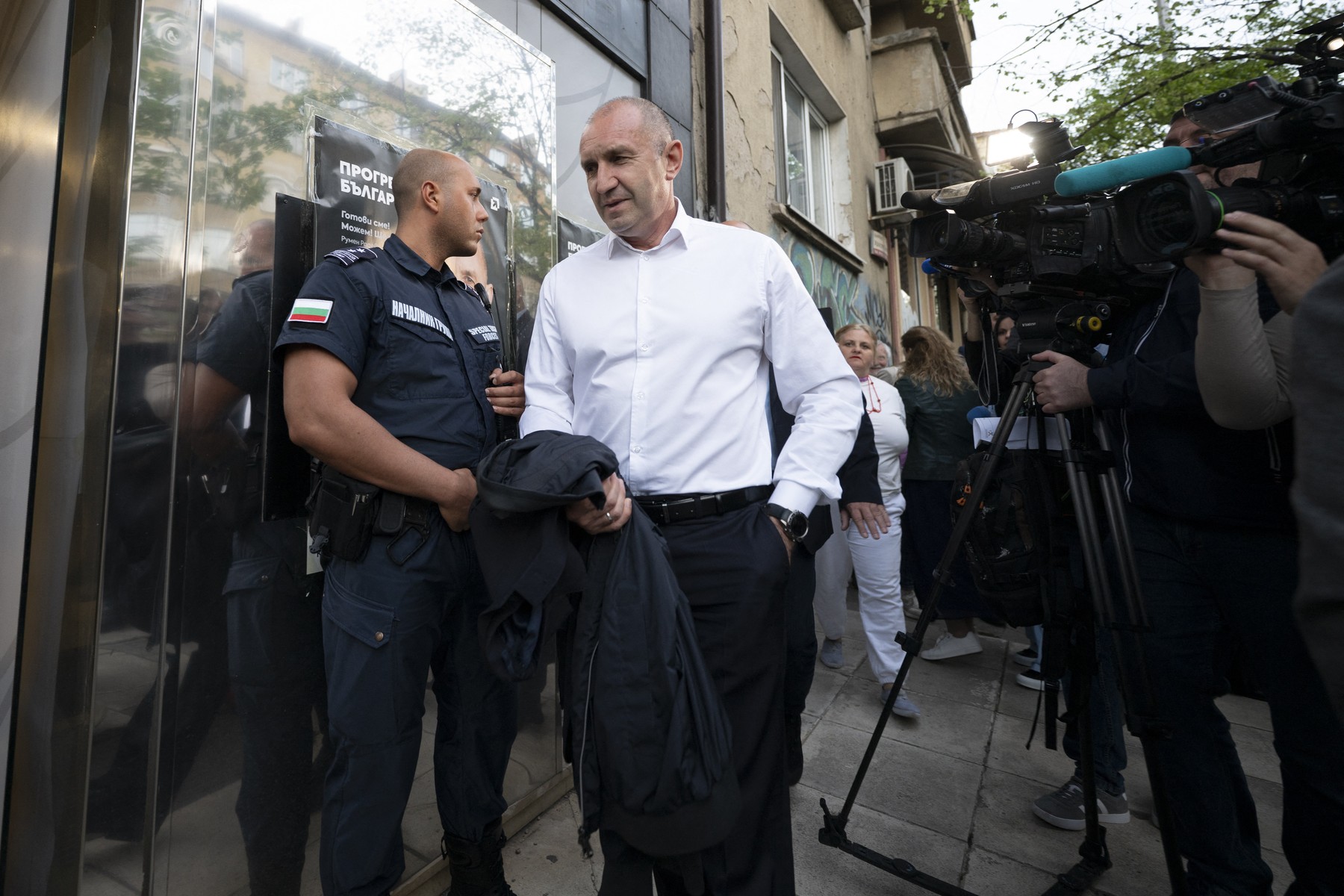
Progressive Bulgaria, a three-party coalition led by former president Rumen Radev, has been credited with a significant lead in Sunday's early parliamentary elections, according to exit polls by several sociological agencies cited by Mediapool.
In second place is the GERB party. The last time the party of former Prime Minister Boiko Borisov, in power for almost twelve years, recorded a similar result was in its first participation in the parliamentary elections, in 2009.
Now, however, GERB could see a historic loss of around 14–16% (compared to an initial estimate of at least 19–20%).
According to some data, the formation is on a par with the formation Continue the Change – Democratic Bulgaria, whose score, of approximately 14%, seems above expectations.
The DPS–Renaissance party, associated with US and UK-sanctioned mogul Delian Peevski, is in fourth place with around 8%.
The Renaissance Party is credited with around 5%, but other data indicate that it could remain below the parliamentary threshold.
In the case of the BSP – United Left, the result varies: some agencies place it above the 4% threshold needed to enter Parliament, while others indicate it below this level.
Voter turnout is 43.4%, according to Trend data, at 8:00 p.m.
In total, 4,783 candidates participated in the parliamentary elections, representing 14 parties, 10 coalitions and one independent candidate. According to official data, 1,440 of the candidates are women and 3,343 are men.
ruddy Radev: “I am ready for all options”
The chances of Rumen Radev getting an independent majority of 121 deputies depend on the number of parties that will enter the National Assembly. At the moment, however, he is at least ten votes short, meaning he will have to seek allies and make compromises to form a government.
The negotiations will anyway be necessary to reach a constitutional majority of 160 votes, necessary for the election of the Superior Council of Magistracy – a key step for the changes promised by Radev and Continue the Change – Democratic Bulgaria regarding the Prosecutor's Office and the judiciary.
It remains to be seen whether GERB and the Movement for Rights and Freedoms (DPS) – A New Beginning, which supports the status quo in the judicial system and tolerates the situation where the interim prosecutor general could stay on practically indefinitely, will together have less than 80 MPs and be unable to block a reform promoted by Progressive Bulgaria, with the support of Continue the Change – Democratic Bulgaria
In a surprising comment made just before the polls closed, Rumen Radev called for the results to be centralized, citing queues at polling stations in Madrid and London.
“I hope that I and Continue the Change – Democratic Bulgaria will look in the same direction regarding the Superior Council of Magistracy. I am ready for all options, so that Bulgaria has a functional and stable government. I expect that the parties that demanded reforms in the judiciary will respect them,” he declared, stressing that he will do everything possible to form a cabinet.
What does Radev want?
Bulgaria held the eighth round of parliamentary elections in the last five years on Sunday. Former president Rumen Radev's coalition, a voice sometimes critical of the European Union but favorable to Russia, was favored to win.
The previous seven rounds of elections have not provided the political stability Bulgaria seeks, and political fragmentation has heightened uncertainty, with coalitions collapsing after brief periods in power.
Radev, head of state from 2017 to 2026, is a former general in the Bulgarian air force who left his post in January to prepare his candidacy at the head of a centre-left coalition, Progressive Bulgaria.
A member of the eurozone since January 1, Bulgaria has been going through a period of political instability since 2021, when former Prime Minister Boiko Borisov, in power for almost twelve years, was forced out of office under street pressure. Since then, no government has been able to stay in power for more than a year. The new elections were triggered by the resignation, in mid-December, of another government, also led by conservatives from GERB, Borisov's party. The government was brought down by a series of anti-corruption demonstrations on an unprecedented scale.
Radev, whose main goal is to “eliminate the oligarchic model of governance” in the country, has openly supported anti-corruption protests since the end of 2025.
He is at the same time a critic of some EU policies, of Ukraine and a politician eager to ensure the resumption of relations with Russia.
Critic of the EU's green energy policy, which he considers naive “in a world without rules”, and of sending weapons to Ukraine, he denounced a ten-year defense deal with Kiev last month.
Last year, he called for a referendum on Bulgaria's accession to the eurozone, saying the country was not ready.