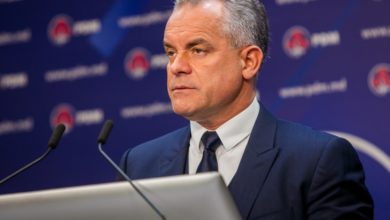
Peter Magyar's victory shakes Putin's influence in Hungary, but the country cannot afford to completely break away from Russia


Viktor Orban's landslide defeat in Sunday's election marks a sea change in Hungarian politics and a blow to the Kremlin, which has benefited from Budapest's support inside the European Union for years. Hungary may no longer be Putin's ally, but it cannot afford a total break with Russia, which retains an important tool of influence, energy, writes The New York Times
Peter Magyar won the Hungarian elections. PHOTO FB Peter Magyar
Peter Magyar won the election promising a normalization of strained relations with the EU and NATO and a reassessment of the relationship with Moscow. In the campaign, he warned that Hungary “does not want to become the first American-Russian colony”, criticizing both the support received by Orbán from Washington and the privileged relationship with the Kremlin.
In a previous interview with , Magyar said: “Anyone who knows the history of Hungary knows that we were attacked by Russia many times”.
However, the Tisza leader said he would not go for a total break, citing the energy dependence built up during Viktor Orban's 16 years in power. Hungary imports more than 80 percent of its natural gas and crude oil from Russia, and long-term contracts, including those for the Paks nuclear power plant, are difficult to change quickly.
The Kremlin is recalibrating its position
Viktor Orban's defeat deprives Vladimir Putin of one of the EU's most vocal critics within the bloc. Orban has blocked sanctions packages, funding for Ukraine and talks on Kiev's accession to the Union.
However, the Kremlin's reaction was cautious. Spokesman Dmitry Peskov said that “Hungary made its choice and we respect it”adding that Russia wants to maintain “pragmatic contacts” with the new management.
A change of direction, but not a radical one
Analysts believe that Russia will try to adapt to the new political reality in Hungary. “The Orbán government has been a pragmatic ally,” said an expert quoted in the article, suggesting that Moscow does not hesitate to abandon such partnerships when the context changes.
Peter Magyar could quickly change the relationship with Moscow in areas such as media and security services, where Russian influence has grown in recent years. At the same time, Hungary is expected to stop blocking European support initiatives for Ukraine, although the new prime minister will remain cautious, given the internal divisions and energy dependence.
Energy, the great challenge of the Hungary-Russia relationship
Diversification of energy sources will be a slow process. Russian oil could be replaced more easily, but natural gas and nuclear fuel will be major obstacles. The 15-year gas contract, signed in 2021, is difficult to terminate, and almost half of the country's electricity comes from the Soviet-era nuclear plant.
Peter Magyar stated that he must analyze in detail the agreements signed by the previous government before making decisions.
At the moment, Hungary seems ready to gradually reduce Moscow's influence, but not eliminate it completely. As one analyst noted, “in terms of energy security, radical and immediate changes are very rare.”