What will the weather be like on Resurrection Night? Temperatures rise on the first day of Easter

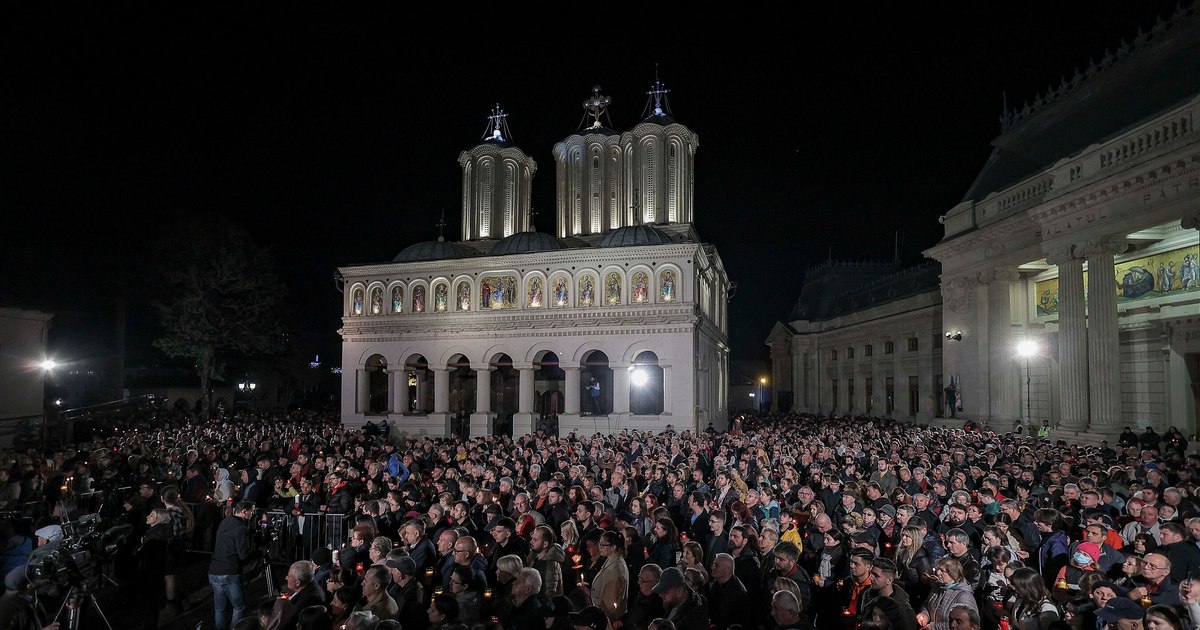
Resurrection Night brings lower temperatures than normal for the period, both nationally and in the Capital, but the weather begins to warm up gradually even from the first day of Easter, according to the meteorologists of the National Meteorological Administration, quoted by Agerpres.
Easter night brings cooler temperatures. PHOTO: Inquam Photos Alexandru Busca
ANM service meteorologist, Oana Păduraru, said on Saturday that Romania is going through an episode of colder weather than usual for this period.
According to ANM, the morning of April 11 was the coldest recorded for this date, with five minimum temperature records being recorded.
In Miercurea-Ciuc, -9°C was recorded, in Poiana Stampei -8°C, and in Toplița and Joseni the temperatures dropped to -7°C.
What will the weather be like on Resurrection Night?
Temperatures will remain low Saturday night into Sunday. In the depressions in the country, the minimums can drop to around -5°C, while on the coast the highest nocturnal values will be recorded, around 5-6°C.
In Bucharest, the minimum temperatures will be between 2 and 4°C. The sky will be temporarily cloudy, and in the east of the country, especially in Moldova, light and passing rains are expected. There is also a low probability of rain in Dobrogea, eastern Muntenia and even in the capital.
Better news for Easter
For the first day of Easter, temperatures will start to rise slightly. At the national level, the maximums will be between 9 and 17°C, the highest values being in the southwest of the country.
In Bucharest, the maximum will reach 14-15°C, with sunny intervals, but also with possible short-term rains.
Significant warming from next week
From Monday, the weather enters a more pronounced warming process. In the west of the country, temperatures will reach, towards the end of next week, 20-22°C, while in the rest of the regions the maximums will frequently exceed 15°C.
Meteorologists state that the rains will not be completely absent, but they will be weak, transient and in limited areas.