2026-04-02 19:08, updated 2026-04-02 20:20
publication
2026-04-02 19:08
update
2026-04-02 20:20
In Belgian law, judgments of first-instance courts are the basis for the winning party, in this case Pfizer, to demand the awarded sum, regardless of the appeal proceedings, Konrad Korbiński, director general of the Ministry of Health, told PAP.
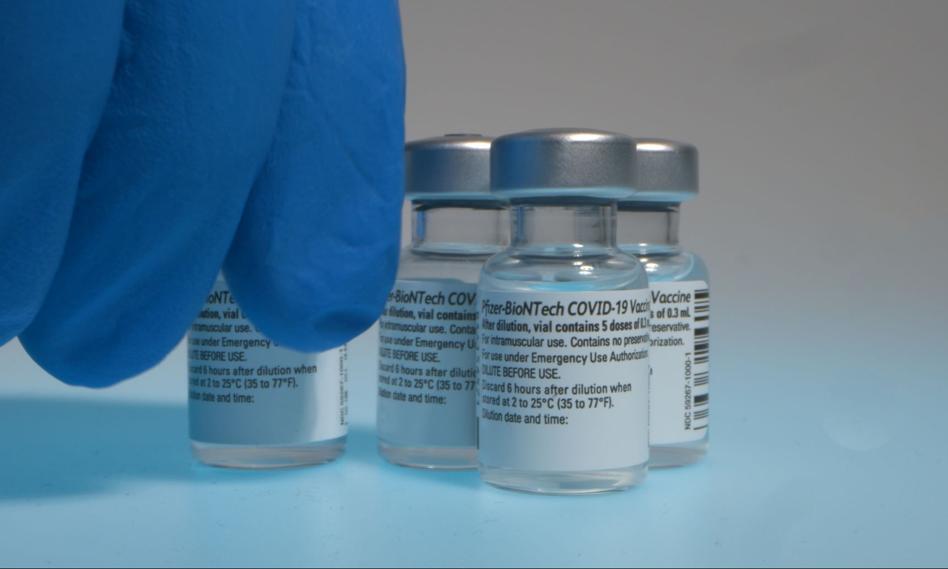
The court of first instance in Brussels ruled on Wednesday that Poland must collect COVID-19 vaccines from the American company Pfizer and pay the company PLN 5,644 million. According to the Ministry of Health, approximately 64 million doses of the COVID-19 vaccine are available.
Director General of the Ministry of Health, Konrad Korbiński, told PAP that under Belgian law, judgments of first-instance courts are immediately enforceable. This means that they are the basis for the winning party – in this case Pfizer – to request payment of the awarded sum, regardless of the appeal proceedings – he added.
He emphasized that Belgian law allows for four scenarios of further proceedings:
- the first assumes that Poland pays the awarded amount to Pfizer and starts appeal proceedings. – The minimum duration of such appeal proceedings is about five years – said Korbiński.
- the second option is to submit an appeal to the court together with a request to temporarily suspend the enforceability of the judgment. – If the court accepts such a request, Poland does not have to pay the awarded amount until the end of the appeal proceedings, but during this time interest is charged, which will be added in the event of a loss – noted the director general of the Ministry of Health.
- the third solution provides for the payment of the awarded amount to a deposit in a Belgian court. Korbiński said that this was tantamount to payment. – The amount remains in escrow until the appeal proceedings are resolved. If the decision is the same as in the trial court, this amount will be paid to Pfizer together with the interest on the deposit. Then Poland will not bear interest costs for the duration of the appeal proceedings – emphasized the Director General of the Ministry of Health.
- the fourth option assumes submitting to the court, together with the appeal, an application to suspend the enforceability of the judgment, which means that until the end of the appeal proceedings, Poland does not pay the claim. This means, however, that if it is confirmed by the appellate court, the Polish party will be charged interest for the duration of the appeal proceedings. – Regardless of the above scenarios, settlement talks may also be held with Pfizer – said Korbiński.
The Director General of the Ministry of Health announced that the base amount of Pfizer's claim with interest to date is approximately PLN 6,390 million.
After the Belgian court announced the judgment, the Ministry of Health announced that Poland intended to use all legal means available to it to change the judgment and defend its interests.
The European Commission concluded a contract with the American vaccine manufacturer Pfizer on behalf of the member states in 2021. Under this agreement, Poland committed to purchase a certain number of vaccines in accordance with the negotiated schedule. However, in 2022 it refused to continue receiving doses. In September 2023, Pfizer took Poland to court to enforce the contract.
PLN 6 billion for vaccines is the equivalent of oncology therapies
Deputy Minister of Health Katarzyna Kacperczyk said in an interview on RMF FM that the awarded amount is equivalent to the key expenses of the health system – from oncological treatment to emergency medical services. – Poland will have to pay over PLN 6 billion for unclaimed COVID-19 vaccines and collect 64 million doses within three years – she noted. She emphasized that this amount corresponds to annual expenses for oncological treatment. – This is the cost of drugs for cancer patients. This is probably the worst information we could have received, she said.
– We have to pay for unclaimed vaccines and – what's worse – collect them within the next three years, she said.
She added that at the current level of vaccination rates, the preparations may prove to be largely useless. – These are 64 million doses. We would need several dozen years to use them up, she said.
The deputy minister pointed out that vaccines have a limited shelf life. – Unfortunately, they have a relatively short shelf life, so they will have to be disposed of – she said. Disposal costs have not yet been estimated.
She added that the government was working on financial solutions. – We are developing scenarios with the Ministry of Finance on how to secure these funds. Health care remains a priority, she assured.
Referring to recent changes in the financing of diagnostic tests, according to which the National Health Fund will now pay 60%. for gastroscopy and colonoscopy, and 50 percent for magnetic resonance imaging and computed tomography performed beyond the limit specified in the contract, Kacperczyk noted that they would not cover oncology patients or children. – We do not introduce limits, we introduce co-financing of some benefits – she emphasized.
The deputy minister also commented on allegations of deterioration in the availability of benefits. – I don't know of anyone dying because of such restrictions. Scaring people is irresponsible, she said.
She also assured that there is currently no threat of a shortage of medicines in Poland due to the international situation. – For now, we are not noticing any alarming signals. Deliveries are made regularly, she noted.
kno/ pś/ mhr/ mir/akar/