Deadlock in the UN Security Council: France made a common front with Russia and China against the opening of the Strait of Hormuz through military intervention

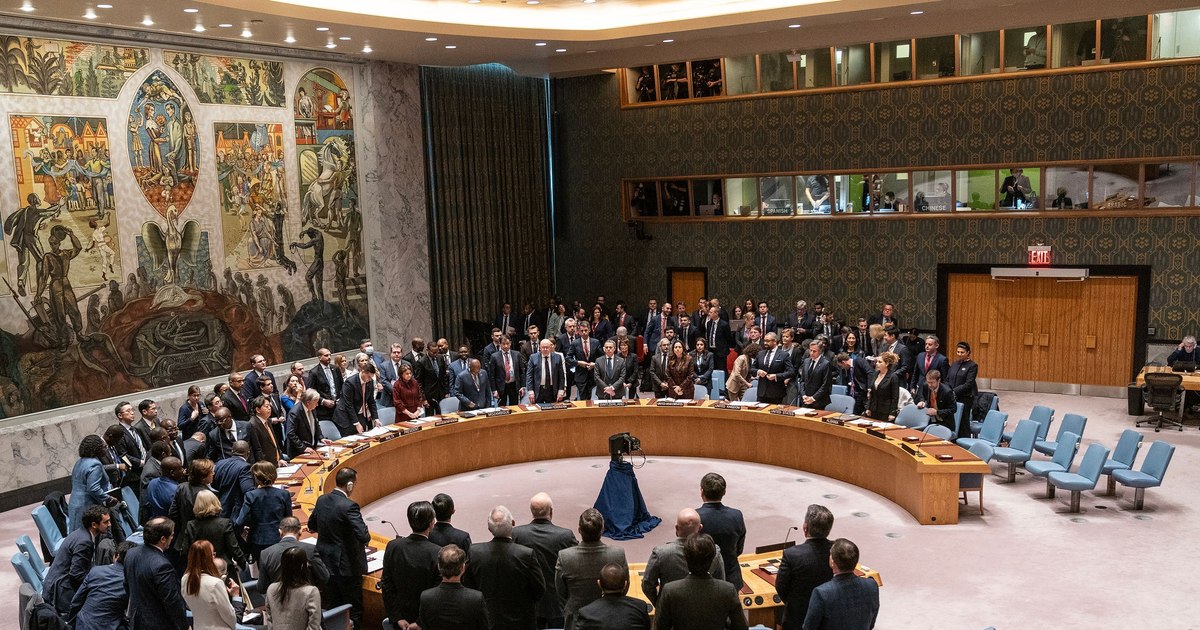
France joined Russia and China in blocking a UN resolution that would have allowed the use of force to reopen the Strait of Hormuz, amid rising energy prices and fears of an escalating military conflict in the Persian Gulf.
Deadlock in the UN Security Council on the resolution on the Strait of Hormuz. PHOTO: Profimedia
France joined Russia and China in blocking a draft UN resolution that would have cleared the way for military action against Iran to reopen the Strait of Hormuz, one of the world's most important sea routes, The Washington Post notes, citing a diplomat and a senior UN official.
The proposal, introduced by Bahrain, was aimed at countering Tehran's blockade of the strait, through which about 20 percent of the world's oil normally passes.
In its original form, the resolution proposed that member states “to use all means
necessary” to guarantee the transit of ships, a wording interpreted in UN language as authorization of military operations. The document covered not only the Strait of Hormuz, but also the Persian Gulf and the Gulf of Oman, areas where Iran has carried out thousands of attacks on civilian infrastructure in neighboring states, according to Bahraini authorities.
In the face of strong opposition from China, Russia and France, Bahrain significantly “sweetened” the text, so that the final version, obtained by the Associated Press, authorizes only defensive actions aimed at protecting international navigation, with wording regarding offensive interventions being completely removed.
The new proposal allows states “to use all
the means defensive necessary and proportionate to the circumstances in the Strait of Hormuz and adjacent waters”
for a period of at least six months. These actions can be undertaken individually or within multinational naval partnerships, but require prior notification of the Security Council.
Gulf leaders admit, however, that the resolution is largely symbolic, because the military forces of the states in the region are relatively small and heavily dependent on American support, and their ability to counter the Iranian military is limited.
A possible attack is “unrealistic”
Amid the debates at the UN, French President Emmanuel Macron harshly criticized the idea of a forced intervention to open the strait, calling the American proposal “unrealistic”.
A similar position was adopted by Beijing and Moscow. Chinese Ambassador Fu Cong described the use of force as “illegal and non-discriminatory”, warning that this
“would inevitably lead to a further escalation of the situation and serious consequences”, while Russia, through ambassador Vassily Nebenzia, argued that the only real solution was a cessation of hostilities.
France, for its part, insisted on avoiding any extensive use of force, with Ambassador Jérôme Bonnafont suggesting that the new text, focused on defensive measures, might be acceptable.
Meanwhile, the situation in the region remains extremely tense. Donald Trump said on Wednesday that the United States and Israel will continue to bomb Iran “extremely tough” in the next two to three weeks, without indicating a date for the cessation of operations. Iran, for its part, has continued its retaliatory attacks, and control of the Strait of Hormuz has become a sticking point for the global economy amid rising energy prices.
In this tense context, a French container ship, CMA CGM Kribi, recently managed to cross the strait, becoming, according to the international press, the first ship bound to Western Europe to do so since the outbreak of the conflict.
The Security Council is to vote on the new version of the resolution. The meeting originally scheduled for Friday, during the UN Good Friday holiday, has been postponed until Saturday, and diplomats are trying to negotiate a consensus to avoid another veto.