US Secretary of State threatens US 'will have to reassess' NATO relationship after Iran war

US Secretary of State Marco Rubio said Washington may have to reassess its relationship with NATO after the war against Iran ends, escalating pressure on European allies the US accuses of not providing enough support.
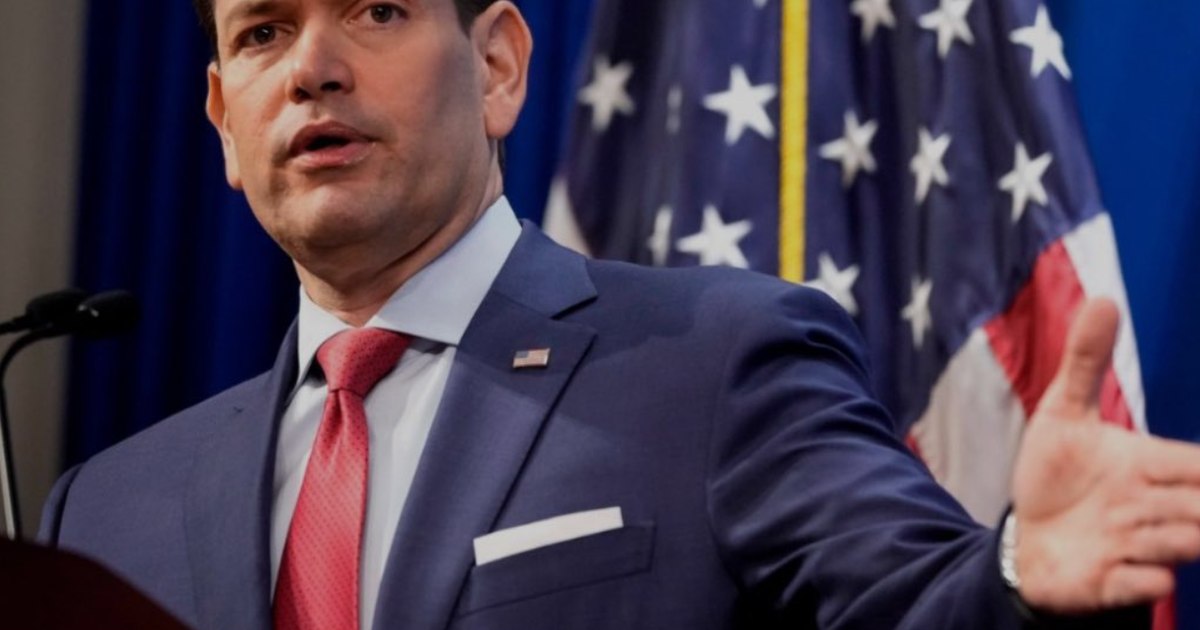
US Secretary of State Marco Rubio PHOTO X
“We will have to reassess the value of NATO and this alliance for our country”Rubio said in an interview with Fox News' Sean Hannity on Tuesday night.
“If NATO only means that we defend Europe in the event of an attack, but they deny us the right to use military bases when we need it, it's not a very good arrangement. It's hard to stay committed to that kind of relationship.”the US official added.
In parallel, several European states are strengthening their resistance to US requests for support in actions against Iran, in the context of President Donald Trump's growing anger towards Washington's traditional allies, writes POLITICO.
Spain has become a major point of tension in transatlantic relations. Madrid has banned US military aircraft involved in the Middle East conflict from flying over its airspace and denied access to key bases, Deputy Prime Minister Carlos Cuerpo said on Monday, reconfirming the government's opposition to the operation.
Polish Defense Minister Władysław Kosiniak-Kamysz announced on Tuesday that Warsaw “has no plans” to move its Patriot air defense systems to the Middle East. “Poland's security is an absolute priority”he wrote on platform X. And Italy refused, on the same day, the access of American bombers destined for Iran to the Sigonella air base in Sicily.
Since the start of the US and Israeli attacks on Tehran on February 28, France, Germany, Italy and Britain have avoided sending military ships to the Persian Gulf. In March, they issued a joint statement with partners such as Japan and Canada, through which they support “adequate efforts” to ensure safe transit through the Strait of Hormuz — but only after the fighting has stopped, as German Chancellor Friedrich Merz has pointed out.
To what level can transatlantic political-military solidarity collapse? Is there a crisis in NATO?
Tensions continued to rise. On Tuesday, Trump said France had closed its airspace to aircraft carrying military equipment to Israel, criticizing Paris as “VERY UNRECEPTIVE” and warning: “USA will remember!!!”
The American president also conveyed to European allies that securing the Strait of Hormuz will be their responsibility, not Washington's.
“Go and get your own oil!”Trump wrote, as Iran's blockade of the strategic sea route sent fuel prices soaring.
The American president also claimed that the United States could stop attacks on Iran in two to three weeks and that an agreement is not necessary to end the war.
“Iran doesn't have to make a deal, no”he said, when asked by reporters at the White House if successful diplomacy was a condition for the US to reduce the conflict. He added that the US will “he's leaving very soon… maybe two weeks, maybe three.”
“When we feel that they are, for a long period of time, brought into the Stone Age and they can no longer develop a nuclear weapon, then we will leave”he said.