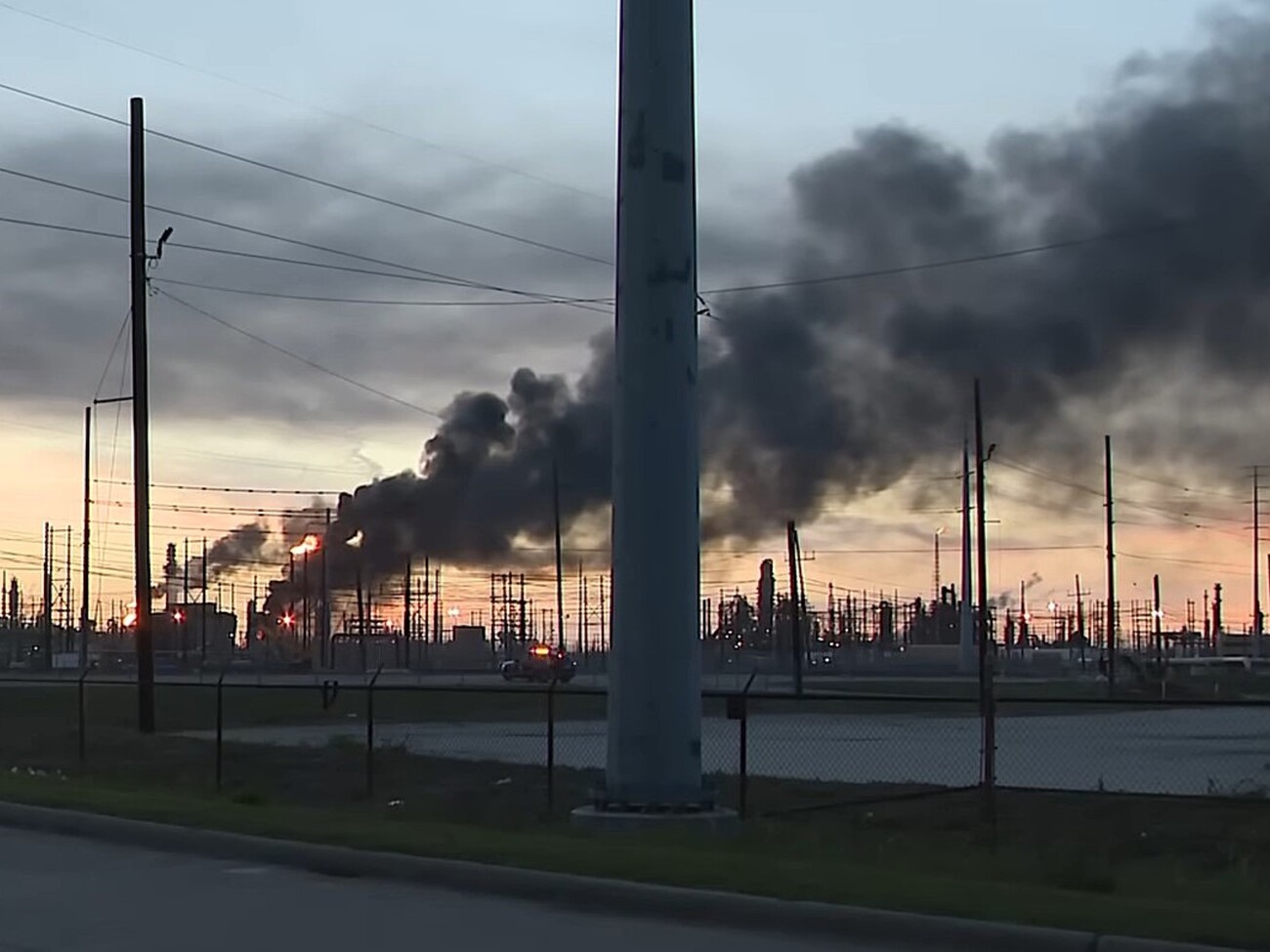
The explosion occurred on March 23, causing production at the 47,000 barrels per day diesel fuel hydrotreater to be temporarily suspended.
The explosion was heard 18 km from the plant, located on the eastern border of Texas and Louisiana.
The company reported that no one was injured as a result of the incident.
Valero is already preparing to reopen the plant: workers will block damaged pipelines, restart boilers and safe gas combustion systems, and then gradually return all production units to operating mode to reach planned production levels. Hydrotreaters use hydrogen to remove sulfur from motor fuels in accordance with US regulations.
This is the second large CCD fire in Texas in two weeks. On the evening of March 12, as reported by Reuters, an “operational incident” occurred at the world's largest propylene oxide and tertiary butyl alcohol plant by volume, LyondellBasell.
The fire was contained thanks to the work of the local emergency team and the support of firefighters from neighboring areas. The plant workers were evacuated in time and no one was injured.
The plant produces propylene oxide, propylene glycol, tertiary butyl alcohol and other chemical products. According to the company, the fire did not cause any damage to the environment, and local residents do not need to take any safety measures.
The company added that LyondellBasell shares fell 2.2% to $72.70 in morning trading thereafter.
The agency notes that the incident occurred against the backdrop of high oil refining revenues due to the closure of the Strait of Hormuz by Iran, which limited the supply of petroleum products from the Middle East.
Context
Against the backdrop of the war between the United States and Israel with Iran, shipping through the Strait of Hormuz, one of the most important routes for global oil trade, through which millions of barrels of crude oil and petroleum products pass from the Middle East to Asia, Europe and the United States every day, has practically stopped since March 1. Oil prices began to rise sharply.
On March 10, information appeared in the media that Iran had allegedly begun mining the strait. US Treasury Secretary Scott Bessent stated that the US Navy will escort tankers from companies that cooperate with the Americans through the Strait of Hormuz.
On March 14, US President Donald Trump called on China, France, Japan, South Korea, the UK and other countries to send their ships to create conditions of openness and security in the Strait of Hormuz.
On March 17, White House adviser Kevin Gassett said that tanker traffic through the Strait of Hormuz was supposedly being restored, and Iran's attempts to restrict shipping on this route had not caused damage to the US economy. On the same day, the head of European diplomacy, Kaya Kallas, proposed introducing an analogue of the “grain agreement” concluded during the Russian-Ukrainian war to unblock the Strait of Hormuz.