Former CIA agent: “We will understand Iran's response after the 40-day mourning of Khamenei's martyrdom”

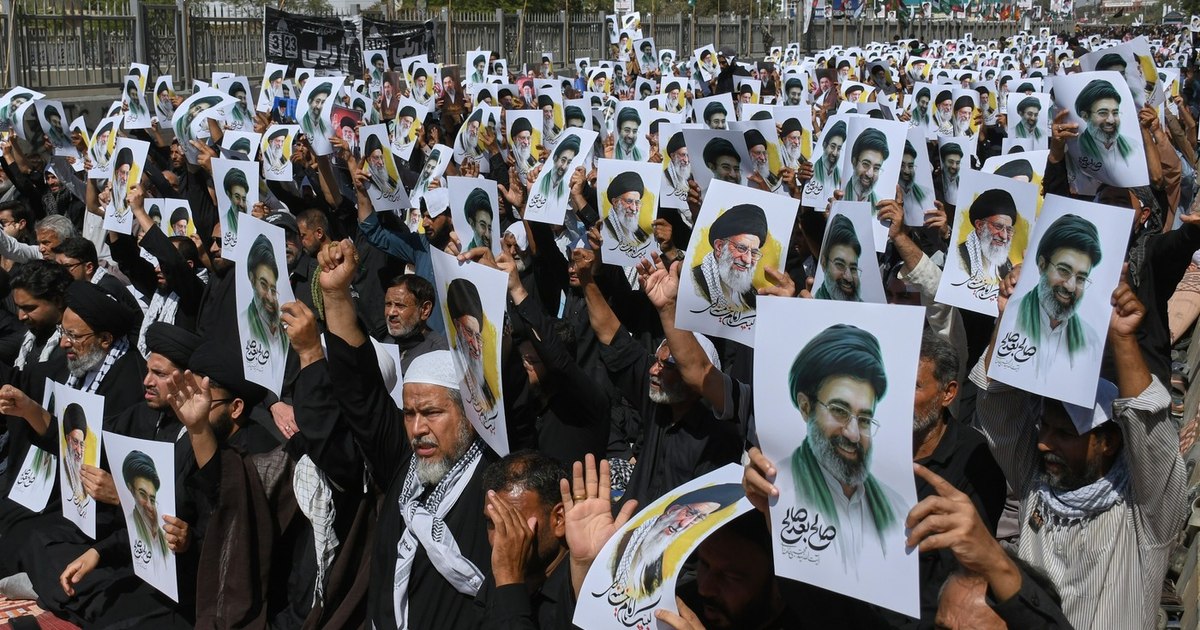
Andrew Bustamante, a former CIA agent, points out that the true extent of Iran's response to the global conflict may only become apparent after the 40 days of mourning have passed since the death of Ayatollah Ali Khamenei.
Mojtaba Khamenei continues the Khamenei dynasty. PHOTO: Profimedia
Andrew Bustamante, former CIA agent, talks in a podcast about what will happen in the world of Shia believers after the 40 days of mourning after the death of Ayatollah Ali Khamenei.
At the end of the 40-day mourning period, global followers of Shia Islam are expected to renew their faith and loyalty not only to the current Ayatollah, but also to the previous Ayatollah, and to honor whoever was lost through the act of martyrdom.
Whatever is happening now in the global conflict in Iran will be better understood after April 9, when the 40-day mourning period for Khamenei's death ends, the former CIA agent says.
Bustamente points out that “we have no idea what to expect from the Shia world as a whole and from Islamic extremists in that world” after this period.
So after the 40 days of mourning, a spiritual renewal and strengthening of loyalty among Shiites is anticipated, and the true extent of Iran's response in the global conflict may become apparent.
“Donald Trump just lost to the Ayatollah of Iran”
“No matter how you look at it, there is a truth that we all have to understand, which is that Donald Trump just lost to the Ayatollah of Iran. It may sound like a shocking statement, but we have to look at it through the lens of the Islamic Republic, of the people of Iran. In the eyes of the Islamic Republic, which is Iran, the death of Ayatollah Ali Khamenei is martyrdom. And martyrdom is one of those tools, one of those ideas in Shia Islam that cements with true idea of the Ayatollah's political and religious legitimacy. This is something that dates back thousands of years, from Shia imams who fought in battles ranging from the Crusades to modern conflicts with Western powers such as the Great Satan, Iran's label for the United States and Israel. Not only is Ayatollah Ali Khamenei seen as a martyr, but the fact that he was killed in a peacetime attack and died alongside his wife, his daughter-in-law, his son-in-law and nephew also trigger something known as family martyrdom”, explains the former CIA agent.
This idea that a true martyr is killed, along with his loved ones, by an overwhelming force at a time that is unjust or incorrect according to Islamic practice, he elaborates.
“And this is not an important thing exclusively for Shia Islam. It is against international law to target world leaders in peacetime, along with non-combatants such as family members. So again, we see the power of this idea of martyrdom, particularly through the eyes of the Islamic Republic. And Khamenei's death, along with two more generations of his successors, is significant for them. It is so significant that it triggers a 40-day mourning period, traditional in Shia Islam“, explains Bustamante.
The true face of the war, after the 40 days of mourning
As we look at the conflict between Iran and the United States, Israel and America's allies, we must recognize that we are still in the first part of that 40-day mourning period.
Unexpected decision in Washington: Trump extends the ultimatum given to Tehran by five days. Attacks on Iranian infrastructure are suspended
In fact, Iran's inconsistent ballistic missile activity could be an indicator that helps demonstrate that this 40-day mourning period has been activated, the former agent says. The barrage of those ballistic missiles is more intense on some days than others, making it difficult for analysts to determine whether the total number of those ballistic missiles is being reduced or if Iran is simply keeping missiles to use later in the conflict.
“But the most important thing to understand is that at the end of that 40-day mourning period, the global followers of Shia Islam should renew their faith and loyalty not only to the current Ayatollah, but also to the previous Ayatollah, and honor whoever was lost through the act of martyrdom. So whatever we see today in the global conflict in Iran, we will truly understand that conflict better on April 9, after the end of the period of 40 days of mourning by the death of Khamenei“, says Bustamante.
The lessons of history regarding conflict with theocracies
Bustamante argues that the US does not understand how to manage theocracies during conflict. “There are some important lessons to be learned. First, with regard to the Taliban in Afghanistan, the United States fought the Taliban for 20 years before finally giving up and leaving, pulling out of Afghanistan and handing over power to the Taliban. Even before we pulled out, we entered into negotiations with the Taliban, further cementing their theocratic rule over Afghanistan. So we don't have a strong history, even in recent history, of being able to overcome power religious power, the spiritual power, the impulse that comes from a religious theocracy”he points out.
If we look further back in history, all the way back to Pope Urban II in 1090, he is the pope who actually launched the Crusades that were intended to drive the Muslims out of the Holy Land. “For 200 years, Christians fought the Crusades, trying to drive the Muslims out of the Holy Land, but they lost. And finally, the Muslims maintained control of the Holy Land and still control parts of Jerusalem to this day, even though there is a contest from Israel. So in recent history with the Taliban and in ancient history with the Crusades, you can see over and over again that theocracies are very difficult to defeat“, says the former agent.
“Ayatollah Khamenei is alive”
“So that brings us to today, the theocracy of Iran and the death of Ayatollah Ali Khamenei. A death that Donald Trump would be able to celebrate because he would be the president who said he killed Ayatollah Khamenei. Only, not long after Ayatollah Ali Khamenei's death, his son Mojtaba Khamenei was identified as the next Ayatollah. Now, because his son bears the same name, that means Iran is back under the power of Ayatollah Khamenei, which which not only deprives Donald Trump of the ability to say he killed Ayatollah Khamenei, because Ayatollah Khamenei is still very much alive, but also demonstrates the faith and bravado of the Islamic Republic in the face of a superior military force like the United States or Israel. This is an extremely important context to remember as we continue to watch what is happening in Iran and around the world“, explains Bustamante.
Iranian media dispute Trump's claims of “productive” negotiations with Tehran
We may not really see Iran's response until after April 9.
“We have no idea what to expect from the Shiite world in general and the Islamic extremists in that world“, he concludes.
The threat to the US can come in extremely varied forms.
“We can count on one thing: that the Islamic Republic, based on the Islamic Revolution of 1979, will not allow Donald Trump to win, even if Donald Trump sets his own definition of victory as the unconditional surrender of Iran, which he will dictate when that unconditional surrender occurs“, concludes Bustamante.
He believes a similar scenario is following the withdrawal from Afghanistan in 2021.