48 hours to war: The decisive conversation that convinced Donald Trump to attack Iran, revealed for the first time

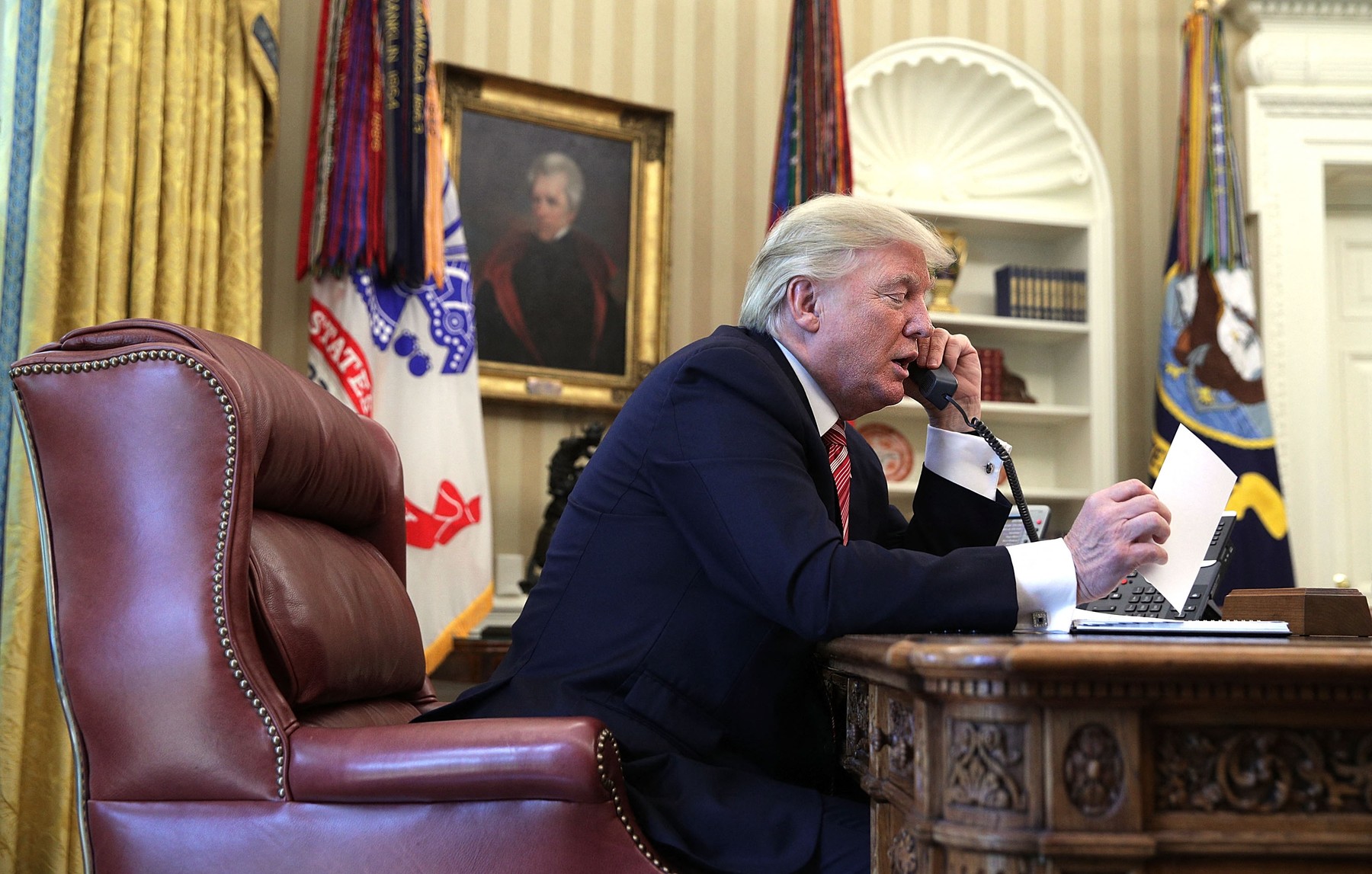
Less than 48 hours before the US-Israeli attack on Iran was to begin, Prime Minister Benjamin Netanyahu spoke by phone with President Donald Trump about the arguments for launching a complex, long-range war of the kind the US leader had campaigned against in both of his races for the White House, Reuters has revealed.
Both Trump and Netanyahu knew from intelligence briefings received earlier that week that Ayatollah Ali Khamenei, Iran's supreme leader, and his top lieutenants were soon to meet at his compound in Tehran, leaving them vulnerable to a “beheading strike” — an attack on a country's top leaders frequently used by the Israelis but less frequently by the United States.
But new information suggested the meeting had been moved from Saturday night to Saturday morning, three people with knowledge of the conversation between Trump and Netanyahu told Reuters.
Reuters points out that this conversation has not been disclosed so far.
Netanyahu, determined to push ahead with an operation he has advocated for decades, argued there might not be a better opportunity to kill Khamenei and avenge Iran's earlier attempts to assassinate Trump, according to Reuters sources. Among them was an alleged “murder on contract” plot orchestrated by Iran in 2024, when Trump was a presidential candidate.
The Justice Department has charged a Pakistani man with trying to recruit people in the United States as part of the plan to avenge the US killing of Qassem Soleimani, the top commander of the Islamic Revolutionary Guard Corps, during Trump's first term.
Key conversation between Netanyahu and Trump on Iran 'beheading'
The Reuters sources, who spoke on condition of anonymity because of the sensitive nature of the matter, said Trump had approved before the call with Netanyahu the idea of the United States conducting a military operation against Iran, but that he had not yet decided when or under what circumstances the United States would get involved.
The US military had been building up its presence in the region for several weeks, leading many in the administration to conclude that it was only a matter of time before the president decided to move forward. A possible date, just a few days earlier, had been abandoned due to bad weather.
Reuters could not determine how much Netanyahu's arguments swayed Trump as he considered issuing the strike orders, but the call was the Israeli leader's final plea to his American counterpart. The three briefed sources said they believed that conversation, along with information indicating an increasingly narrow window to remove the Iranian leader, was a catalyst for Trump's final decision to order the military on Feb. 27 to launch “Operation Epic Fury.”
According to Reuters sources, Netanyahu told Trump that he could make history by helping to remove an Iranian leadership long loathed by the West and many Iranians. The Israeli leader also told the White House that Iranians may even take to the streets, overthrowing a theocratic system that has ruled the country since 1979 and has since been a major source of terrorism and instability globally.
The US leader's desire for revenge also played a role
The first bombs hit on the morning of February 28. Trump announced that evening that Ayatollah Khamenei had died.
In response to a request for comment, White House spokeswoman Anna Kelly did not directly address the conversation between Trump and Netanyahu, but told Reuters the military operation was designed to “destroy the Iranian regime's ballistic missile production capability, annihilate the Iranian regime's navy, end its ability to arm proxy forces and ensure that Iran can never obtain a nuclear weapon.”
Neither Netanyahu's office nor Iran's UN representative responded to requests for comment.
Netanyahu dismissed as “fake news” claims in a press conference last Thursday that “Israel has somehow drawn the United States into a conflict with Iran. Does anyone really believe that anyone can tell President Trump what to do? Come on,” he added.
Trump has publicly stated that the decision to strike was his alone.
Reuters points out that the information it obtained does not suggest that Netanyahu in any way forced Trump's hand to go to war, but that it shows that the Israeli leader presented effective arguments and that the way he presented a possible positive decision, including the opportunity to kill an Iranian leader who allegedly oversaw attempts to assassinate Trump, was convincing to the US president.
Pete Hegseth, the US Secretary of War, suggested in early March that revenge was at least one reason for the operation, telling reporters: “Iran tried to kill President Trump, and President Trump had the final say.”
Trump's Long Road to War on Iran
Trump ran his 2024 election campaign on the “America First” foreign policy of his first term and has publicly stated that he wants to avoid a war with Iran, preferring to deal with Tehran diplomatically.
But as talks with Tehran last spring over Iran's nuclear program failed to produce a deal, Trump began considering a strike, according to three people familiar with White House deliberations.
A first attack occurred in June 2025, when Israel bombed Iran's nuclear facilities and missile sites and killed several Iranian leaders. U.S. forces later joined the attack, and when that joint operation ended after 12 days, Trump was publicly delighted with the success, saying the U.S. had “wiped Iran's nuclear facilities off the face of the earth.”
However, months later, talks resumed between the US and Israel about a second airstrike, aimed at hitting additional missile facilities and preventing Iran from acquiring the ability to build a nuclear weapon.
The Israelis also wanted to kill Khamenei, a long-time geopolitical adversary who had repeatedly fired missiles at Israel and supported heavily armed proxy forces surrounding the country. Among them was the militant group Hamas, which launched the October 7, 2023 surprise attack from Gaza, as well as Lebanon-based Hezbollah.
Israel Katz, Israel's defense minister, said earlier this month that his country had begun planning a new strike against Iran on the premise that it would act alone.
But during Netanyahu's visit last December to Mar-a-Lago, Trump's Florida residence, the Israeli leader told the US president he was not entirely satisfied with the outcome of the joint operation in June, two people familiar with the relationship between the two leaders said on condition of anonymity.
Trump indicated he was open to a new bombing campaign, but also wanted to try a new round of diplomatic negotiations.
How the events that led to a new full-scale war in the Middle East precipitated
Two events pushed Trump to strike again against Iran, according to several officials, as well as US and Israeli diplomats.
The first was the Jan. 3 U.S. operation to capture Venezuelan President Nicolas Maduro in Caracas—which caused no American casualties and resulted in the ouster of a longtime U.S. adversary. The White House understood from this that ambitious military operations can be carried out with little collateral consequences for US forces.
Later in January, massive anti-government protests erupted in Iran, prompting a violent response from the Islamic Revolutionary Guard Corps that left thousands dead. Trump promised to help the protesters, but did nothing immediately visible about it.
Privately, however, cooperation has intensified between the Israel Defense Forces and the US Middle East Command, known as CENTCOM, with joint military planning carried out in secret meetings.
Shortly thereafter, during another February visit by Netanyahu to Washington, the Israeli leader briefed Trump on the development of Iran's ballistic missile program, pointing to certain sites that raised concerns. He also outlined the dangers of the program, including the risk that Iran would eventually acquire the ability to strike U.S. soil, three people familiar with the private discussions said.
The White House did not respond to questions about Trump's meetings with Netanyahu in December and February.

Trump's chance to make history
By late February, many U.S. officials and regional diplomats considered a U.S. attack on Iran highly likely, although the details remained uncertain, according to two other U.S. officials, an Israeli official and two other people familiar with the situation.
Trump was briefed by Pentagon and intelligence officials about the potential advantages of a successful attack, including the decimation of Iran's missile program.
Ahead of the decisive phone call between Netanyahu and Trump, Secretary of State Marco Rubio told a select group of congressional leaders on February 24 that Israel was likely to attack Iran whether the US participated or not, and that Iran would most likely respond with attacks on US targets.
Behind Rubio's warning was a US intelligence assessment that such an attack would indeed provoke Iranian counterattacks against US diplomatic and military targets and against US allies in the Gulf.
This prediction proved correct. The strikes led to Iranian counterattacks on US military assets, the deaths of more than 2,300 Iranian civilians and at least 13 US servicemen, attacks on US allies in the Gulf, the closure of one of the world's most vital sea routes and a historic spike in oil prices, already felt in the United States as well.
Two other people familiar with Rubio's briefing to congressmen said Trump had also been told there was a chance, albeit slim, that the removal of Iran's top leaders would lead to a government in Tehran more willing to negotiate with Washington.
The possibility of regime change was one of Netanyahu's arguments in the conversation that preceded Trump's final order to attack Iran.
This view was not shared by the Central Intelligence Agency (CIA), which had assessed in previous weeks that if Khamenei had been killed, he would most likely have been replaced by a hardline domestic leader.
The CIA did not immediately respond to a request for comment from Reuters.
Trump has repeatedly called for an uprising after Khamenei was killed. With the war now in its fourth week and the region engulfed in conflict, Iran's Revolutionary Guards are still patrolling the country's streets. Millions of Iranians remain sheltered in their homes.
Khamenei's son, Mojtaba, considered even more anti-American than his father, was named Iran's new supreme leader.