
It is difficult for farmers to maintain profitability of production. Farms are in increasingly poor condition

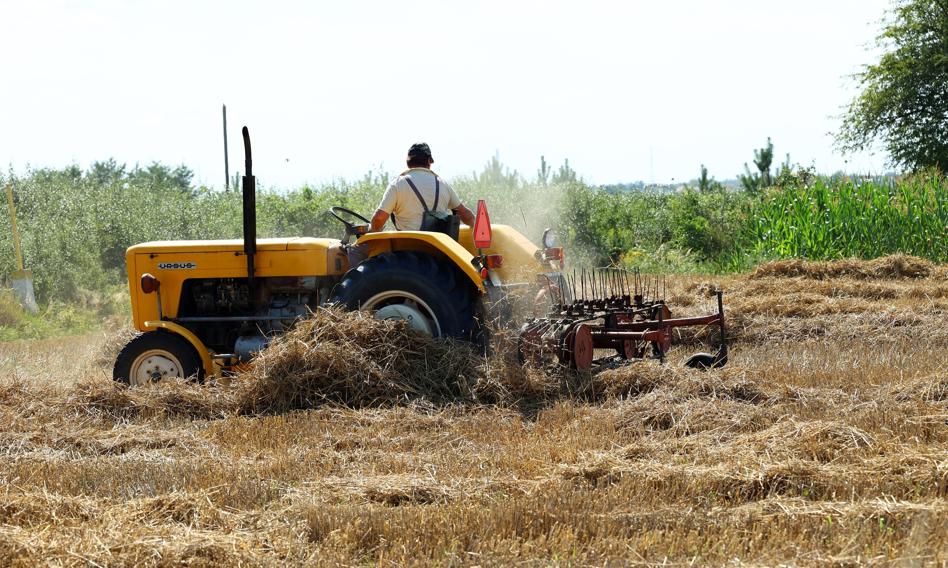
Poland produces approximately 35-36 million tons of grain annually, but some of the grain remains in farm warehouses due to low prices and difficulties in selling. Over the last two decades, the pig population in the country has decreased from approximately 17 million to less than 9.3 million, which has limited the domestic demand for grain. Agricultural organizations indicate that in such conditions, the pressure of surpluses on the market is increasing and it is becoming more and more difficult to maintain the profitability of production.
– This year, the condition of farmers is very poor, a situation like this has never happened before. Our prices are twenty years old, farmers' liquidity is at risk, our costs are rising, obtaining some materials is very expensive, while our produce is very cheap, and there is no buyer yet, which is the worst thing. You can produce something and sell it, even at a lower price, to sow more and move forward, but we have no buyer for the produce, except for beef, the rest is at prices unacceptable to farmers – emphasizes Marian Sikora, chairman of the Council of the Federation of Branch Associations of Agricultural Producers, in an interview with the Newseria agency.
Research by the Institute of Economic Development of the Warsaw School of Economics shows that in the first quarter of 2026, the economic climate index in Polish agriculture (IRGAGR) decreased by 12.6 points compared to the previous quarter and was 7.2 points lower than a year earlier. Economic declines in the first months of the year are a seasonal phenomenon, but – as the authors of the study point out – this year's scale of deterioration is exceptionally large.
According to IRG SGH, the quarterly decline in the indicator is greater than in periods of strong economic shocks such as the global financial crisis of 2008-2009 or the energy crisis in 2022, when it was 10, 9.3 and 11.6 points, respectively.
The index of equalized cash income of farms – one of the main elements of the business climate index – decreased by 15.1 points, while the farmers' confidence index dropped by 7.6 points. According to the authors of the study, these are the largest quarterly declines in both indicators in the over thirty-year history of agricultural economic research conducted by IRG SGH. The current deterioration of the economic situation results primarily from the decline in revenues from the sale of agricultural products and difficulties in selling some of them.
– Trade agreements that have been concluded also affect the European market. Moreover, the global situation is such that we have surpluses because production is increasing. Poland is quite far from third-country markets, our exports are limited by freight costs, and these are basic things, and the country, due to the lack of breeding, will not use everything produced by farmers. In the past, if there was breeding, there were other plants in the field, not only wheat and rapeseed, now we have fewer other plants, there are no field beans, potatoes, peas, horsetail, or seed grasses – explains Marian Sikora.
According to data from the European Commission, the European Union currently has 44 preferential trade agreements covering 76 partners in the world. Several dozen more agreements are at various stages of the procedure – some negotiations have already been completed and the agreements are in the process of being adopted or ratified by the EU institutions and Member States, while others remain in the negotiation phase.
The greatest concerns of some agricultural organizations in the European Union are the trade agreement between the EU and the Mercosur countries, including Brazil, Argentina, Uruguay and Paraguay. The agreement may increase the inflow of agricultural products from South America to the EU market, which – according to some agricultural circles – means greater competition for European producers.
In the opinion of agricultural organizations, changes in international trade may affect the situation on the grain market – one of the key segments of agricultural production in Poland.
– Flour is getting cheaper in retail chains, and it is supplied by mills. If they do not obtain an appropriate margin for flour sold to retail chains, they cannot increase the price of grain, which is already low. We are also afraid that this price may be blocked or reduced – says the chairman of FBZPR.
The applicable intervention price for grain purchase is EUR 101.37 per tonne and has not been updated since 2013. According to sector representatives, its level does not correspond to the current production costs, which is why there are demands to increase the reference rate to even approximately EUR 230 per tonne and to introduce instruments to facilitate exports to distant markets.
Poland is one of the largest grain producers in the European Union. According to data from the Central Statistical Office, the annual grain harvest in recent years has amounted to 35-36 million tons, and cereals occupy about 70 percent. sowing area in the country. Such large production means that a significant part of the grain must be exported or processed.
– We will not sell or empty grain warehouses. It will not be known where to store the new grain, which – I hope – will grow despite this weather. Due to lack of financial resources, farmers will use less fertilizers and this is a problem. Loans do not solve the problem. Investment loans are good because they provide a future, but a loan taken out just to survive is not a future for a farmer and does not provide liquidity – says Marian Sikora.
However, domestic grain consumption is not able to fully utilize such a large production. The decline in livestock numbers in recent years has reduced the demand for feed grains, which previously constituted an important element of domestic consumption. As a result, most of the production must be exported or remains in the warehouses of farms and purchasing companies.
In recent years, Poland has become one of the largest grain exporters in the European Union, but due to the high supply on the European market, selling some of the stocks may be difficult. In such conditions, some of the grain remains in warehouses until the next season, which increases the pressure on purchase prices.
– I don't see any possibility that we will empty all warehouses by at least 50 percent, maybe up to 40 percent. Unless the ministry, as we propose, allows some of the grain to be processed into spirit, which can be made into refills and added to export. We should receive consent from the European Commission for subsidies for exports to third countries, but these exports may also be blocked, says the chairman of FBZPR.
According to the Central Statistical Office, the pig population in Poland in December 2025 was approximately 9.23 million animals, while in the early 2000s it was nearly 17 million. This means a decline by almost half in two decades.
The number of other farm animals is also decreasing. According to the Central Statistical Office, in December 2024, the cattle population was approximately 6.19 million head, i.e. 1.2%. less than a year earlier. The decline in animal production reduces the demand for feed, which is important for the grain market.
Livestock production is one of the main recipients of feed grains, therefore changes in the scale of breeding directly affect the demand for grain on the domestic market.
– Every rural farm had a breeding farm – a few pigs, sheep, a cow – and for this breeding the farmer sowed barley, planted potatoes or beets – explains Marian Sikora. – However, if the demand for the market is lower because there are fewer pigs that ate huge amounts of potatoes, we abandoned them. Where there were potatoes, wheat and rapeseed appeared. This is our problem: we produce too many cereals and cereal-like plants, but there is no market for them on the domestic market.


