
A large animal, disappeared 200 years ago, has reappeared in the forests of Romania. “People should not panic and act impulsively”


At the end of 2025, an unexpected appearance attracted the attention of Romanian biologists and nature lovers. An elk was filmed in the wild in Hunedoara County. The presence of the animal was confirmed by specialists, after images sent by a witness were verified in the field by a research team. Biologist Alexandru Iftime explained to HotNews how an animal that disappeared 200 years ago ended up in Romania's forests again.
- The discovery of the animal is considered important for Romania's biodiversity, even if the specimen filmed in Hunedoara was only in transit.
The elk, the largest deer species in the world (males can exceed 680-700 kg and 2 meters high at the withers), was once also present in Central and Eastern Europe, including in the dense forests of Romania.
Over time, however, deforestation and excessive hunting led to its disappearance from this region. Today, stable populations exist in countries such as Poland, Belarus or Ukraine, and specialists believe that the specimen observed in Hunedoara could come from these areas, being a young male looking for a new territory. They may even have left a conflict zone in Ukraine and found shelter here.
Its appearance brought back into question the idea of ”natural recolonization” – the phenomenon whereby extinct species gradually return to their historic habitats when ecosystems become favorable again. If the Carpathian forests remain connected and sufficiently fragmented, it is not excluded that, in the future, the elk will become a natural presence in Romania's fauna again.
I learned more details about this spectacular appearance in Romania's forests from the discussion with Alexandru Iftime, museographer at the “Grigore Antipa” National Museum of Natural History and PhD in biology.
“The discovery of this specimen is important because it signals a rare species in our country, which is only known through its sporadic occurrences, at least in the last centuries”, says Alexandru Iftime. “Most likely, that moose reported in Hunedoara is just a stray specimen,” he adds.
A project to reintroduce moose in Romania is in the Neamț area
The specialist says that in the Neamț Hunting Park area there is a project to reintroduce this species into Romania's fauna. “The moose lived on the territory of Romania, as it also appears from historical sources synthesized, for example, by Alexandru Filipașcu in the Book of Wildness from the Time of Our Ancestors. Once upon a time, these moose – or plotuini, as they were known locally – existed in several areas of the Carpathians, especially in the north of the Eastern Carpathians. The moose reintroduction project started last year and is being carried out in the Park area German hunters.”
The project is launched by several NGOs also responsible for the “Tinutul Bimbrului”. Through this, the first steps will be taken in the process of reintroducing the elk species and the creation of the “Forest School” educational area in the Vânători Neamţ Natural Park. The project started on March 27, 2025 and has a completion date of January 26, 2027, with a total budget of 7.78 million lei. In fact, the first five moose were supposed to arrive in the Vânători Neamț Park in the fall of 2025.
Alexandru Iftime believes that, most likely, the elk observed at the end of last year came on the Ukraine-Poland axis, says the biologist. “The closest populations to Romania are in the extreme south of Poland and in the north-west of Ukraine, in the border area with Slovakia. There is also another population in the Czech Republic.”
The moose is able to cover very long distances, and over time there have been isolated specimens on the territory of Romania. “After it disappeared somewhere in the 18th century, rare specimens appeared again in the 1960s-1970s, reported in Moldova, in the area of Neamț, Botoşani and Suceava counties, but also in the Danube Delta,” says Iftime. “One specimen was shot, if I'm not mistaken, and it is kept at the Museum in Piatra Neamt. So, yes, such apparitions existed before. And, being in the east of the country, they most likely also came from the territory of present-day Ukraine.”
The moose seen in Hunedoara is not a singular case
In 2024, another one was filmed in Satu Mare county, Iftime indicates. “Someone filmed it on the side of a road. It's too early to say that there might be a natural recolonization, but it's certainly worth watching.”
The disappearance of moose from Romania, over 200 years ago, had several causes. “He was certainly hunted, which is one of the explanations. The changes in the environment probably didn't suit him either: anthropization, deforestation, gradual climate changes. He also lived during our Little Ice Age and in earlier times. There were certainly several factors that contributed to his disappearance,” the biologist points out.
Moose is an animal that likes to have access to water and aquatic vegetation. Even today, in the mountainous areas of Romania there are still places that could be favorable for it, says the biologist. “Forests of fir and spruce or mixed forests, with patches of alder and willow, with swamps, peatlands and rivers. Such habitats still exist. Proof that the initiative from Vânători Neamț considered it appropriate to bring moose. So there is a possibility to reintroduce at least in certain areas a population. It will probably not be very large or very extensive populations. But if it was possible with the bison – which was reintroduced in several areas – I do not rule out that it can be done with the moose. The success with the bison is encouraging. The bison also has a history and, if you like, an ecology somewhat similar to that of the moose.”
Recovery of a natural heritage
The reason for the attempt to reintroduce moose into the Romanian ecosystems is “the desire to recover something that was lost from the fauna of the country”.
“It is about recovering a natural heritage that the Romanian space once had. At the same time, it also means diversifying the fauna and offering a new living space for a species. The more populations a species has, spread over different areas, the more its safety increases. It is true that the elk is widespread in Eurasia and North America, but it never hurts to have additional populations, including in the territory of the European Union, where it is not so common. It exists in Scandinavia, Poland and in the Baltic countries.”
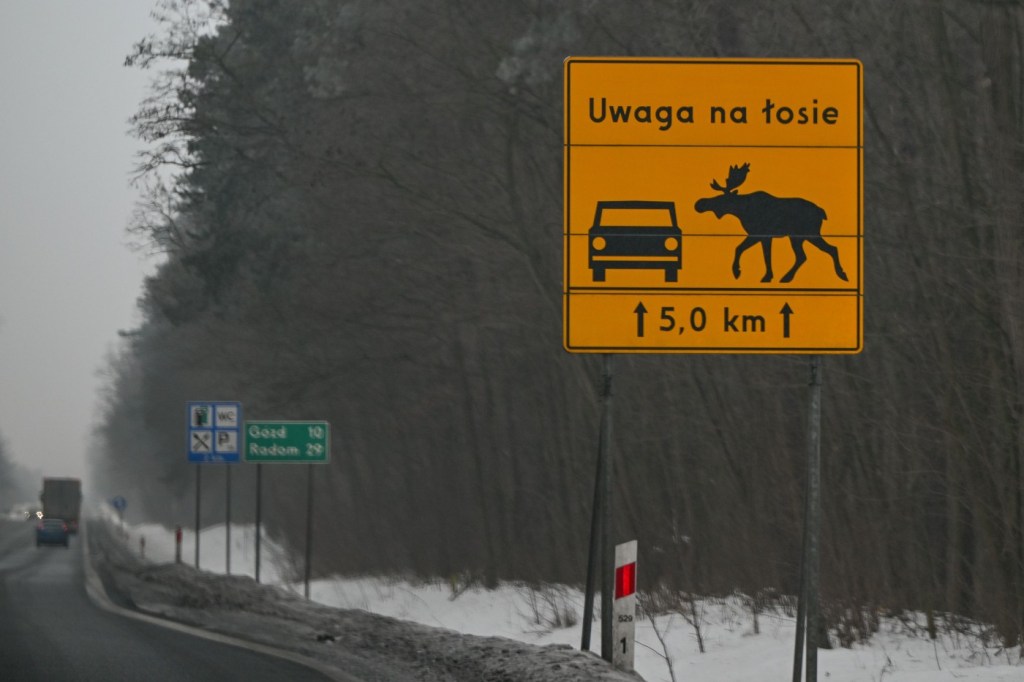
The negative impact could occur mainly on roads, as sometimes happens in Scandinavia. “Drivers will have to be more careful. Otherwise, it's not too bad.” And on forest hikes, nature lovers might have encounters with these animals.
“Accidents can happen if you run into a doe with cubs, but that's true of almost any large mammal. We know what happens to the bear, we know what happens to the wild boar. The moose are probably less dangerous than the bear in that regard, and they generally avoid human settlements,” says Iftime.
The positive impact could be felt at the ecosystem level. “Every herbivorous species contributes to the ecological dynamics of the forest. It's hard to predict exactly what happens, but I'll give you an example from the United States. In Yellowstone, after the reintroduction of the wolf – extinct for almost 100 years – it put pressure on the big deer. It didn't make them disappear, but it reduced the pressure they put on the shoots of some tree species. Thus, the vegetation recovered and certain types reappeared It's an example of a cascading ecological effect.”
Since it is a species that existed in the past on the territory of Romania and disappeared due to man, this initiative must be seen as one of renaturation, not the introduction of an exotic species.
“Some locals from Moldova were really scared”
Regarding the authorities, the biologist believes that information and education campaigns should be initiated. “People need to know what it is, not to be scared and not to react impulsively. The moose looks a little strange when you first see it. In the 70s, some local people in Moldova were even scared, because it seemed to them a bizarre animal. It is important not to be provoked or suddenly. If it is seen, the forestry department or organizations dealing with nature protection should be notified. At the same time, a long-term plan is needed for the management of this species. From since there is already a reintroduction project, moose should be included in a long-term environmental strategy,” says Iftime.
The recent success of the reintroduction of some extinct species from Romania's fauna – such as bison, beaver or, more recently, gray eagles in the Rucăr area – could be a good sign for moose as well. The biologist remains cautious, however.
“Our ecosystems are under a lot of pressure, both from human activities and from climate change. There has been a severe drought for several years, and even though this winter has snowed and rained more, I'm afraid that the water deficit has not been recovered. In some ways we are better off, but we mustn't lie on our backs. In nature conservation they say that victories are temporary and defeats definitive”, claims Iftime.
What we should know about moose
- the moose (Alces alces) is the largest deer species in the world.
- The animal appears drawn in cave paintings over 5,000 years old, a sign that it was very widespread in Europe.
- In Romania it lived until 200 years ago, especially in areas with dense and humid forests.
- The horns of the males can reach up to about 1.8 meters in width.
- It is an excellent swimmer and can cross wide lakes or rivers.
- It often feeds on aquatic plants, entering deep water to gather them.
- It is a solitary and relatively quiet animal, avoiding contact with people. Moose can travel hundreds of kilometers in search of new territory. It is usually young males that leave areas with high populations to colonize other regions.


