Article by Andrei Crăiţoiu – Published Monday, 09 March 2026, 10:32 / Updated on Monday, 09 March 2026 10:33
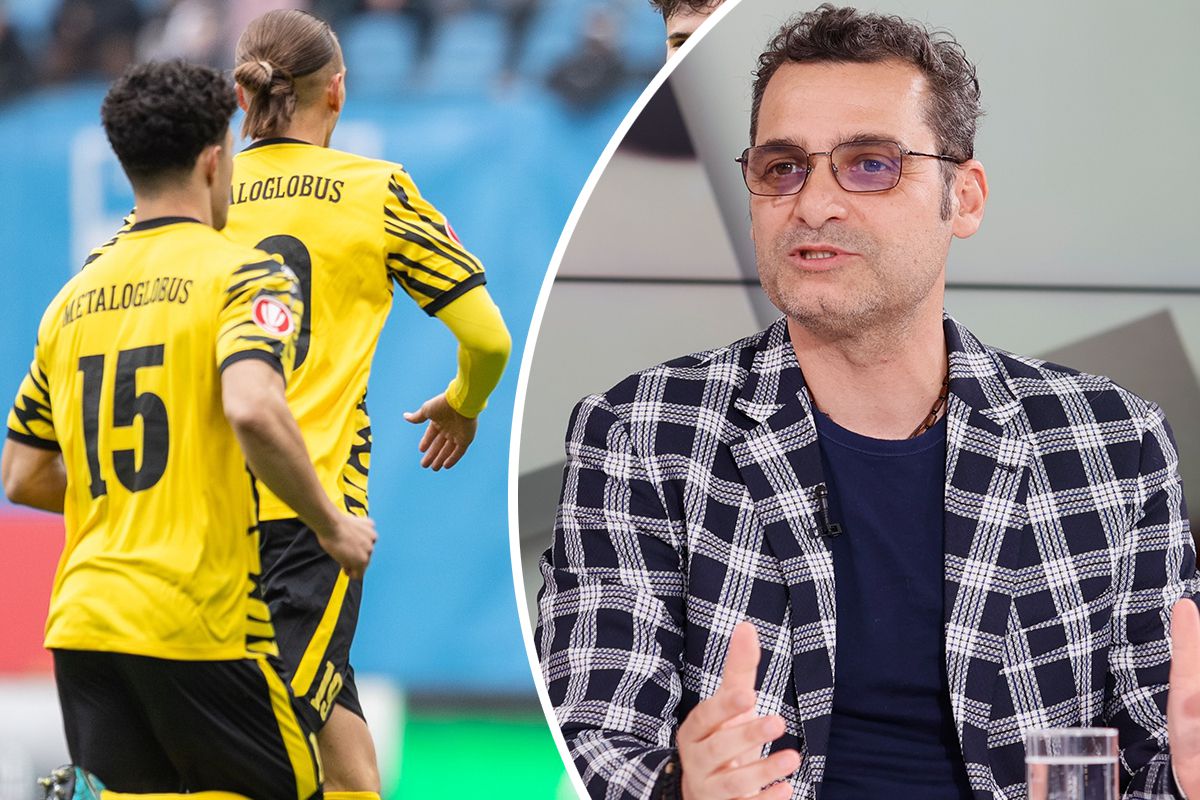
Mihai Teja (47 years old), the guest of the show “Prietenii lui Ovidiu” which is to be broadcast in its entirety, on Wednesday (March 11) speaks openly about the separation from Metaloglobus and about the backstage of a club that tried to survive in the first league with salaries of 1,000 and 3,000 euros, but with decisions made, sometimes, over the coach's head.
The technician says that the team “didn't play badly”, and even played solid matches against opponents such as Dinamo, Rapid, Craiova or FCSB, but the lack of a clear strategy and the interventions of the management decisively weighed the disaster of the last months.
In the dialogue with Ovidiu Ioanițoaia, Teja explains why Metaloglobus was drowning on the shore, how the transfers were made to the club patronized by the Syrian businessman Imad Kassas and why the conflict with the president Marius Burcă became inevitable.
VIDEO. “I was playing well, but for victories you need more than the game”
– Mr. Teja, Metaloglobus was a team that didn't play badly, played well, but always drowned at the shore. How God did this happen?
– I think we played good matches. And with Dinamo we played a very good match, and with Rapid, at home, the same with Craiova, and with FCSB we played two very good matches. All our games were good from a game point of view. Indeed, to win a match you need many more factors.

– Obviously!
– You don't train for a week and you win next week's game. It all depends on what you propose: how you sleep, how you sleep. That is, planning and the strategy you have from the beginning. To be a match-winning team, you have to prepare this from the summer, with everything that means conditions, infrastructure and methodology.
– You didn't have conditions at Metaloglobus? Is there any way he can escape?
– In football everything is possible. We remember the late Ionuț Popa, when he was in Timișoara. I saved Voluntariul when I took over the team in the winter, with only four points. I also saw Bogdan Andone in Botoșani succeeding in something similar, starting from a very difficult situation.
– And then I wonder why they kicked you out now?
– We have a different mentality, a different education and a different culture in sports. Every time there is the idea that a “shock” must be created. Now I don't know exactly what this shock means, because if things are built right from the beginning, I don't think there is a need for such a thing.
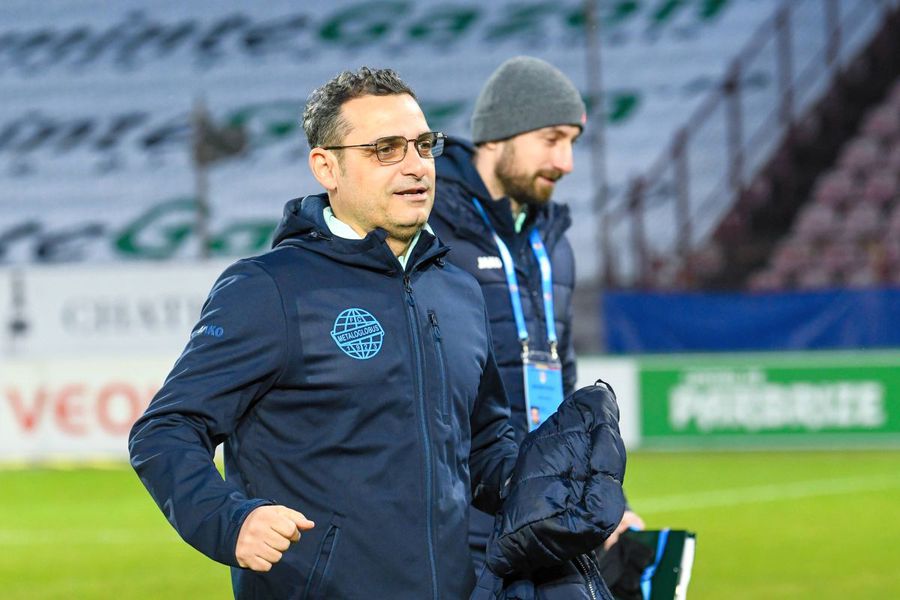
Mihai Teja. PHOTO: Imago Images
– Right, yes.
– It would be natural for things done well. In my view, managers and those who run clubs should think much more carefully both when they bring in a coach and when they decide to change him.
“At Metaloglobus, the average salary was 1,500-2,000 euros”
– I admit that I don't know: what about this team? Whose is it?
– It is a private team of Mr. Imad, a Syrian.
– And what is he doing in Romania?
– He has some businesses, several businesses. He took over the Metaloglobus factory and everything he has…
– What does this factory do?
– For the time being, he is not busy with anything. As far as I understand, it is no longer in production.
– And does this Syrian have enough money to keep a team in the first league? What were the salaries?
– The average salary was, I think, between 1,500 and 2,000 euros. The highest salary reached 3,000 euros, and the lowest were 4,000, 5,000 or 6,000 lei.
– This is not a first league salary, forgive me.
– These are the salaries. Actually, from my discussion with Mr. Imad, when we first met, I told him that we can do beautiful things.
– Does he speak Romanian?
– Yes, he speaks Romanian. He has been here for a very long time, he also studied at the university in Romania. And then I told him that if we want to do something, we have to have at least a budget. He is a very discreet guy, a very OK man, in his place.
– He's a good boy, but he kicked you out.
– There are a lot of people besides the bosses and those with money who dictate. I think there's a problem there too, and that's where everything starts. Because, in football, there are many who are good at it.
“Transfers were made according to salary, not according to value”
– Was the conflict with the president?
– My conflict was with the president of the club. He wanted to do many things, he also wanted to set the strategy. It was not a problem for me to deal with the transfers.
– Did he do them without asking you?
– He made transfers from his point of view, depending on how he saw the players, whether they were OK or not. Analysis of whether a player would be good for our team. Then, naturally, he would ask me too.
– And if you didn't agree, did he give up or did he keep bringing it?
– Don't give up, he was bringing it. A very important criterion for transfers was the salary level.
– Who agrees to come for 1,000 euros…
– Exactly. It wasn't necessarily the quality that mattered, but the salary level.
– What was the president's name? Marius Burca?
– Yes, yes. We had a few fights. I always wanted to make an even better team, like any coach, because I wanted us to succeed and build beautiful things. But we were not on the same wavelength.
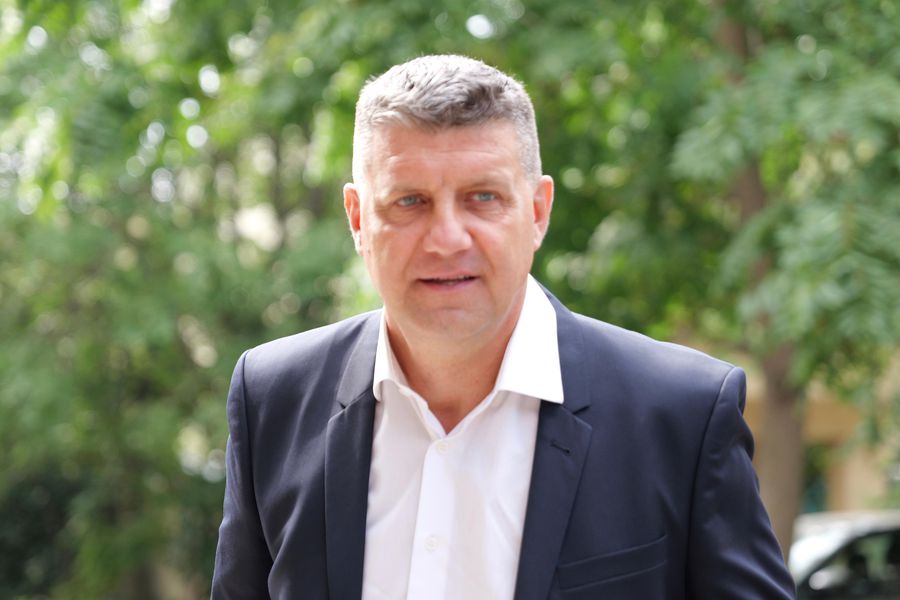
Marius Burcă, president of Metaloglobus // photo: GSP
“There are chances to save. The play-out system can change everything”
– Man, do you think Metaloglobus can escape?
– It's very hard! But after all, there is this halving points system that can help you. You reach six points from Slobozia. It's still six points. I played three play-outs: I won one with Gaz Metan Mediaș, and with Voluntari we were saved thanks to this system. We managed to balance the situation and catch up.
– Yes.
– I saved Gaz Metan in a season in which Astra did not make the play-off for one point and was relegated! We were at Gaz Metan Mediaș then and we were fighting for relegation. In nine matches we had five wins, four draws and one defeat and won the play-out.
– So you say there are chances.
– Chances are. I think there are chances.
– Who is coming after you? Florin Bratu?
– Yes, that's how I saw it too.
– He didn't call you, he didn't contact you to ask: “Hey, Mihai, how was it, what happened?”.
– No, no.
– That's how our coaches are, it's like they're arguing with each other. It would be normal that, when you take a team from a coach, you consult with him, ask him: “How was it, what happened?”.
– I think that's normal too. But in the end, everyone thinks in their own way. He probably saw from the outside what is happening in the team, why things don't work, he got an idea from the statistics and everything he has at his disposal, and then maybe he didn't feel the need to call.