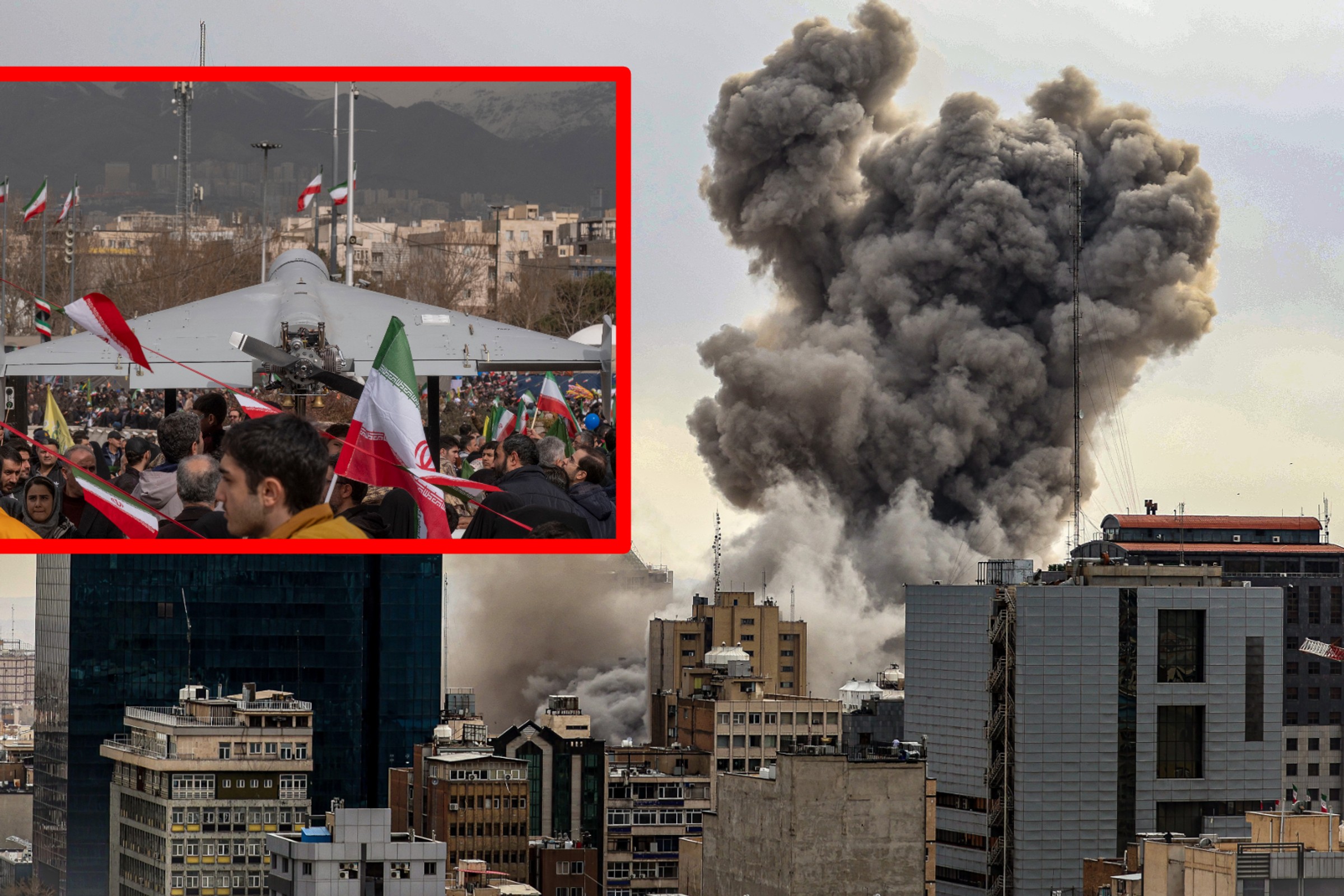
For seven days, Israel and the US have been at war with the mullahs' regime in Iran. Americans and Israelis argue that the attacks are extremely successful and exceed the expectations of political leaders. The combined forces were to destroy as much as 75 percent. Iranian missile capabilities. These include fixed launchers and mobile devices. Moreover, Tehran reportedly lost 73 percent. of its medium-range missiles and more than half of its short-range missiles.
While the statistics are inexorable for the mullahs' regime, Iran's military remains extremely dangerous. Donald Trump threatens that there will be “no agreement with Iran except unconditional surrender.”
But Tehran doesn't care about it and is wreaking havoc in the countries of the region. The targets included, among others: Türkiye, Azerbaijan and even Cyprus. And apparently this is not the end. Iran's announcements are ambitious. The authorities are putting everything on one card because they know they can take risks. They can, because they have just found a way to the West. If he doesn't get organized in time, Washington may be in trouble.
The data presented by the US and Israel becomes even more reliable when you look at recorded Iranian missile launches day after day. According to the American think tank “JINSA”, the mullahs' regime used 504 rockets on the first day of the war, 132 on the second day, 117 on the third day, 33 on the fourth day and 29 on the fifth day. This is a clear trend that confirms the estimated loss of 75%. missile launch capabilities.
The article continues below the video
However, Iran's army is doing quite well. On the one hand, Tehran is trying to exploit the weak points of the anti-missile defense system of its potential opponents. Instead of shooting towards the center of Israel (although there is reliable information that missiles were fired towards Tel Aviv, they break through the Israeli defenses), where 95% is captured. incoming Iranian missiles, the regime fired at neighboring Persian Gulf countries on Thursday.
Tehran also attacks targets, including: in the United Arab Emirates – explosions were heard in Dubai and Abu Dhabi. The Iranian missile also hit a refinery in Bahrain and the vicinity of the American Al-Udeid base in Qatar, which is considered the heart of the US military presence in the Middle East. In turn, the Israeli army is also constantly attacking Hezbollah positions in the capital of Lebanon, Beirut.
Iran is looking at Russia
On the other hand, the regime is switching from missiles to droneswhich in recent days have been more difficult for many countries to intercept than ballistic missiles. On Thursday, Tehran attacked Azerbaijan with several kamikaze drones, none of which was intercepted.
Off the coast of Kuwait, the mullahs made their first attack using a floating drone packed with explosives and severely damaged an oil tanker. Further attacks occurred on Friday. The Kuwaiti military, in a statement issued a few minutes ago, said: “Kuwaiti air defense forces are currently dealing with hostile missile and drone attacks that have violated the airspace of the State of Kuwait.”
Iran attacks its enemies with drones – just like Russia does Ukraine. The Persian Gulf countries neutralize them with expensive missiles that may soon run out. Everything indicates that these countries will knock on Europe's door and ask for help.
War in the Persian Gulf is already a struggle for resources, the outcome of which may ultimately depend on economic factors. However, this does not automatically mean that the victory of the West and its allies is certain. Gaps in the region's air defense may prompt regional countries to push for a quick end to the conflict. Or putting additional pressure on Europeans to get involved in the conflict.
I’m Ashley Davis as an editor, I’m committed to upholding the highest standards of integrity and accuracy in every piece we publish. My work is driven by curiosity, a passion for truth, and a belief that journalism plays a crucial role in shaping public discourse. I strive to tell stories that not only inform but also inspire action and conversation.