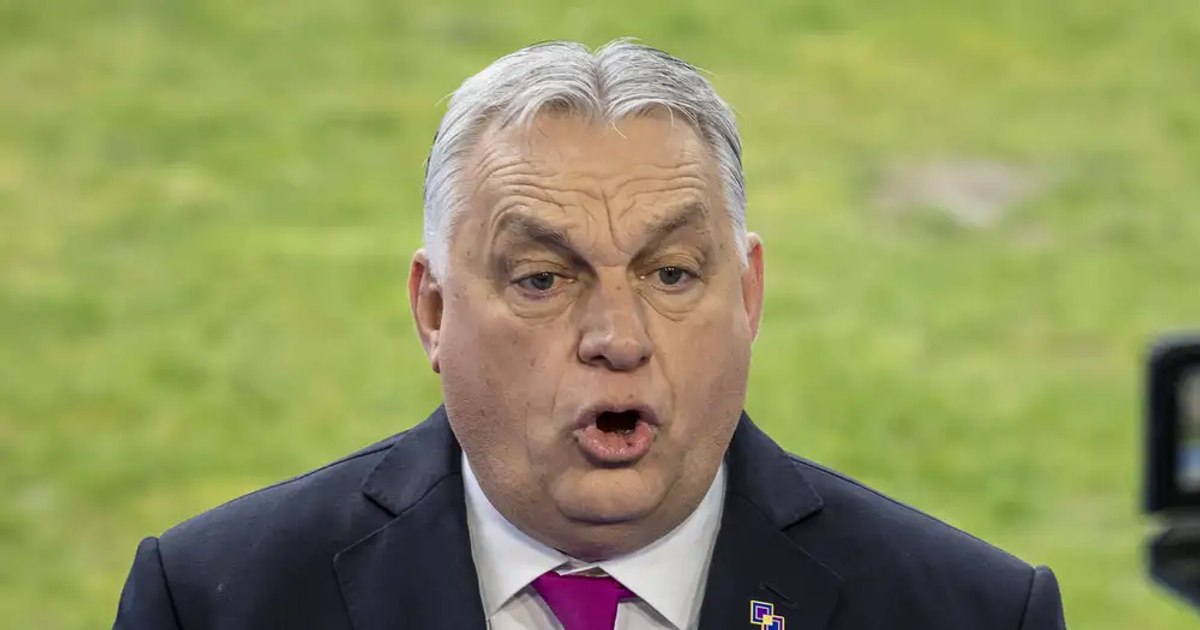
The polls predict the victory of the opposition party Tisza, the situation for Viktor Orbán is serious. Now the Hungarian prime minister is warning of Ukrainian attacks and sending the army to guard energy facilities.
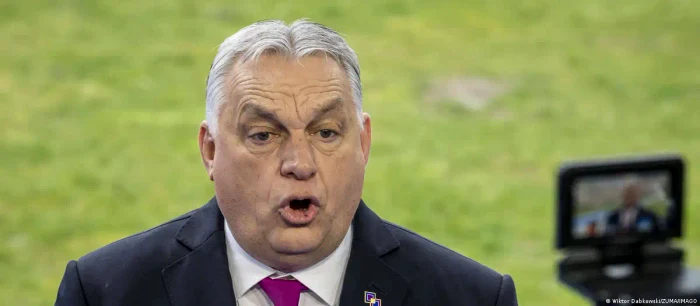
Viktor Orbán is no longer certain of victory in the April elections
It hasn't been long since Hungarian Prime Minister Viktor Orbán was overflowing with confidence. His party, Fidesz, was – he repeated in almost every speech – the most successful political formation in Europe. Electoral victories with two-thirds of the votes were “visible from the moon”. Furthermore, he was announcing his governing ambitions well beyond the end of this decade.
Meanwhile, however, in public appearances, Orbán has often appeared uncertain for some time. Sometimes he speaks incoherently, sometimes he implores his supporters, in a fragile voice, to put everything in the service of his electoral victory, and sometimes he starts stuttering. After 16 uninterrupted years as prime minister, something is becoming increasingly apparent: Orbán sometimes appears like an aging autocrat who feels the public mood is turning against him but who clings stubbornly to power.
With just over six weeks to go before Hungary's parliamentary elections on April 12, it's far from certain that Orbán and Fidesz will actually lose power – but growing polls suggest so. At the same time, more and more observers are wondering whether Orbán would accept an electoral defeat. So far, the prime minister has avoided giving a clear answer to the question of whether he guarantees a democratic alternation in power.
Accusations against Ukraine
Now, Orbán is amplifying fears that he will not accept a change of power even further: on Wednesday night (25.02.2026), he announced in a Facebook stream that he had ordered units of the Hungarian army to be deployed to energy installations in the country. He accused Ukraine of “preparing actions with the intention of disrupting the functioning of the Hungarian energy system.” In order to prevent Ukrainian attacks, in addition to soldiers, military personnel from the defense system, as well as police units, would be stationed at the energy installations. Orbán has not presented concrete evidence for his accusations against Ukraine.
In the context preceding the order on the deployment of the army is the fact that, since the end of January, Russian oil has stopped flowing through the Drujba pipeline to Hungary. The pipeline crosses Ukrainian territory and was badly damaged in January near Brody in western Ukraine following a Russian attack. There is no definite information on the extent of the damage – the Ukrainian authorities say that the repairs of the pipeline will take more time.
But Orbán accuses Ukraine of intentionally not wanting to supply oil to Hungary, in order to cause an energy crisis in the country and to “install a pro-war and pro-Ukrainian government” in the elections. The objective of such a government would be, according to Orbán's current election campaign, “to financially extort the Hungarian people to finance the war in Ukraine.”
Important advance for Tisza
Hungarian opposition politicians and many commentators are now alarmed. They see Orbán's order for military intervention as a step towards disrupting the election or even possibly canceling it. This is all the more so since, just a few hours before, the results of a new poll had been published predicting a severe defeat for Orbán and his party.
The survey comes from Median, an independent institute and considered relatively reliable in the field of public opinion research. It shows an 11 percentage point lead for the opposition party Tisza among the general electorate and even a 20 point lead among those who already say they will definitely go to the polls.
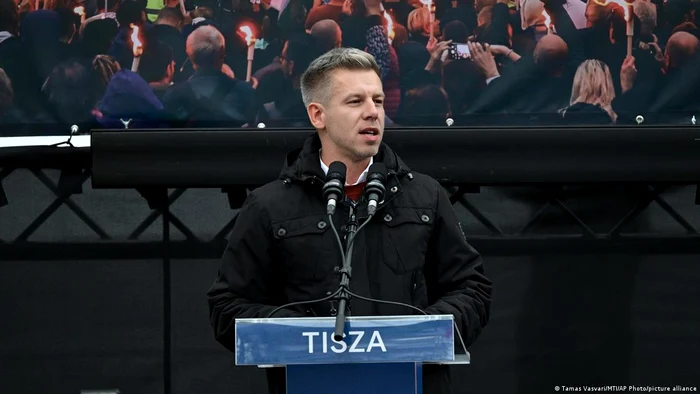
Hungary's opposition leader Peter Magyar speaks at a rally of his Tisza party
Hungary's opposition leader, Peter Magyar, warned after Orbán's order to deploy the army of a possible false flag operation, that is, staged attacks that could serve as a pretext for Orbán's government to disrupt or even cancel the election. He asked Orbán to “hand over power peacefully” and “not to think about solutions of the Russian secret services”.
Political scientist Andras Biro-Nagy said in an interview with the Telex portal, referring to Orbán's order on the use of the army: “We don't know what Fidesz would be capable of in such a pressure situation.”
The prime minister could face charges
For some time, election observers in Hungary have been discussing whether or not the long-time prime minister would accept a change of government. The reasons are good: Orbán's obsession with power has been known in Hungary for decades. He commented on his electoral defeat in 2002: “The motherland cannot be in opposition.”
Since then, Orbán considers himself and his party as the only legitimate representatives of the Hungarian nation – all others are enemies or traitors. This is also the tone of his current election campaign, in which his opponent, Magyar, is presented as a tool of Kiev and Brussels, and his victory would lead, according to Orbán, to the collapse of the Hungarian nation.
“National cooperation system”
But everything also has a concrete material dimension for Orbán and his power structure. The prime minister has built a system in which a circle of family members and close businessmen have become billionaires through abuse of office and corruption, and tens of thousands of ordinary party members and Fidesz sympathizers enjoy positions and financial advantages.
This “system of national cooperation,” as Orbán calls it, would largely collapse if he were to lose power. Both the prime minister and members of his family and inner circle could face investigations and charges.
Therefore, “nothing is excluded and nothing is unimaginable” in the context of the elections, summarizes electoral studies specialist Robert Laszlo in his forecast for the coming weeks. On DW's Hungarian-language “Campaign Noise Filter” show, he says it's just as possible for Orbán's government to cancel the election as it is for the country to be engulfed in national unrest if an election that reflects the popular will is canceled.
Support from Moscow
And Ukrainian political scientist and right-wing extremism researcher Anton Shekhovtsov believes it is possible to cancel the elections. A direct falsification of the vote, as in Russia or Belarus, Orbán could not afford, writes Shekhovtsov in an analysis published on the author platform Substack. In Hungary, however, there are indications of a scenario in which the election would be annulled due to “foreign interference” – specifically, due to the alleged interference of Ukraine.
The political scientist points out that Orbán has been benefiting from at least verbal support from the Kremlin and some circles of the Russian secret services for a long time. Budapest and Moscow would have joined forces, notes Shekhovtsov, to fix in public opinion a disinformation narrative that “the EU and Ukraine are collaborating, together with Orbán's main political rival, Peter Magyar, against Fidesz.”
Meanwhile, Orbán's chancellor minister Gergely Gulyás tried to allay any fears about the use of the military in Hungary at the government's weekly press conference on Thursday (26.02.2026). A state of emergency will not be imposed, Gulyás said, and the April 12 election will take place.
Keno Verseck – DW