Nvidia, the unstoppable engine of the AI era, defies skepticism. Record profits and forecasts that shatter market expectations

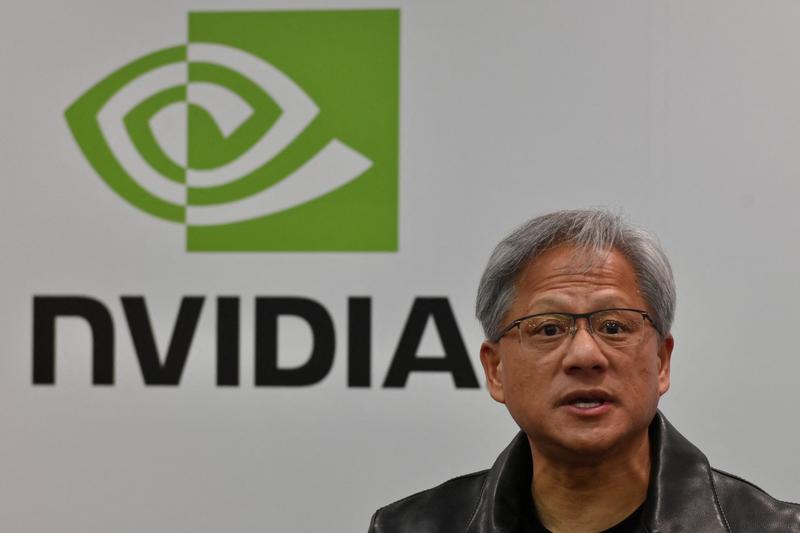
Chipmaker Nvidia on Wednesday posted better-than-expected results for the fourth quarter ended in January and forecast current-quarter revenue above market expectations, betting on “exponential growth” in spending by major tech companies for its artificial intelligence processors, Reuters and AFP note.
Nvidia, record figures
The tech giant reported record annual revenue of $215.9 billion despite investor skepticism about the huge sums spent on AI technology, the BBC writes.
Nvidia is the most valuable publicly traded company in the world, with a market value of approximately $4.8 trillion.
The company also beat analysts' forecasts, with sales in the final three months of the financial year up 73% on the trailing 12 months.
Net profit amounted to $42.96 billion, up 94% from the previous year, according to a statement from the American giant.
Even though competition is intensifying, with the emergence of AMD, but also Google and Amazon, as well as smaller players specializing in certain tasks, Nvidia remains the barometer of the AI sector, considered the best indicator of its trajectory.
“Exponential Demand”
Its graphics processors, called GPUs (graphics processing units), which have become the backbone of the global artificial intelligence boom, remain by far the most in demand, writes France Presse.
“Demand for computing is growing exponentially,” Nvidia boss Jensen Huang said. “Our customers are rushing to invest in AI computing, the factories powering the AI industrial revolution and future growth,” he pointed out.
Aware of the densification of the market, but also of the industry's insatiable appetite for AI and cloud computing, Nvidia is constantly accelerating the pace of its product development.
Thus, at the beginning of January, the group launched the production of Rubin, its latest generation of GPUs, less than a year after the market launch of the last version, Blackwell.
Time for “AI Agents”
While supplying chips to companies in the artificial intelligence sector, Nvidia has in recent weeks drawn up plans to generate demand with new technologies of its own.
“The tipping point of AI agents has arrived,” Huang also said, referring to the emergence of agents, artificial intelligence interfaces capable of performing tasks autonomously on demand.
Huang told Fox Business that the artificial intelligence boom has only just begun and is nowhere near its peak, and predicts that AI “will be everywhere” as the industry enters a decade of growth.
Because agents are “working for you for minutes, even hours,” Jensen Huang recalled, they need to use CPUs to a much greater extent than for a simple ChatGPT query.
“Continuous Acceleration of Investments”
As a result, “the computing power required is a thousand times greater than before,” he said, which should lead to a continued acceleration of investment in all computing infrastructure, from chips to data centers. The group expects, moreover, a turnover of 78 billion dollars, “plus or minus 2%”. If the target were to be met, this would represent a 77% year-on-year increase.
“Nvidia has once again exceeded forecasts, and with the additional billions they (the AI and cloud giants) have committed to spending, demand for (the group's) chips remains solid,” commented Jacob Bourne, an analyst at Emarketer, a market research and data analytics company.
While noting that these big names in AI and cloud are looking to diversify their supply and are increasingly turning to competitors Nvidia, the specialist pointed out that the latter is currently trying to diversify beyond data centers.
Still at the top of the world market capitalization rankings, Nvidia still remains quite far from the highs recorded at the end of October.
“There will always be questions about the potential of the AI spending wave to last beyond the next few years,” said Matt Britzman, an analyst at Hargreaves Lansdown, the UK's largest investment site.
The head of Nvidia is not afraid that American technology will be used by China
After an early rally, Nvidia shares were down nearly 1 percent in electronic trading after the close on Wall Street.
However, according to Britzman, “(analysts') revenue estimates for 2026 and 2027 are clearly too low, and we expect a number of upward revisions based on these numbers” released on Wednesday.
Nvidia says it doesn't expect any revenue from the Chinese market, despite US government approval to sell some of its chips, which aren't the best in its range.
But the imposed conditions would have made exports difficult, according to US media, while Chinese authorities intend to allow them to enter their territory only in very small quantities, wanting to see the development of the national industry.
Nvidia boss says concern that China will use US technology to develop its artificial intelligence industry is “unfounded”.