Boredom, “fuel” for the brain. 5 clever strategies parents can use to encourage children to play on their own

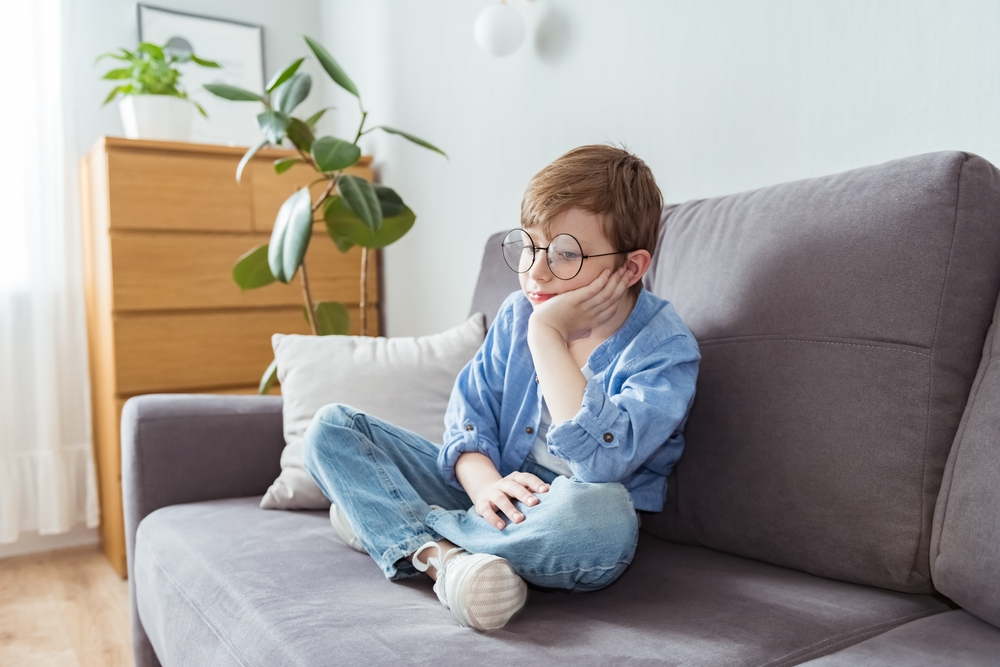
Often when parents hear their children whine about being bored they tend to become irritated, frustrated or feel guilty. “How can you get bored? You only have so many toys!”, “When I was your age, I would play for hours without getting bored!”. Or: “Are you bored? Come on, I have a list of household chores that need to be done!”. Giving kids a list of activities to follow or letting them fend for themselves are options that don't work, parenting experts point out. How to turn boredom into something positive.
After more than a decade of experience, Lizzie Assa, an education expert and author of the book But I'm Bored, claims to have identified a behavioral pattern of parents: when they hear that their children are bored, parents either give them a list of activities that can be done or leave them to fend for themselves.
None of the options work, the author believes: “The first option creates addiction, and the second is perceived by children as a rejection.”
The truth is, says the education expert, that we cannot and should not, as parents, entertain our children constantly. Over-involvement only leads to parental burnout and deprives children of the opportunity to acquire those skills essential to their development.
The expert proposes five approaches for parents to try to encourage independent play.
- “I have a few minutes! Can you tell me more about X topic?”
The first question parents should ask themselves when their children complain about being bored is whether they really connected with them that day, invites the expert.
But not a connection like: “look, I made you a package for school!” or “I told you to go brush your teeth”, but a real connection, with eye contact and 100% presence.
I mean, “I heard you laughing pretty hard on the X show this morning! What gave you so much fun?”.
Many children are used to being told what to do and how to do it, so when they are deprived of this guidance, they feel lost. Sometimes that “I'm bored!” it means, in fact, that the little one needs its parent, that it cannot do without him.
A reconnection with the child helps the child feel more emotionally comfortable and confident about playing alone.
- “I wonder if your body needs anything first!”
Not infrequently, when the little ones show signs of boredom, in fact, their body signals that they are missing something essential. Like rest, food, exercise or have an emotional problem at the moment.
So it is useful that, before redirecting them to play, parents ask themselves: when was the last time the child ate? Or if they woke up early in the morning and didn't sleep during the day.
Or maybe he's been indoors all day and would like to go outside. Sometimes “I'm bored” means to the little ones “my blood sugar is low” or “I'm exhausted and I don't know how to relax”.
- “You don't really want me to tell you what to do, do you? I could, but it would most likely be about chores or other boring stuff”
This phrase is playful, takes the pressure off, and assumes they already know what they want, they're just indulging. Plus, in this way the scenario is reversed: the child is the one who refuses help, not the one who is refused help.
- “I suggest you think about this: do you feel like doing something you've done before or trying something new? Once you find the answer, it will be easier!”
This approach works because it gives them a framework for collaboration. The parent invites the child, does not solve the problem for him. It teaches the child to ask himself, in fact, what he feels like doing, to identify what he wants.
Over time, his problem-solving skills will improve. They will learn to say, “I'm bored! Okay, but do I want to do something I already know or try something new?”
Maybe I could rebuild the ship I made last week, but I'll make it bigger, add another mast!”
- “It's difficult, I understand! You don't know what to do next. It might take a while to figure it out”
This strategy lets the child understand that the parent is aware that boredom creates a state of discomfort for him that he has to live with for a while. Children need to learn that boredom is not a crisis that needs to be solved urgentlythat it is ok to be bored and that this boredom forces you to find within yourself the resources to overcome it, to generate a purpose from within yourself, without turning to television, toys or electronic devices.
The parent can say to the child: “look, I have to pack this laundry” or “I have to prepare dinner, but I'm here by your side if you need me!”.
In this way, the parent does not leave the child alone with his feelings but gives him space to manage them, with the benefit of his constant presence.
Boredom develops tolerance to less pleasant experiences
Children complain that they are bored, but boredom can actually help them develop skills, creativity and self-esteem, says psychologist Stephanie Lee, for Child Mind Institute.
First of all, the expert claims, boredom develops children's tolerance towards less pleasant experiences.
“Life puts us in a position to manage our frustrations and regulate our emotions when things don't go the way we want, and boredom is a great way to teach children this skill,” the psychologist believes.
Boredom also helps children develop planning strategies, problem-solving skills, flexibility and organizational skills.
All of this is very helpful, points out Jodi Musoff, an education specialist at the Child Mind Institute, because children aren't usually the ones who plan their daily activities: “And when they have a project to do to fill their time, they have to come up with a plan, organize their materials, and solve problems,” adds Musoff.
How can parents do this? First, boredom must be combated proactively.
When a child says “I'm bored,” that's code for a number of different things. They could be hungry, wanting attention, curious about what the parent is doing, or looking for something to occupy their time.
While it is important for the parent to consider why the child is really complaining, it is equally important to pay attention to the child's reaction.
Because if he leaves everything alone to give the child his undivided attention, then he will never learn how to have fun on his own. Or if the parent will always struggle to find activities for the children when they ask, they won't have the chance to come up with their own ideas.
“Instead of being reactive, it's better to be proactive with kids about the options they have,” Lee invites.
To anticipate complaints, the expert suggests that parents set aside time to create a list of activities that children enjoy, but also one with challenges and long-term projects.
“Ideally, you should combine your ideas with your child's. To start, you can discuss what he has enjoyed in the past, new things he is interested in learning, and ways to use things you already have around the house. Use the list to create an activity chart (with pictures for younger children) that can be consulted in moments of boredom,” says the expert.
Activity suggestions for younger children
Breakfast or picnic with teddy bears
Hunting insects or in nature
Build and play in a fortress
Lego or other construction toys
Puzzles
Coloring or crafting project
Calling a relative on the phone
Activity suggestions for older children and teenagers
Board games
Drawing or other artistic projects
Reading a book from a favorite series
Starting a garden or other outdoor project
Creating a podcast or website
Learning a dance on a social network
Practicing sports skills