
In 2027, ten years will have passed since the adoption of the Capacity Market Act. Four years later, the first auction was held to select the beneficiaries of this support system – power plants receiving remuneration for their readiness to provide power when the system needs them. Currently, in February 2026, we have already finished the last main auction, so it is time for the first summaries. In the latest publication, they were undertaken by Forum Energii analysts. Their conclusions are simple – the capacity market costs us a lot and requires changes.
The rest of the article is below the video:
Read also: Energy in winter passes the test. Neither coal nor renewable energy sources can save us
The capacity market is intended to protect against blackouts
What is the capacity market anyway? Somewhat contrary to the name, it is about public aid, and not the fully free operation of the “invisible hand” directing demand and supply, away from state intervention. The entities covered by it earn money not on the energy sold, but on the readiness to produce it if necessary.
For Polskie Sieci Elektroenergetyczne, i.e. the transmission system operator, this is an essential guarantee of the availability of controllable sources – those that can be relied on in the event of a shortage of production from renewable energy sources. In other words, the capacity market is primarily intended to protect against the threat of blackout.
The emergence of the capacity market and the development of renewable energy have a lot in common; cheap production from wind and solar began to displace more expensive electricity from conventional coal or gas power plants.
However, since we still need them to guarantee uninterrupted supplies regardless of the weather – and in the case of gas stations, we are even building new ones – it was necessary to come up with another way to ensure income for them. Auctions are organized by Polish Power Grids and there is price competition during them.
That's it in the most general terms – the details become more confusing and problematic. The study by Forum Energii reminds that there are main auctions on the capacity market, where most of the so-called capacity obligations (in contracts concluded for a maximum of 17 years), additional auctions (a year before deliveries, contracts are concluded quarterly) and supplementary auctions (intended primarily for the oldest and most emissive coal units, thanks to the concession negotiated by Poland in the European Commission, they can offer support until a maximum of 2028), and one extra-time auction has also been held so far. The last main auction in December 2025 is behind us, all the remaining auctions will last until 2030. Ultimately, the capacity market in its current shape will be valid until 2046, when the last concluded contracts expire.
Capacity market. Cheaper than blackout, but still too expensive?
Experts have calculated that the total cost of the system (together with estimates of the costs of auctions that have not yet taken place) in the years 2021-2046 at current prices is PLN 187.9 billion. PLN 95.1 billion (50.7% of the costs) will go to natural gas power plants, PLN 49.2 billion is the total for hard coal sources (26.3% of the costs), and PLN 30.1 billion (16% of the costs) will go to energy storage facilities. The rest of the beneficiaries are foreign entities, industrial plants declaring their readiness to reduce the demand for electricity (as part of the so-called demand services – DSR) or minor water or biomass sources.
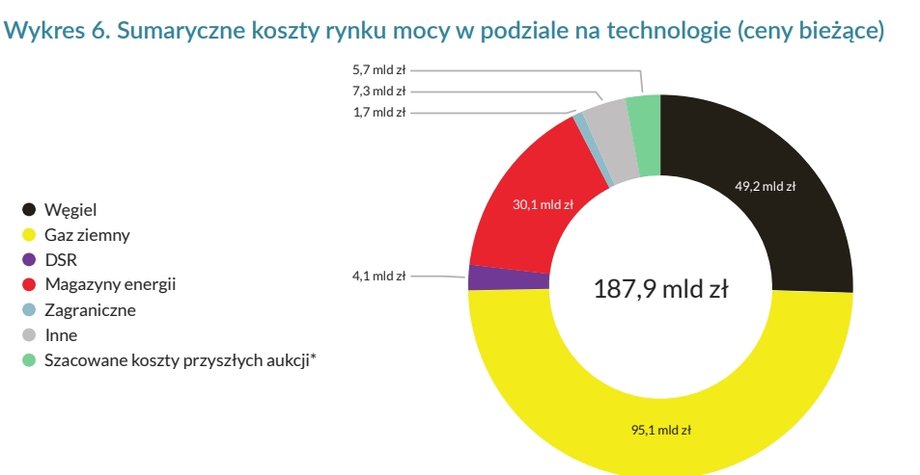
Capacity market costs
|
Energy Forum / Energy Forum
Read also: Will reducing demand save the network? How DSR services can help
– Compared to the alternative costs of a blackout, this is not much. However, if we take into account how much energy costs in Europe and how much in the USA or China, we cannot afford not to optimize this support – commenting on the amount of less than PLN 188 billion, Jędrzej Wójcik, manager of the Power Engineering program at Forum Energii and co-author of the analysis, said at a meeting with the media on February 23.
Remuneration for capacity market beneficiaries comes from fees that are added to energy bills. As summarized by Forum Energii, in 2026 the capacity fee for households in the amount of PLN 17.2 per month (compared to PLN 11.4 last year) constitutes 8.1%. the entire amount of the bill. According to different rules, it is paid by entrepreneurs for whom the fee is charged during peak demand hours, i.e. from 7:00 a.m. to 9:59 p.m. on working days, and constitutes 10.1 percent. (in the SME sector) or 14.7 percent bill (in industry, although energy-intensive plants with a constant consumption profile can benefit from significant discounts).
Blackout insurance. Can it be cheaper?
Therefore, our settlements contain a kind of “blackout insurance” hidden. In the years 2021-2026, it mainly benefited existing coal units, which received approximately ¾ of the funds from the capacity market, while currently the main beneficiaries are the gas-fired power plants under construction and planned. In Wójcik's opinion, we have moved from the stage of “cementing the system” to “investments in the future energy sector”, which will bear fruit mainly in the 2030s. Support for coal-fired power plants on the capacity market is to finally end in 2035. Gas, however, will remain at least until the end of 2045.
The problem is that the gas plants being built are primarily CCGT gas-steam units, which are less flexible and therefore less compatible with renewable energy sources than OCGT turbines, which can be launched faster in the event of a shortage of wind and solar production. For Forum Energii experts, this is not the only problem with today's capacity market – they see it as having more troublesome elements that would require correction.
What are these elements? The authors of the report put forward a strong thesis; as they write, it is not entirely clear what the current capacity market is actually intended for. “Although declaratively this mechanism is intended to support the transformation, in practice it has largely perpetuated the status quo of the Polish power industry by maintaining the operation of old and inflexible conventional units. At the same time, it also favors the construction of new gas capacities, while energy storage facilities are of limited importance,” we read.
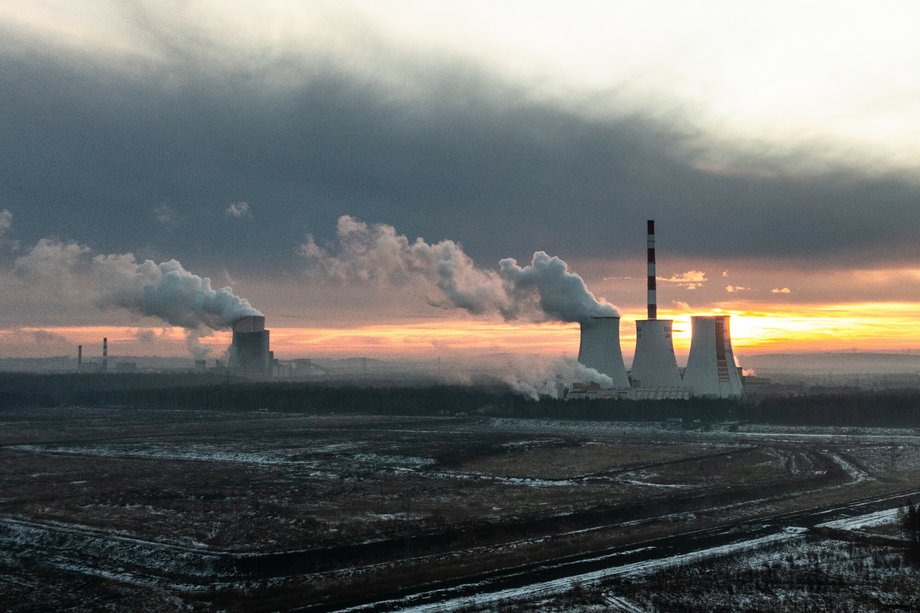
The Jaworzno coal-fired power plant, owned by Tauron Wytwarzanie, receives support from the capacity market
|
Karol Porwich/East News / East News
The capacity market is not transparent?
Therefore, the capacity market today has an “unclear strategic purpose” and generates high costs. Experts add that it does not sufficiently promote flexibility and is not transparent enough. Auction results are published in such a way that it is difficult to tell who actually wins them — although PSE informs about the contracted power levels and the related amounts, it is difficult to assign them to a specific entity.
Among others Due to high costs, Forum Energii also warns against the risk of oversizing. The think-thank suggests that perhaps too much power from conventional sources is contracted in auctions, while the system can also be secured in other ways, e.g. by better integration of the energy sector with other sectors (such as industry or heating) or by increasing the number of cross-border connections.
— Energy security does not end with sufficient power and the presence of available sources. They consist of more parameters – affordability, reduction of dependence on imports of fuels and raw materials, and system flexibility – commented Jędrzej Wójcik. The expert also stated that the existing contracts eliminated the threat of a capacity gap, i.e. a power shortage that would threaten the system.
Does the capacity market need flexibility?
In the opinion of the authors of the analysis, the weakness of the capacity market is also its uncertainty. It comes down to the fact that, depending on their needs, PSE changes the so-called correction availability factor = a fixed amount of power that different technologies can offer at auctions. The energy storage industry, among others, is complaining about changes in this area, which sees the change in the coefficient as a blow to its own competitiveness.
There are more points that, according to the Energy Forum, would require changes; for example, the current rules for calculating capacity fees for industry reward constant energy consumption rather than flexibility, which is desirable in a system with a large number of variable renewable energy sources (e.g. increasing consumption at peak moments of photovoltaic generation).
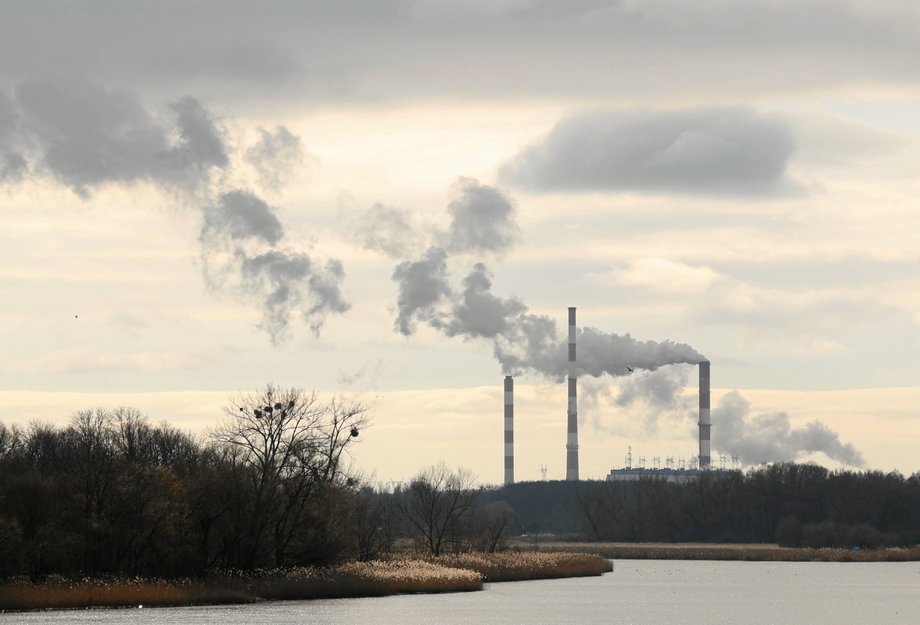
PGE's Dolna Odra Power Plant
|
Photo Cezary Aszkielowicz / Agencja Wyborcza.pl / Agencja Gazeta
Experts appreciate the role of the capacity market in ensuring energy security in the coming years, but they believe that the current model is already exhausting itself, also due to the problematic role of gas, which we should use as little as possible.
Read also: New dependency? “Europe's selective blindness” to American gas
As the president of the think-tank, Dr. Joanna Pandera, said during the meeting with the media, the time has come for a reliable summary of the experience with this mechanism on the part of the operator and the Ministry of Energy. Drawing and summarizing conclusions will help develop a better mechanism in the so-called a new capacity market, which, in consultation with the European Commission, Poland will have to develop for the period after 2030. According to Forum Energii it will be necessary to focus not only on the availability of conventional sources, but also on flexibility – a feature of the system that is becoming more and more important as the energy transformation progresses.


