Will the US attack Iran? This is a turning point for Israel. He's preparing for the worst

Constantin Schreiber is a member of the Axel Springer Global Reporters network, which, in addition to Die Welt, also includes Bild, Business Insider, Onet and Politico.
Financial markets are already reacting. Stock exchanges in the Persian Gulf are losing value, oil prices are fluctuating greatly. Investors fear the escalation of the conflict, which would have global consequences.
Iran's ambassador to Germany also emphasized: “Our country is not a destructive force.” He is ready to talk, but also to defend himself.
The West accuses Iran of seeking to possess nuclear weapons. Tehran denies these allegations and emphasizes its right to enrich uranium for civilian purposes.
The US president, in line with the words of his special envoy Steve Witkoff, is surprised that Iran does not “capitulate” despite the presence of troops in the region and constant threats. The president is “curious” about Tehran's position after it threatened the country with serious consequences if there is no agreement on Iran's nuclear program, Witkoff said Saturday in an interview with Trump's daughter-in-law, Lara Trump, on Fox News.
“I don't want to use the word 'frustration' because [Donald Trump] he knows he has many alternatives, but he is curious why they didn't surrender,” Witkoff said. “Under such pressure, in the face of the naval forces there – why didn't they come to us?” the special envoy said. It is “difficult” to get the Iranian authorities to make concessions.
Israel is preparing for the worst
In Israel, the situation is seen as a strategic turning point. Prime Minister Binyamin Netanyahu calls the Middle East “at a crossroads.” Israel is ready to “respond to any challenge” and cooperates closely with Washington.
Israeli security expert Ori Rabinowitz says Israel would like to finally get rid of the Iranian regime. What does the Netanyahu government not want? — A step that is, in fact, just a slap in the face. This carries the risk of encouraging the regime [mułłów do dalszej agresji] – says. A symbolic attack without strategic consequences may even strengthen Tehransays the expert.
However, if Washington has a plan “that actually leads to significant results” — for example, by putting enormous pressure on (Iran's) leaders or internal changes — then it is likely that Israel will support it.
Simultaneously Preparations for a crisis are underway in the country. According to information from Israeli security circles, Israel and the United States are working on a common defense architecture against possible Iranian counterattacks. Anti-missile and anti-drone defense systems are being deployed in several countries in the region. American fighters in Jordan are also to be prepared for possible drone attacks.
Another concern in Jerusalem: Trump may end up agreeing to a “limited” deal — that is, an agreement covering only the nuclear program, but not Iran's missile arsenal or support for allied militias in the region.
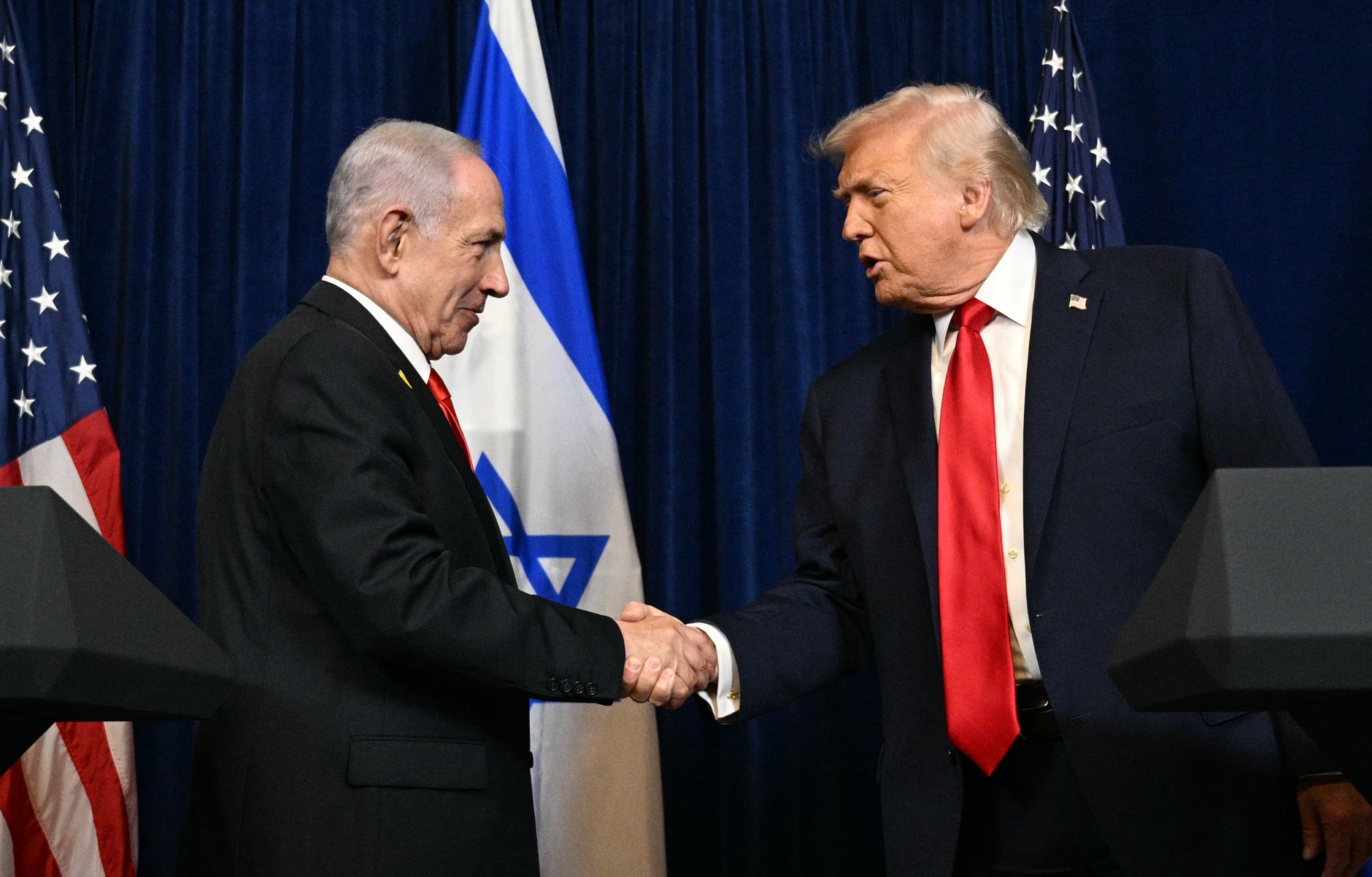
Israeli Prime Minister Binyamin Netanyahu (L) and US President Donald Trump attend a joint news conference at Trump's Mar-a-Lago residence in Palm Beach, Florida, US, December 29, 2025.Jim Watson/AFP / AFP
Tension between the US and Iran. Experts on possible scenarios
While Israel favors a hard line, the mood in many Arab capitals is much more restrained. Countries such as Saudi Arabia, Qatar and Egypt are warning behind the scenes against the spread of the conflict.
Middle East expert Galip Dalay of the Chatham House think tank sums it up this way: many governments want to avoid a war that “could cause even greater turmoil in the region”.
The fear is that in the event of an attack, Iran could attack not only Israel but also American bases in the Persian Gulf — or respond through allied militias in Lebanon, Iraq or Yemen. Possible scenarios include attacks on oil installations or blockade of strategically important sea routes.
Officially, talks on a possible nuclear agreement are still ongoing. However, the closer to Trump's deadline, the greater the pressure.
Security experts warn against escalation of the conflict: a limited attack could trigger massive retaliatory actions. A comprehensive attack could upset the balance of power in the Middle East.