Who is Mother Elisabeta de la Pasărea, from the generation of “decrees” born in communism and canonized by BOR / 16 women from Romania were canonized


List of women that Patriarch Daniel proclaimed on February 6 saints in the Orthodox calendar consists of people covering 500 years of history. From the ladies of Romania, the wives of Neagoe Basarab and Constantin Brâncoveanu, to mother Antonina de la Tismana, who died in 2011, and Elisabeta de la Pasărea, born in 1970.
“The 16 Holy Romanian Women, canonized in 2025 and proclaimed today in the Patriarchal Cathedral of Bucharest, are important spiritual landmarks from the historical past of the Romanian Orthodox Church, who show us, as spiritual mothers of the Romanian people, the path that leads to Christ. They sanctified their lives through humility and love of their neighbor, through their strong faith and confessional courage, through patience with troubles, through hardships and prayer”. said Patriarch Daniel, quoted by the Basilica, in his speech at the proclamation service.
Two nuns who lived until close to the year she was canonized are the list of 16.
Saint Elizabeth of the Bird described by her own living sister
The youngest of the saints proclaimed by the Patriarchate is Saint Elisabeta de la Pasărea. She was born as Rodica Lazar in 1970, in full Ceausist dictatorship, in a family with ten children close to the church. It is the first holy “decree”, the most numerous generation in the history of Romania.
At the age of 15, he decided to go to the Pasărea Monastery near Bucharest, following the gesture made by two cousins. After three years she becomes a nun, taking the name Teodora.
In an interview given to Lumina Newspaper, mother Nectaria, the older sister of Saint Elisabeta, tells that she was a withdrawn person, passionate about the church world.
“She had a very nice start. For example, whenever it was her turn to go milk the cows on our farm, which was about 3 km from the house, she always took Ceaslov with her,” says Mother Nectaria, who currently occupies her sister's cell at the Pasărea Monastery.
After the fall of the communist regime, Mother Teodora goes to Jerusalem for a while, where she works in the Romanian Settlement.
Returning later to the country, in 2003 she made the decision to retire in solitude in the Giumalău Mountain area, in Bucovina, where she lives as a hermit. In 2007 she receives the “great scheme”, that is, she reaches the highest degree in the hierarchy of monks. On this occasion she adopts the name Elisabeta. She died in 2014, and currently her sister, Nectaria, preserves her memory at the Pasărea Monastery. Saint Elizabeth of the Bird is celebrated on June 5.
Antonina from Tismana, born Ilinca Diaconu
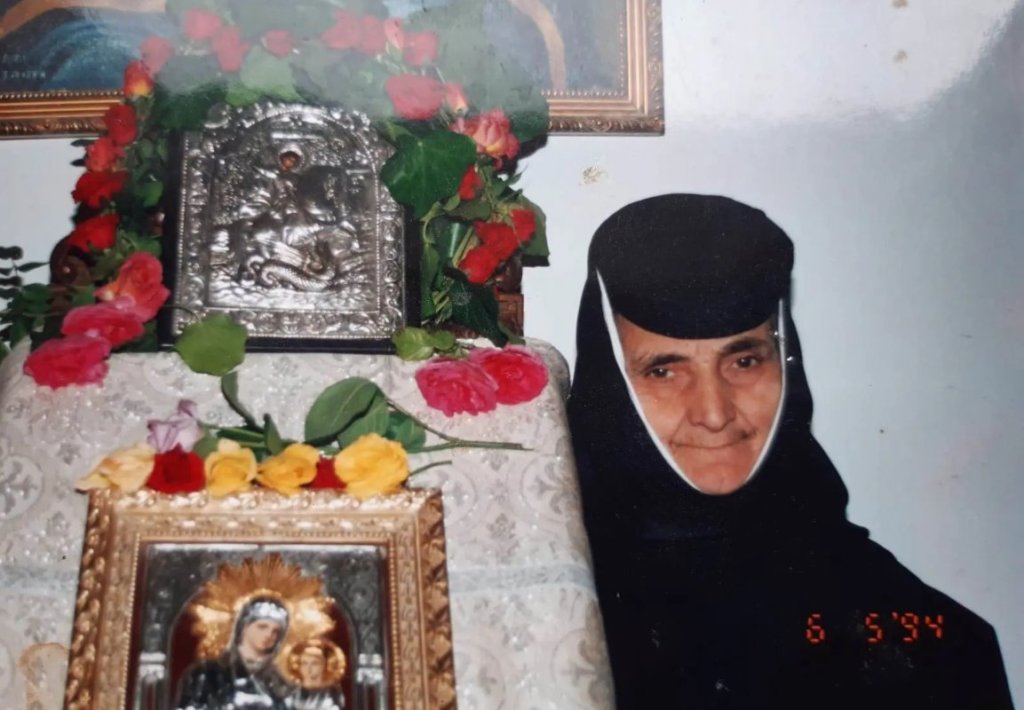
Another saint is Ilinca Diaconu. She was born in 1923 in a farming family. In 1950, at the age of 27, she decided to join the Tismana Monastery, taking the name Antonina. For 40 years he took care of the animals of the monastery.
An article in the Lumina newspaper shows that she remained known for the modesty she had throughout her time as a monk, until she died in 2011. Saint Antonina from Tismana is celebrated on December 23.
The two saints of aristocratic origin
The saints come from different periods and social backgrounds, as the Doxologia website shows. Two of them are from noble vine families.
Saint Pious Platonida from Argeș, whose name was Despina Milița, was the wife of voivode Neagoe Basarab. She came from a line of Serbian rulers, her father, John Brancovici, being the despot of Serbia from 1493 until his death in 1502.
In 1505, Despina married Neagoe Basarab, who reigned in Wallachia between 1512 and 1521. After her husband's death, she became a monk in 1545 in Sibiu, taking the name Platonida de la Argeș. She remained known as a patron of the arts and for the foundations she made together with her husband, who was proclaimed a saint in 2008. She is celebrated on September 26.
Next to her, the other saint with noble origin is Maria Brâncoveanu, the wife of ruler Constantin Brâncoveanu. The granddaughter of Antonie de Popești, who ruled over Wallachia in the 17th century, she married the future ruler in 1674. In 1714, Constantin Brâncoveanu and his four sons were executed in the capital of the Ottoman Empire, the current city of Istanbul.
After the execution, Maria Brâncoveanu was imprisoned and later sent into exile. After three years, she returns to the country and begins the steps to bring her husband's remains, which they secretly bury at the “St. Gheorghe Nou” Church in Bucharest. He lived the last part of his life at the Surpatele Monastery in Vâlcea. Her husband was canonized in 1992, and she is celebrated on August 16 in the Orthodox Christian calendar.
Along with the four women, the BOR proclaimed the canonization of 12 other saints:
- Schimonahia Filofteia Antonescu from Pasărea Monastery (half of the 18th century – 1833), with the title of Saint Pious Filofteia from Pasărea, mother of the Saint Hierarch Calinic from Cernica and honored on April 12;
- The Martyr Nun Evloghia Șârlea from the Samurcășești-Ciorogârla Monastery (1908 – 1949), with the title of Holy Pious Martyr Evloghia from Samurcășești and honored on December 19;
- Măndălina Cătălinici (1895-1962) with the title of Saint Magdalena from Mălainita and with honor on October 15;
- Schimonahia Mavra from Ceahlău mountain (17th-18th century) with the title of Saint Pious Mavra from Ceahlău and with honor on May 4;
- Schimonahia Nazaria, the first abbess of the Văratic Monastery (1697-1814), with the title of Saint Pious Nazaria from Văratic and honored on August 17;
- Schimonahia Olimpiada, founder of the Varatic Monastery (1757-1842), with the title of Saint Pious Olimpiada from Văratic and honored on August 17;
- Olimpia Tănase (1880-1967), mother of Reverend Petroniu from Prodromu, with the title of Saint Olimpia from Fărcașa and with honor on the 4th of July;
- Blandina Gobjila (1906-1971), teacher, deported to Siberia for 15 years, with the title of Holy Confessor Blandina from Iasi and honored on May 24;
- Nun Elisabeta (Safta) Brâncoveanu (1776-1857), with the title of Saint Elisabeta (Safta) Brâncoveanu and with honor on August 17;
- Anastasia Șaguna (1785-1836), mother of Saint Hierarch Andrei Șaguna, with the title of Saint Anastasia Șaguna, mother of Saint Hierarch Andrei Șaguna and with honor on December 1;
- Nun Philotimia Manolache from Râmeț Monastery (1896-1989), mother of Saint Pious Dometie the Merciful from Râmeț, with the title of Saint Pious Philotimia from Râmeț, mother of Saint Pious Dometie the Merciful and with honor on July 6;
- The nun Matrona Ciupelea, abbess of the Hurezi Monastery (1852-1935), with the title of Saint Pious Matrona of Hurezi and honored on May 5.