Japan at a turning point. Its prime minister was given a historic opportunity. Now he can become the architect of a new balance of power


She should also realize that her country has a key role to play as a stabilizing force in a turbulent world. She must be a leader for all of Japan, not just her right-wing loyalists. In short, he must take the risk again.
She received strong credit. Support for Takaichi came from all over the country. The LDP won 316 seats in the 465-seat lower house, up from 198 in the previous term, giving it a two-thirds majority that will allow it to overcome resistance from the upper house, which it has no control over.
Takaichi responded to Japanese voters' expectations regarding both security and the need for change. She offered tough realism for difficult times. It also embodies a break with the old guard. She is a straightforward person from a middle-class background, not a reserved scion of a political dynasty like many of her predecessors. She is also the first woman to lead democratic Japan.
Historic choices open historic opportunities — if Takaichi is brave enough to use them. Most importantly, it is well-positioned to accelerate the transformation of Japan's defense. The late Abe Shinzo, prime minister from 2012 to 2020, began strengthening the armed forces in response to China's assertiveness and America's insecurity. However, the world changed faster than Japan.
Takaichi has already postponed the planned increase in defense spending to 2 percent to the current fiscal year. GDP, originally planned for 2027, but this is still not enough. In any case, simply increasing the budget is only part of the solution. Japan must adapt to the new chaos that has engulfed the world. The prime minister's readiness to break taboos, including talks about nuclear weapons, is a rational approach. She has sensible ideas when it comes to unlocking the defense industry, encouraging defense innovation and strengthening the country's intelligence capabilities.
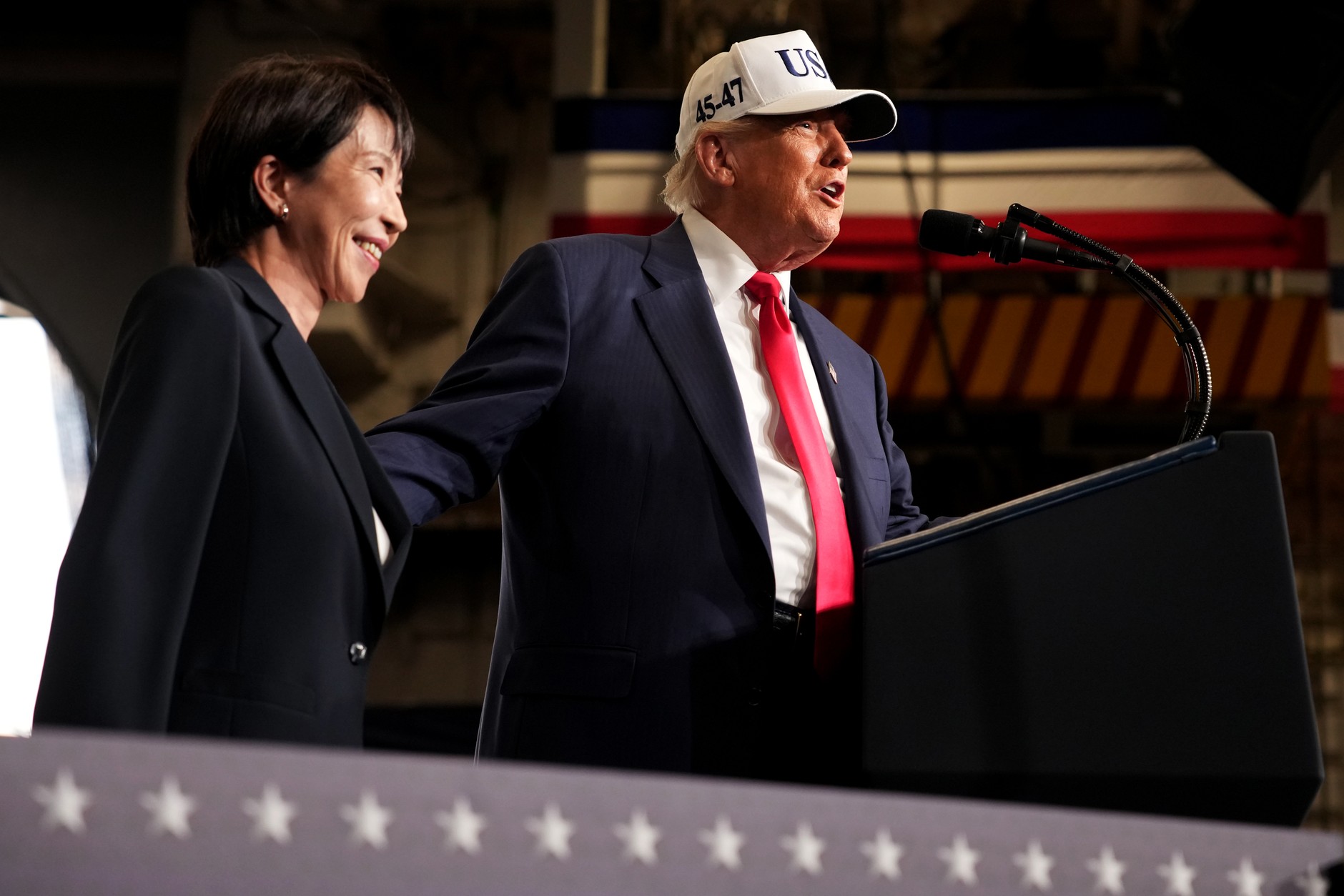
Japanese Prime Minister Sanae Takaichi and U.S. President Donald Trump at the Fleet Activities Base in Yokosuka, Japan, October 28, 2025.Andrew Harnik/Getty Images/Getty Images
This will require enterprising diplomacy. Like other American allies, Japan is concerned about Donald Trump's return to the presidency. However, even more than NATO members, Japan cannot afford to alienate America. It is surrounded by nuclear-armed adversaries in China, Russia and North Korea and for now relies on the US nuclear shield.
Takaichi has done an admirable job of remaining on good terms with Trump (who even endorsed her before the vote). But even if Japan cooperates with America, it should not hesitate to cooperate with other countries, as Abe did by saving the CPTPP (Comprehensive and Progressive Agreement for Trans-Pacific Partnership) free trade agreement after Trump withdrew from it during his first term.
This did not prevent Abe from maintaining warm relations with Trump. This time, Japan should spearhead efforts to merge the CPTPP and the European Union, which would create a trading bloc with more than 30 percent world production.
Challenges in the country
Japan will need to demonstrate global leadership at a time when its resources at home are limited. A shrinking and aging population is a major factor hampering Japan's economic growth. As many other countries are beginning to understand, there are no easy solutions. Families are not a production line that can be easily sped up. Instead, demographic change, like climate change, requires constant adaptation. A decisive election victory gives Takaichi space to make difficult decisions that others have previously avoided.
It should focus on unlocking the potential of the Japanese people and making the country more friendly to new residents. The social security system requires urgent reforms. Companies should move away from rigid employment practices based on seniority towards more flexible systems based on qualifications. Patriarchal family law and tax structures that discourage marriage and condemn women to low-paid work must be abolished.
Japan should attract immigrants, not demonize them. As demand for defense and social welfare spending increases, Japan will need to assure markets that it can finance the needed programs. Now may be a good time to gradually capitalize on overseas assets to help reduce gross debt.
A moment of testing
Will Takaichi be up to this task? She took up the position in October and has not yet been tested. It may misinterpret broad support as consent to pursue its narrow ideological goals. As a staunch nationalist, she can visit the Yasukuni Shrine, which honors the Japanese war dead, including imperial leaders, some of whom were war criminals.
As a supporter of easy fiscal policy, Takaichi could pursue a high-spending program that fuels inflation and causes panic among bondholders. One of the tests will be the populist election promise to suspend the 8% tax on food sales for two years, without incurring new debts. While voters may have believed in such wishful thinking, markets know better. She will have to find a way to finance this gift or give it up.
The to-do list is overwhelming. No wonder the Japanese are concerned. Takaichi asked voters if they wanted her to lead them through these turbulent times. The answer was definitely yes. However, if he wastes his mandate on symbolic gestures and populism, other, more destructive movements will emerge. And Japan will not quickly give the next leader such a huge opportunity.
© The Economist Newspaper Limited, February 12, 2026