Romania is identified as having a potentially important role in Europe's strategy to secure and diversify the supply of rare earth elements, according to the study “EY Rare earths: hidden leverage beneath the surface”, being mentioned as part of a group of countries that contribute to the wider regional potential.
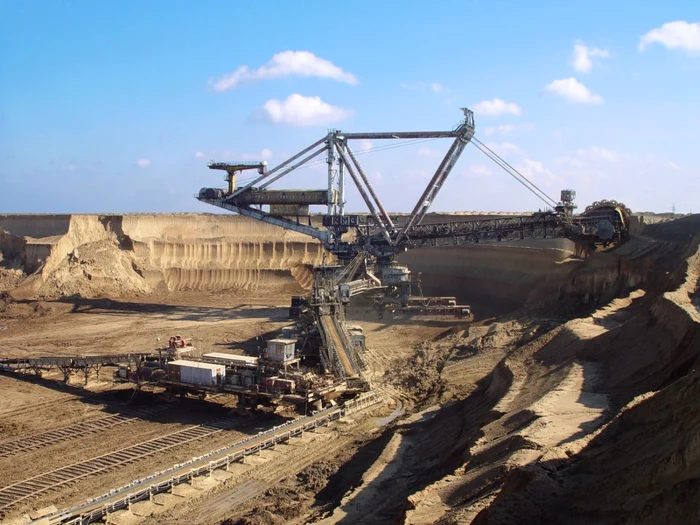
Romania is included in the EU strategy for rare metals. Photo by Shutterstock
But the report points out that access to deposits or resources is not enough to reduce dependence on China, due to limited refining and separation capabilities in Europe. Thus, Romania's role is framed in a regional context, but without highlighting industrial capacities or specific projects that are already operational
The European Union is trying to reduce this dependence through legislative initiatives, such as the Critical Raw Materials Act (CRMA), which aims to reduce dependence on a single third country. The CRMA states that by 2030, the EU must extract at least 10% of its annual requirement of critical raw materials, process 40% and cover 25% through recycling, while limiting dependence on a single third country to a maximum of 65% of the requirement.
The European Commission also highlights the potential of recycling permanent magnets and the need to rebuild European supply chains, a topic also addressed in the official projects dedicated to the global consumption of magnets, semiconductors and other components necessary for electric cars, generically called REE for e-mobility, such as REESilience (Resilient and sustainable critical raw materials REE supply chains for the e-mobility and renewable energy ecosystems and strategic sectors).
In this context, REESilience researchers have analyzed in depth the alternatives to Chinese sources of REEs, assessing for the interval 2022-2035 the evolution of availability, volumes and price dynamics. The analysis is based on a mix of information from specialist studies, industrial data and interviews with experts and takes into account both primary resources, represented by mining operations, and secondary resources, resulting from the recycling of end-of-life products. On this foundation, an extensive database has been built that maps the potential of raw material sources.
In this institutional framework,
Romania could pursue an active involvement in regional initiatives in Central Europe to diversify the supply of rare earth elements, consolidating its role in a strategic value chain supported by the European Union. The European Commission announced a package of 47 mining projects for critical materials in 13 member states, and Romania has three projects in the field of rare earths and critical minerals: the exploitation of graphite at Baia de Fier (Gorj), magnesium at Budureasa (Bihor) and copper at Rovina (Hunedoara), for which approximately 615 million euros are allocated in total, projects declared strategic and aimed at simplifying authorization procedures and access to European funding.
In parallel, at the governmental level, the Romanian Ministry of Energy announced that it had received an offer from the company Critical Metals Corp (owned by European Lithium) for an exploratory agreement with Nuclearelectrica and its subsidiary FPCU Feldioara, which could allow the construction of a rare earth processing plant in Romania, using the concentrates extracted from the Tanbreez deposit in Greenland. In this initiative, the project would allow the processing in Feldioara of up to 50% of the production of those rare earths, aiming at the creation of a top European industrial capacity and the transformation of Romania into a constant supplier for key industries, such as microprocessors, aerospace or defense.
Romania should update the map of critical resources
Romania should adopt a coherent and investment-oriented approach, by launching a national program of geological analysis and exploration, which will update the map of critical resources, fully digitize the geological archives and make available to validated investors a National Atlas of Critical Resources, accessible online and updated in real time.
In parallel, it is recommended to speed up and clarify the authorization framework, by modernizing mining legislation, fully digitizing licensing procedures, reducing administrative blockages and prioritizing projects declared strategic, in line with European requirements.
Also, Romania must build a national strategy for the recycling of critical materials, considering the objective set by the European Union that at least 25% of the critical raw materials required should come from recycling by 2030, by developing an infrastructure dedicated to the collection and recovery of permanent magnets, batteries and waste electrical and electronic equipment (WEEE).
In order to facilitate the implementation of these directions, it is essential to create a National Platform for Strategic Partnerships, a one-stop-shop, which will centralize all relevant processes for investors, from the rapid authorization of strategic projects and guidance on legislation, incentives and European funding, to the coordination of dialogue with local authorities and the facilitation of technological and financial partnerships, offering investors a single point of contact and a clear, predictable and accelerated path for investments in critical resources.
Rare earths in global context
The 17 elements in the category rare earthsalong with scandium and yttrium, are critical due to their unique magnetic, optical and electrical properties, being widely used in electric vehicles, wind turbines, sensors, lasers, telecommunications, medical imaging, AI data centers and advanced military systems, while global consumption of REE magnets is estimated to grow by up to 9% annually over the next decade, according to EY – Rare earths: hidden leverage beneath the surface.
Although geologically many of these elements are relatively abundant, their dispersed nature makes them difficult to exploit, requiring complex technical processes, intensive water and energy consumption, and the management of radioactive by-products. The entire global ecosystem is critically dependent on China, which dominates extraction (approx. 70%), refining (over 90%) and production of permanent magnets (94%), consolidating its position through an increasingly strict export control regime introduced between 2020-2025, which includes limitations on elements such as gadolinium, dysprosium, terbium, lutetium or yttrium, as well as extraterritorial restrictions on technologies and products containing even traces of REE of Chinese origin.
“These measures have caused significant disruption in Europe, where delays in approving export licenses have led to repeated shutdowns of production lines, particularly affecting the automotive, electronics and home appliance industries.” say EY experts in rare metals analysis.
According to them, even if China holds almost half of the world's reserves, multiple emerging projects in Australia, Brazil, the USA, Africa, Canada, Kazakhstan or Uzbekistan, as well as in Central Europe, are trying to create viable alternatives, although the lack of refining capacities remains the main global bottleneck. However, legislative projects such as the Critical Raw Materials Act (CRMA) aim to reduce dependence on a single third country.
Critical dependence on China
EU member states are at a point where industrial transformation is strongly conditioned by global chains of critical rare materials, as the European Union does not produce enough REEs and thus covers 98% of its permanent magnet needs from imports from China, magnets considered by the European Commission to be vital components for electric vehicle engines and wind turbines.
This dependence is accentuated by China's global monopoly in the extraction, production and refining of rare materials. Moreover, the Chinese state supplies around 70% of the eurozone's imports, and its 2025 export restrictions have cut magnet shipments to Europe by around 75% in a single month, causing disruptions and even production shutdowns in the European auto industry.
The importance of these materials for electric mobility is fundamental, as permanent magnet EV motors are considered by the European Commission to be the most efficient traction devices developed so far and rely on elements such as neodymium, praseodymium, dysprosium and terbium.
CORDIS (Community Research and Development Information Service), an official platform of the European Commission that presents the results of research and innovation projects funded by EU programs, in turn points out that REEs are crucial for magnets, semiconductors and other essential components used in electric vehicles and renewable energy, in a global chain almost completely dominated by China.