The scientists who have deciphered the secret of longevity. “Moş Maftei, at 147 years old, was vigorous and straight as a pillar”

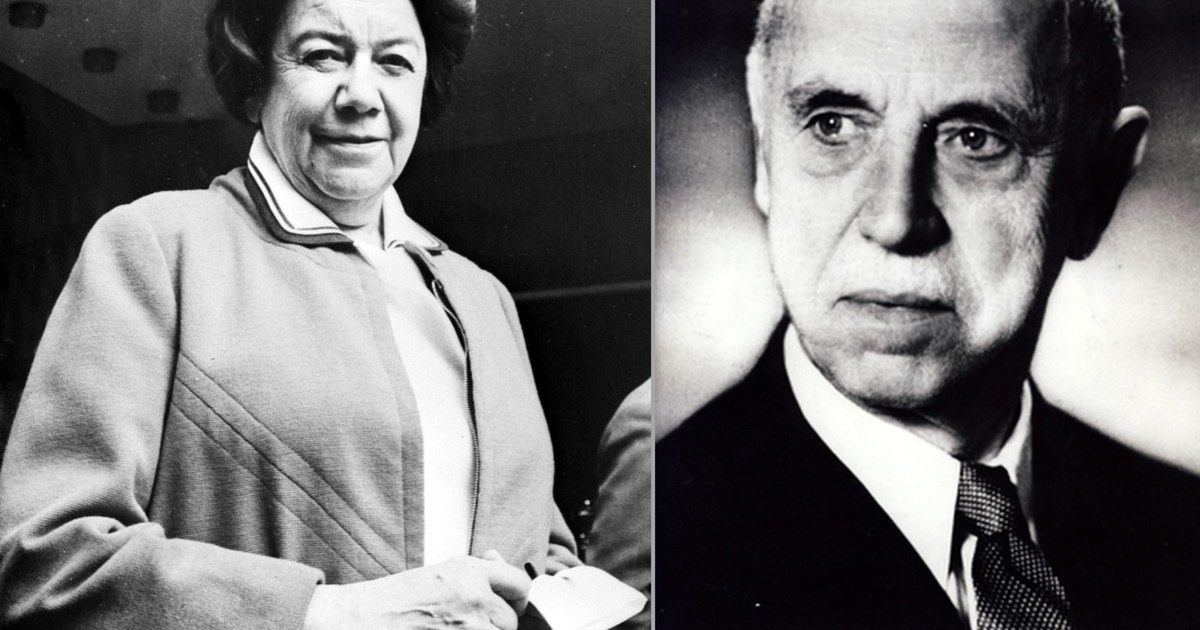
In the 1950s, two Romanian scientists became known throughout the world, thanks to their achievements in the study of longevity and the slowing down of aging processes. Old age could be treated, and people could live up to 150 years, Constantin I. Parhon showed.
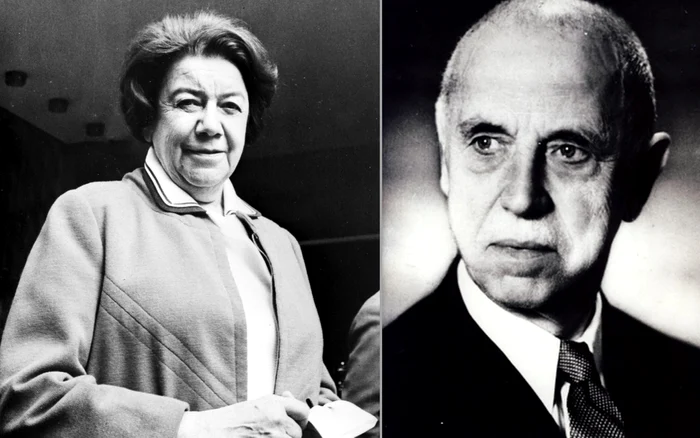
Ana Aslan and Constantin Parhon. Source: Wikipedia.
In the early 1950s, the life expectancy of Romanians was 60–62 years, higher for women, but at least 15 years lower than today.
Scholars who treated old age
Two Romanian scientists firmly argued that old age was only a disease that could be treated, and the Institute of Geriatrics they headed would support their claims with solid evidence.
“We affirm that old age is a disease, a pathological condition. Our research shows us that we can extend the life of animals, and therefore also of humans, beyond the usual limits”. noted the scholar Constantin I. Parhon (1874–1969).
He was a well-known doctor, biologist and university professor, but also the president of the Presidium of the Great National Assembly in the period 1947–1952, a position equivalent to that of the head of state, but rather symbolic.
The scientist laid the foundations of the Romanian school of endocrinology and founded, in 1952, the Institute of Geriatrics in Bucharest, which in the following years was led by his student, Ana Aslan, also one of the most appreciated Romanian scientists of the 20th century. Initially, the Institute had a little over 20 patients, but the revolutionary treatments here attracted thousands of Romanians in the mid-1950s. Among them were people past the age of a century, who were receiving treatment and, at the same time, had also become a subject of study for specialists.
“In our country, the fight for prolonging life is led by the illustrious scientist CI Parhon, who has been dealing with this problem since more than 40 years ago. He claims that old age is a disease that can be treated, that the normal human life should be 100-140 years and maybe even more”. said Ana Aslan, in 1957, then director of the Institute of Geriatrics.
Constantin I. Parhon was confident in the possibility of prolonging life by slowing down the aging process, but considered rejuvenation a utopia.
“Everywhere in nature completely irreversible transformations are unrealizable. There is no reversibility either in the regeneration of albuminoids or in the evolution of living beings”he notes.
The unusual patients of the institute
At the Institute of Geriatrics led by the two in the 1950s, many unusual characters arrived, and others were visited by scientists at home.
“Until two years ago, a 147-year-old old man lived with us. This fact was told to us by Dr. Ana Aslan, a tireless experimenter in the field of longevity science. It is about an old man from the Osoi commune, on the outskirts of Cluj, known in his village as Moš Maftei. Professor Aslan found out about him and visited him in his house in Transylvania. He was tall, still in good health, straight as a pillar”, informed the press of the time in 1955.
Iancu, a Romanian who lived alone in a cave on the outskirts of the village of Săcămaş, in Hunedoara, also arrived at the Institute of Geriatrics.
“Because he was a lonely man and of an unknown age, Iancu had been brought to the attention of the Ministry of the Interior. Learning that a strange and semi-wild man lives here, the authorities sent him to the Parhon Institute in Bucharest, for geriatric studies. Those at the institute analyzed his hair and estimated his age to be around 140 years old”related professor Ioachim Lazar.
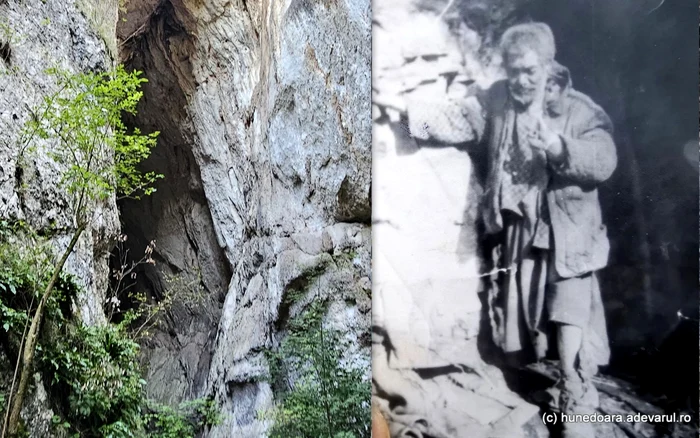
Iancu from the cave. Photo: THE TRUTH
In the 60s, Romania had approximately 400 centenarians, according to a study by the Institute of Geriatrics in Bucharest, conducted under the direction of Dr. Ana Aslan. It is not only elderly patients who have made the Institute of Geriatrics in Bucharest famous, but above all the scientific achievements of the two scientists.
The doctor Ana Aslan (1897–1988) is among the most appreciated Romanian scientists of the 20th century, being the one who developed the Gerovital H3 and Aslavital treatments, intended to slow down the aging process.
Like Constantin I. Parhon, Ana Aslan was a member of the Romanian Academy and enjoyed international recognition for her contributions to gerontology. In 1982 he received one of the most prestigious awards given by the World Health Organization, the “Leon Bernard” Award. His treatments have been tested on thousands of patients, many of them inpatients of the institute headed by Ana Aslan.
“They do, for example, treatments with vitamins and hormones, or with novocaine (prepared in a special concentration and with a certain acidity), called preparation H3. Novocaine, in this form, gave Professor Parhon and the team of doctors the best results”, reported the Red Flag newspaper in 1955.
Patients revitalized by Ana Aslan
Many of those interned in the 1950s at the institute run by Ana Aslan were of considerable age, but they felt empowered.
“Here is old Caterina Mântuleasa. She is 114 years old and was brought here six months ago. She remembers that she was 40 years old when she married a second time. The action exerted by the H3 treatment, to which she was subjected, has visible consequences. Comrade Aslan combed her hair, which on the day of admission was completely silver. “Do you see the result? Now the hair from the root is beginning to turn black, and the condition the body is improved. But these are the first results. It remains to be seen what new signs will appear in the future.”informs the press of the time.
Other elderly people, over a century old, were optimistic about the treatments administered, some doing gymnastic demonstrations for the visitors.
“Old Morgacian Parsel is 108 years old. He is thin and straight. At first glance, you have the impression that you are dealing with a skinny and fast old man. He was a porter in the port of Constanta until 10 years ago and he would like to live a long time and even work. That is why he came here after hearing about the discoveries of Professor Parhon”the press noted, in 1955.
Two years later, the former porter was still a patient of the institute. A former maths teacher, now 95 years old, claimed that hair had started to grow on his bald spot. Another testified that he was related to Avram Iancu. Some seniors spent their time in the institute's library, and others engaged in making children's clothing and toys to fill their time.
Veterans of the 50s
Vasile Rujoi, a forester from the village of Grădiștea de Munte, was famous for his vitality, at the age of 107 in 1955. In the 1950s, he could be seen working around the forestry cabin in the Dacian fortress of Sarmizegetusa Regia.
“Many of the students who came from Bucharest to see the ruins of Decebal's fortress met a forester who lives near Grădiştei hill. He is old, he retired a long time ago. Now he is 107 years old”showed A. Păduraru, in a report from 1955, published in Scânteia Tineretului.
Old Rouge had white teeth, which he always smiled, and was in extraordinary health. He had three wives, and he married the last of them at the age of 92. His son was also retired.
“But what is most interesting about this man, who has lived in the forest for a century, is that at the moment he speaks well, hears well and works! Yes, he works! I found him carrying the garbage from the stable”, pointed out the author of the report.
In the 60s, a shepherd from Oltenia attracted attention because of his age. Ilie Stamate lived in the town of Firizu (Ilovăț commune, Mehedinți county) and would have been born around 1840.
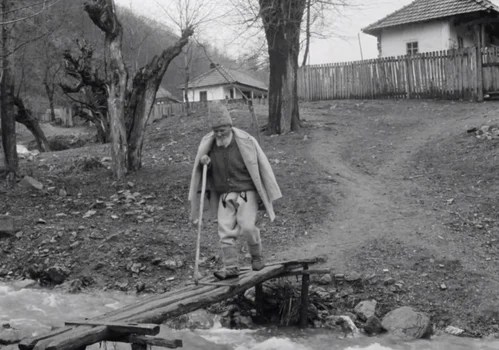
Image 1/10:
Ilie Stamate, the veteran from Firizu Cineclic Source Cinteia (10) jpg
In the last years of his life, Ilie Stamate lived in a small house at the foot of the mountains, on the banks of the Coșuta stream, and he received more and more guests who were more curious about his condition. The actual age of the shepherd was not precisely known, but locals, scientists and the press of the time attributed him to at least 120 years old. His daughters were over 70 years old, and the man remembered that during the War of Independence in 1877 he was about 45 years old, Scînteia recounted.
“Ilie Stamate from Ilovăţ commune, Firizu village, aged 135 years, passed away. Until recently, this Mehedința peasant largely kept his vivacity and lucidity”. informed Scânteia, in 1968.
The elders of the village remembered, decades later, that Ilie fed on dragonflies and lobode and less on meat, and that he would have worked all his life.