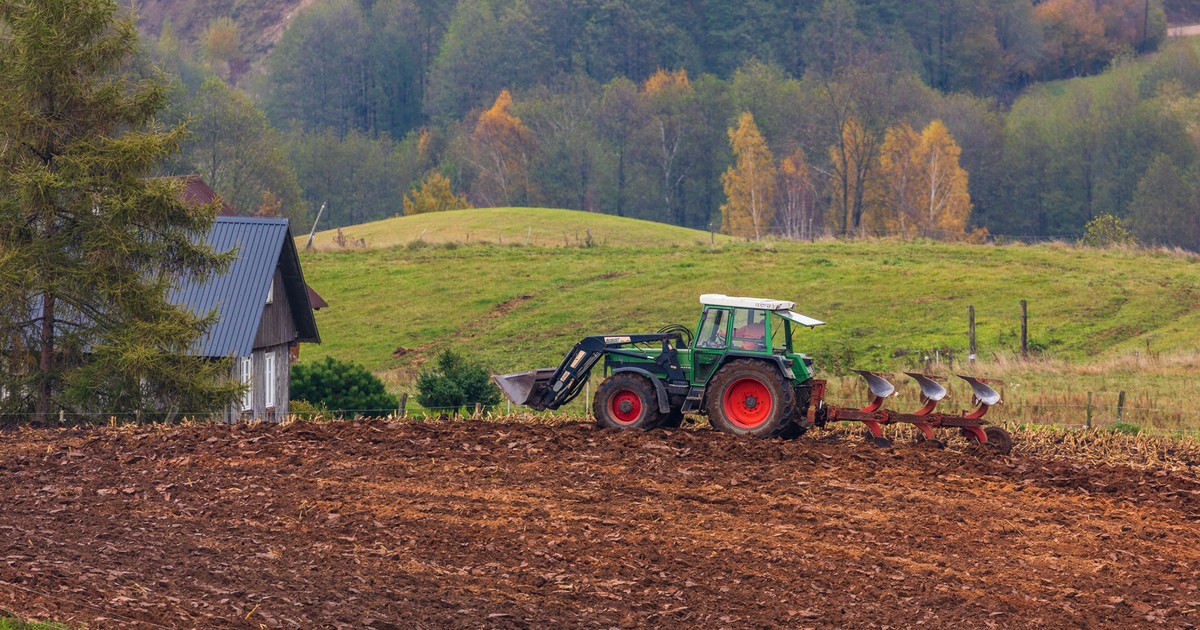
The fight against the trade agreement between the European Union and the South American Mercosur bloc has been one of the main themes raised in the public debate by agricultural organizations and food producers for months.
The rest of the article is below the video:
Today we know that the agreement has been signed. Its impact on the European market is to be weakened by mandatory quotas (lower customs duties will apply to limited quantities of given products, e.g. 99,000 tons of beef) and protective clauses (if prices fall below 5%, the EU will limit imports). Despite this, farmers are still concerned about another blow to their own competitiveness. As they say, the sector is at risk of uncontrolled decline, and the countryside as a whole is at risk of civilizational collapse.
Read also: New doubts surrounding the EU-Mercosur agreement. It's about the effectiveness of the protective clauses
Is the CAP no longer working?
Experts interviewed by Business Insider Polska point out that the situation is ambiguous. Concern about the results of even partial market opening is understandable, but as Adrianna Wrona, manager of the “Agriculture” project at the Institute of Green Economy, tells us, more fundamental issues remain to be resolved.
— For example, the EU's Common Agricultural Policy is playing its role less and less well. Subsidizing mass agricultural production (through a system of payments per hectare – editor's note) could have been justified several dozen years ago, but today we know that it benefits primarily large entities, not small and medium-sized farmers, and is also harmful to the environment. However, sustainable solutions such as eco-schemes, i.e. rewarding nature- and climate-friendly agricultural practices, are insufficiently supported – says the specialist.
He adds that at the national level there has been a long lack of a well-thought-out strategy for agriculture and an idea for the entire food sector, which makes the situation of small producers more and more difficult, and the announcements of trade liberalization deepen the sense of uncertainty.
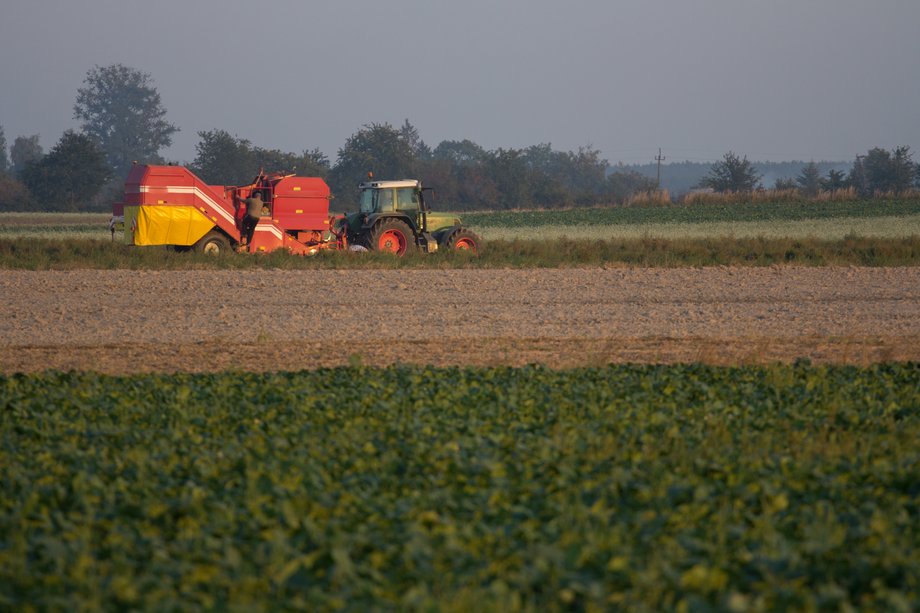
According to Adrianna Wrona from the Institute of Green Economy, pro-environmental practices in agriculture are not sufficiently supported
|
Bagatela / Shutterstock
Read also: Expert on the Mercosur agreement. “It may slightly worsen the position of farmers”
Quality is the advantage of Polish food
Paulina Sobiesiak-Penszko, president of the “Grunt” Institute of Food Strategies, also mentions the need to develop a coherent concept of development of Polish agriculture. As he says, stable conditions can be ensured for farmers by strengthening local markets, where local products will win in terms of quality.
—It is the high quality of food that can be our competitive advantage. We won't win the race for mass production and low prices, but consumers are paying more and more attention to the other advantages of the products they buy, says Sobiesiak-Penszko. Strengthening relationships with consumers will be possible thanks to the expansion of local processing and trade systems as well as food distribution infrastructure – e.g. urban markets and bazaars.
— Regardless of the fact that we are primarily discussing food prices, food quality is very important to people. With Mercosur, we can put the debate on food quality at the center – we need to talk about where what ends up on our tables comes from, under what conditions it is produced and what standards apply to producers on the Polish and European markets. This will also lead us to the need for clearer markings of the origin of specific goods, argues the head of “Grunt”.
Strengthen the demand side
High quality will be an asset of Polish food not only in the country, but also abroad, especially in Western Europe. Paulina Sobiesiak-Penszko notes that Poland has rich culinary traditions that can be successfully promoted on foreign markets.
– Polish items on the list of EU products protected under the agreement with Mercosur currently include only vodka. We have much more to offer, he points out. However, if the orientation of agriculture towards the internal market is to be a priority, the state must focus on this in its agricultural policy.
— The previous strategic plans prepared by Poland under the Common Agricultural Policy were unambitious and rather conservative. The new long-term strategy should take the demand side into greater account, says Adrianna Wrona.
This is even more important in the new financial perspective of the European Union for 2028-2034 there will probably be less money for agriculture and the countrysideand some of them, previously included in the so-called of the second pillar of the CAP (for rural development) will be included in a common national pool, in which it will compete with other needs.
Local food in local canteens
– It is largely up to us how we spend these funds – argues Wrona. — We need to think seriously about this. Experts, farmers, consumers and representatives of other links in the value chain should work together on the strategy. It is worth focusing on, for example, promoting healthy food and diversifying production. Currently, we have too many corn crops in Poland, but we could use more legumes. Diversification is important because it strengthens resistance to possible crises, he argues.
What else can the strategy include? Paulina Sobiesiak-Penszko lists further tools that can strengthen farmers and consumers at the same time – the former will gain markets for their products and will receive fair payment for them, while the latter will receive access to healthy, high-quality food.
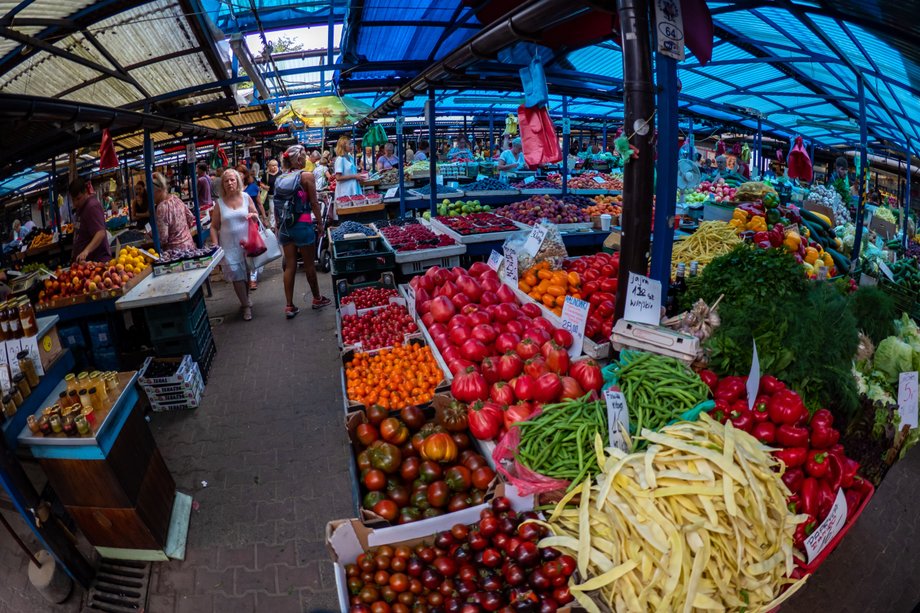
The development of bazaars and markets can strengthen bonds between farmers and consumers
|
Mike Workman / Shutterstock
— Local governments have a lot to do. Collective feeding in various public canteens, from hospitals to schools to offices, may be based on the so-called green public procurement that would promote local suppliers, says the expert.
The first such initiatives are already taking place. Sobiesiak-Penszko talks about the pilot project “Canteen From Here!”, which, with the support of the Ministry of Agriculture and Rural Development and the Warsaw University of Life Sciences, runs a field branch of the National Agriculture Support Center in Białystok. As part of the project, willing school canteens from the Podlaskie Voivodeship supply local food.
Bazaars are part of critical infrastructure
The state, continues Sobiesiak-Penszko, could also support the development of local food processing, e.g. in the cooperative formula. It would also allow for the creation of new jobs around agriculture. The expert also raises the role of agriculture in building collective immunity.
— The discussion around ideas such as the takeover of Carrefour by the National Food Group shows that in uncertain times we take food security issues more and more seriously. Inconspicuous bazaars or marketplaces are actually part of our critical infrastructure – he reasons.
Read also: What's next for Carrefour? “All options are on the table”
“The countryside must be a good place to live”
The discussion about the future of the Polish countryside does not end with agriculture (although the level of employment in the sector is still among the highest in Europe, according to data collected for the Ministry of Family, Labor and Social Policy, in 2024 only approx. 15 percent village inhabitants; the rest fell to industry, services and administration). What can ensure its development and stop or at least slow down the trend of aging and depopulation?
— The countryside must be a good place to live. This also requires providing an appropriate cultural offer and overcoming transport exclusion – suggests Paulina Sobiesiak-Penszko. In the words of the experts, the importance of local agri-food systems and related entrepreneurship – from production, through processing to distribution – comes back again.
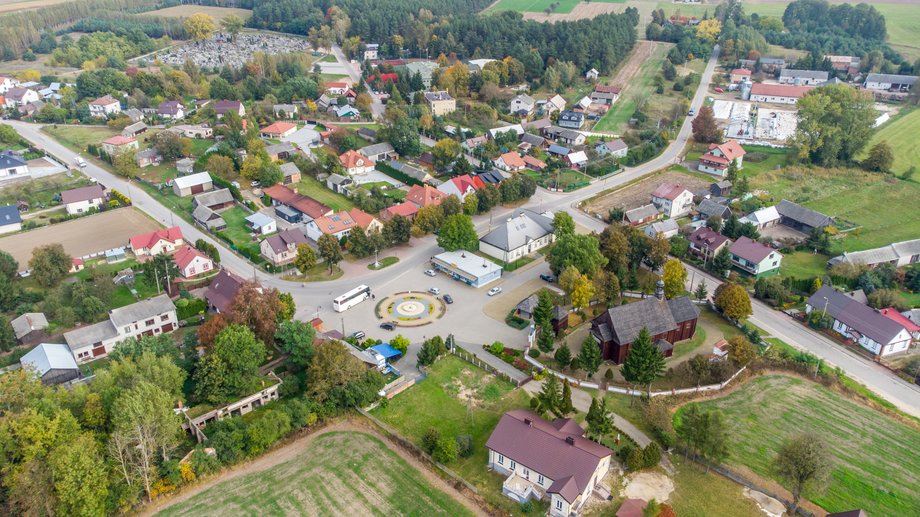
The countryside must be a good place to live – says Paulina Sobiesiak-Penszko, president of the Institute of Food Strategies “Grunt”
|
Robson90 / Shutterstock
— Although it is sometimes difficult to imagine a village separated from agriculture, it should be understood in a broader sense, says Adrianna Wrona. – Farmers not only produce food, but also help provide ecosystem services that can absorb emissions, retain water, protect soils or simply manage the landscape to the benefit of biodiversity. Activities such as maintaining floodplains or irrigating peat bogs should also be adequately rewarded, he argues.
Diversification of farmers' income can also be achieved by investing in distributed renewable energy – agrophotovoltaics that can be combined with cultivation or breeding, or activities within the bioeconomy.
— The agreement with Mercosur should be an impulse for us to rethink the food system in Poland – sums up Paulina Sobiesiak-Penszko.
However, current trends may cause concern. In addition to deagrarianization, i.e. the gradual decline in the importance of agriculture as a source of income and a job, the countryside is facing an aging and declining population. According to data from the Ministry of Family and Labor, between 2019 and 2024, the number of rural inhabitants decreased by approximately 136,000.which was mainly due to the negative natural increase. The number of working-age people living in the countryside has decreased approx. 450 thousand people.