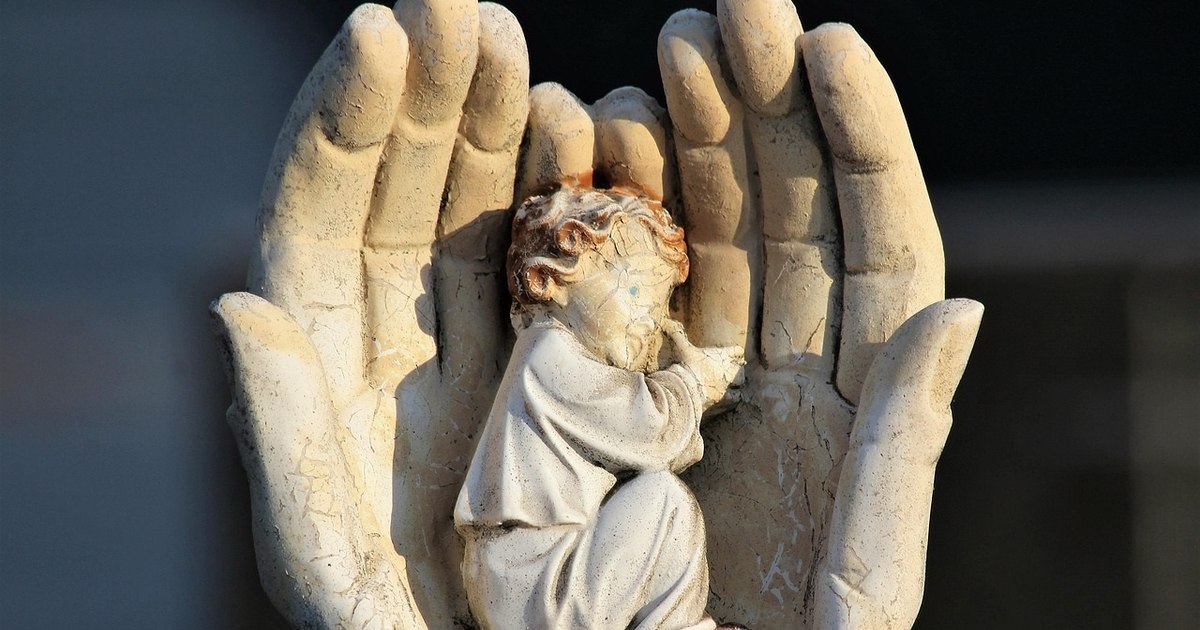
In a world where stress, uncertainty and social fragmentation are increasing, people need to find their inner balance. Spiritual health is the “blue zone” that helps us find meaning in life
Spiritual health, part of well-being Photo source Pixabay
Spiritual health, an essential dimension of modern well-being
Stress, uncertainty, social fragmentation. This is the world we live in today. In an increasingly complicated context, our emotional health is constantly challenged.
Specialists talk about the alarming increase in incurable diseases today, as an effect of lifestyle, where stress plays a very big role. So people need anchors to find their inner balance. Spiritual health is the “blue zone” to which some return after long wanderings, and others barely discover it.
The connection between spiritual, physical, mental and social health helps us to rediscover the meaning of life, to have a purpose and a vision of our own being. According to the McKinsey Health Institute's latest global survey of 41,000 people, spirituality is central to people's lives, regardless of whether it is related to religion or not.
For 80% of survey respondents from Brazil, Indonesia, Nigeria and Vietnam, spiritual health is extremely important. In contrast, for those in Ireland, the Netherlands and Sweden, spirituality is only 45% important.
Those with high spiritual health tend to enjoy a better state on all other levels: mentally, socially and physically. Conversely, those with low spiritual health are much more prone to depression, anxiety, isolation and physical difficulties, the cited survey reveals.
Numerous studies confirm that spirituality reduces depressive symptoms, fear of death and improves the ability to take care of oneself, especially in the elderly.
Faith is essential to human fulfillment
“To believe is to be human,” says theologian Alister McGrath in his book, released in May, 2025. Part apologetic, part philosophical, “Why We Believe: Finding Meaning in Uncertain Times” explores, over the course of eight chapters, what it means to believe and why faith is essential to human fulfillment.
McGrath asserted that although faith extends beyond reason, it is not opposed to it. “People, he argues, need “big pictures” of reality to anchor their lives. Science can explain, but only faith can interpret, providing coherence and purpose. Far from being a weakness, faith provides the interpretive “map” by which we navigate life” says the author.
In McGrath's view, faith must not only be defended in society, but recognized as something we cannot live without. The author extends his research into leadership as well, cautioning that this is not about abandoning rigorous analysis, but about recognizing its limitations.
“As a business leader, ask yourself: When was the last time you made a major business decision based purely on data? If you're honest, probably never. Faith empowers and a business, an organization, a corporation must ask: Why do I exist? What is our mission? How do I make the world a better place?” says the author.
Being a leader turns out to be a mission
McGrath points in his book to research that shows that people need a sense of identity, but also of value, to know that they matter in that job, or the team they work with, that they have a purpose, a meaning.
For many, meaning can be found through everyday work, but toxic or exhausting environments nullify this ability. Two-thirds of Gen Z youth choose their employer based on the organization's mission, social impact and opportunities to contribute to the good of the community.
McKinsey research further validates this approach: employees whose personal purpose connects with their organizations are five times more likely to feel fulfilled at work, and the implications for leadership are profound.
This is why being a leader, in the current context, turns out to be a mission, where balance is essential.
“As long as you are not in a relationship with God, you cannot be in balance with yourself. I am referring here to a peace of mind. This dimension of personal balance is extrapolated into the collective dimension. And you, as a leader, have this responsibility, whether you are an entrepreneur, governor, head of state, teacher, doctor, in business or a corporation,” says Aliz Kosza, business mentor for “The Truth Interviews”.
We can all cultivate this ability to “build our spiritual muscle”
According to the McKinsey survey, compared to the baby boomers, Gen Z is much more likely to report a lack of meaning in life. Over a third of young people feel that their lives lack a clear purpose, and this spiritual emptiness directly affects their mental health. However, those from Z are, paradoxically, also the most interested in workplaces having a mission, values and opportunities for social involvement.
“At a leadership conference I attended, a bank president took the microphone and gave the most impactful speech: 'I'll tell you one thing. If you follow the 10 commandments, you're a leader, if you don't, you're not. And with that he hung up the microphone and was done.' In fact, that's what it's all about” argues Aliz Kosza.
Spiritual health can be seen as an essential element of well-being: finding meaning, connecting with what matters, acting with intention. Lisa Miller, a researcher in the field, says we can all cultivate this ability and “build our spiritual muscle.”
Communities, organizations and their leaders play an important role in increasing the spiritual and social well-being of people. Social, public and private stakeholders can help by creating spaces for reflection, from access to green areas, to community initiatives or cultivating an appreciation of values-driven work.
Spiritual health begins where we recognize that meaning, values, and deep questions matter to our well-being. Opening up a conversation about spirituality can have tangible effects on how we care for ourselves and those around us.