
Dr. Adina Nicolae, MedLife pediatric neurologist: “Every day I see teenagers with headaches, dizziness and lack of concentration. Their schedule is completely messed up”

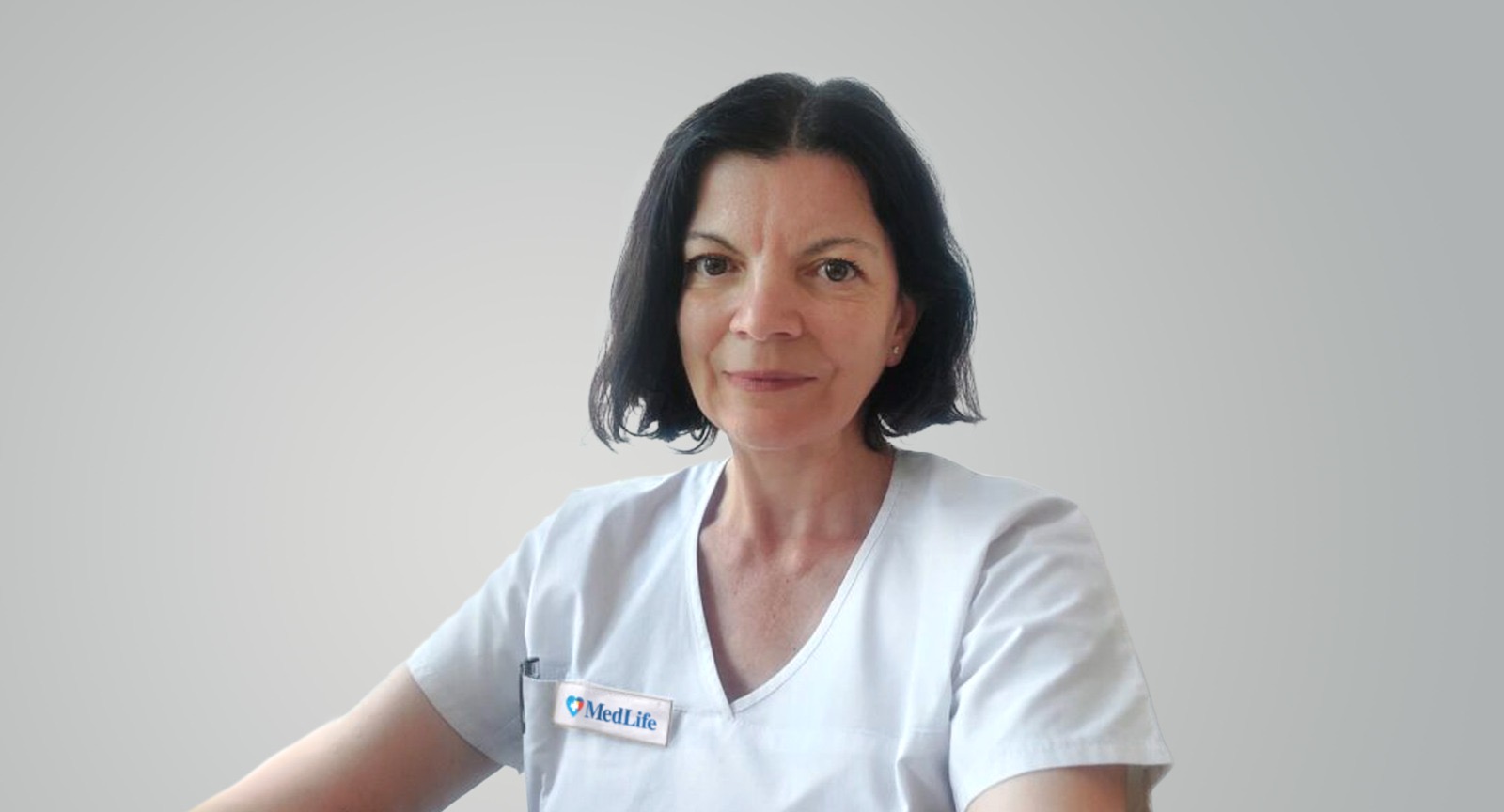
Teenagers who go to bed at 2.00-3.00 in the morning and are convinced that they “recover” if they sleep until noon. Young people who drink energy drinks, spend many hours on screens and end up in the pediatric neurologist's office with headaches, vertigo, fainting states, anxiety or lack of concentration. “Every day I see teenagers with the same problems,” says Dr. Adina Nicolae, primary pediatric neurologist at Hyperclinica MedLife Solomed Pitești. And the part that worries her the most is not just the symptom itself, but the fact that many have come to consider this lifestyle normal.
“I think there should be more promotion of the effects that the ingredients in energy drinks can have on the body. I think these drinks are addictive and far too accessible to children,” a 21-year-old man who suffered heart failure after consuming excessive energy drinks told the British Medical Journal in 2021.
Energy drinks, even when they are not consumed in excess, affect the sleep of children and adolescents, and the lack of sleep leads to a multitude of problems, many with neurological manifestations: headaches, dizziness, fainting states, lack of concentration. Accumulated with the long time spent on screens, with the unbalanced diet and the lack of proper hydration, the consequences are not long in coming: “We, the doctors, are overwhelmed by so many cases of children and young people with neurological symptoms caused by a messed up schedule and a disordered lifestyle”, emphasizes the pediatric neurologist Adina Nicolae.
Adolescents and recurring symptoms
Many children and adolescents go to the doctor after their parents notice changes in behavior or at school: poorer grades, constant fatigue, irritability, the inability to organize or stay focused, but also headaches, dizziness or even fainting. For parents, the meeting with the pediatric neurologist usually begins with the fear: “What if there's something wrong with the brain?”. In everyday practice, the doctor says that, most of the time, the answer is much easier to intuit – and, unfortunately, rather difficult to correct: lifestyle.
“They nonchalantly tell me that they go to bed somewhere between 2:00 and 3:00 in the morning, and for them it is very important that they get their sleep and wake up around noon,” says the doctor. The problem is that the body does not function on duty. Your circadian rhythm (internal clock) is sensitive to bedtime, light, and routine, and consistently delayed sleep can significantly affect daytime mood, attention, and emotional balance—even if the total number of hours seems right on paper.
The doctor's main recommendation, when he sees young people with such problems caused by the disorganized schedule, is simply sleep at the right times. “The truth is that if we stick to the 10 p.m. bedtime, then the brain is rested and functional and the risk of neurological problems is very low.”
Beyond sleep and energy consumption, the doctor also sees other “accelerators” of symptoms: prolonged exposure to bright screens, sedentary lifestyle and insufficient hydration. And in recent years, increasingly, smoking and vaping have a negative impact on the neurological health of teenagers.
For parents, it can be good news to learn from the neurologist that their children's problems do not have an underlying serious condition and that there are concrete things that can be changed. It's just that change isn't easy when teenagers have an entire social ecosystem built around late nights, the phone and stimulants, the doctor believes.
“Of course we don't rule out from the start the possibility that the symptoms have another cause. In the neurology office, children and young people are carefully consulted and we are also very cautious, and in certain cases we request a cranio-cerebral MRI to eliminate other suspicions”, says Dr. Adina Nicolae.
The messed up schedule can also trigger epileptic seizures
In some cases, the list of symptoms with which children and young people come to the neurologist does not stop at headaches and dizziness. Dr. Nicolae says that he also sees epileptic seizures in teenagers, including with an onset that can seem “out of the blue”. The pediatric neurologist recounts the recent case of a teenage girl who had a generalized tonic-clonic seizure in the morning upon awakening (sudden loss of consciousness, body stiffness, then involuntary, jerky movements). From the discussion, it emerged that he was not resting, was on the phone a lot and was consuming energy drinks.
This is not to say that energizers directly “cause epilepsy” in everyone, but there may be an unknown predisposition to such seizures. Fatigue, sleep deprivation and stimulants can, however, be triggers in the vulnerable.
How is the diagnosis made? Epilepsy is often defined by repeated seizures with the same pattern, but there may be a situation where a single seizure, together with suggestive electroencephalogram (EEG) changes, is sufficient to guide diagnosis and management. A practical detail that Dr. Nicolae considers extremely useful: the parent should come with a video of the episode, made on the phone, so that the doctor can understand more precisely how the crisis unfolded.
“Sometimes it's not just fatigue”: when symptoms can hide other causes
Even if, in most cases, the source of the problems is the lifestyle, Dr. Nicolae says that sometimes the investigations point to other explanations. In her practice, she encountered intracranial cysts large enough that some required surgery, cerebrovascular malformations that can cause headaches (especially with exertion), and, to a lesser extent, brain tumors.
There are also simpler but very common explanations: wrong posture. “The wrong posture, with the head bent over the phone for a long time, can cause pain through muscle contracture at the level of the cervical spine,” explains the doctor. Adolescents thus arrive at the neurologist to rule out something serious, and are then directed to recovery or posture correction.
In addition, the doctor says that he also sees scoliosis, kyphosis, back pain, sometimes aggravated by lack of movement and wrongly worn backpacks.
Other Causes of Pediatric Neurologist Visits: Developmental Delays and Signs Worth Checking Out
After teenagers, the most frequent category of patients are young children with developmental disorders – motor, language, cognitive. Dr. Nicolae says that many come referred by the family doctor, but parents also come who notice differences “by comparison with their older brother” or with other children of the same age.
Thus, if in the first year of life, parents notice one of these signals, it would be good to go to the neurologist: if at 3 months the child cannot hold his head, if at 6-7 months he does not sit up, if around 9 months he does not initiate steps with support, if there are obvious asymmetries in the use of his hands.
An example of an attention-grabbing asymmetry is the “parachute” reaction, which occurs around the age of 6 months: when the baby is projected slightly forward, he should support himself with both hands. “If he leans on only one, and the other remains next to the body, it's a possible alarm signal,” because it can point to a weakness on one side (hemiparesis) or other problems that require evaluation.
When walking, the doctor uses a clear limit: if there is no independent walking up to one year and four months, motor delay becomes a very likely diagnosis. And if at 9 months the child does not even stand up with support (from furniture or the parent's hand), this is an additional reason to be evaluated.
The child who often falls and hits himself
After the age of 1, parents sometimes bring children to the neurologist whom they say are “clumsier”, fall often, bump themselves. Here, differentiation is important: it can be inattention and hyperactivity, but also neuromuscular disorders (muscles, nerves) or problems of the nerve pathways involved in movement.
In many cases, recovery helps: physical therapy and muscle strengthening programs. But the doctor also draws attention to ligament hyperlaxity, which can be a benign feature or part of a more complex picture (including collagen diseases), a situation in which there is a need for collaboration between specialties and, sometimes, genetic evaluation.
Febrile seizures and infections: waiting at home is not recommended
In pediatrics, febrile seizures are a major cause of panic. Dr. Adina Nicolae makes a simple difference: febrile convulsions occur against the background of fever, while epileptic seizures occur outside of fever. Febrile seizures are not automatically dangerous if they are short, but they become worrisome if they last more than 15 minutes or if they are “focal” (occur on one half of the body). In such situations, quick medical assistance is needed.
Regarding infections, the doctor warns that viruses and bacteria can affect the nervous system even if they have respiratory or digestive entry. Change in the general condition for the worse: apathy, drowsiness, severe headaches, jet vomiting, convulsions – all these indicate a worsening of the child's condition. “You can't stay at home in such situations,” says the doctor, recalling that during the pandemic there were cases where parents delayed too much and children ended up in the hospital in severe forms.
***
Read other informative articles on medical topics in the Make Romania good section.
This article is supported by MedLife, the largest network of private medical services in Romania, and aims to be a source of information and inspiration for a healthy and balanced life.
Health is the main source of happiness for Romanians. At MedLife, people's happiness makes us happy and motivates us to provide medical solutions at the highest standards.
Regardless of the specialty, at MedLife you can always find good doctors, whose expertise is complemented by the most advanced technologies in the medical field and a modern infrastructure, ensuring personalized care for each patient.
Find out more details about all services at https://www.medlife.ro/
Article sponsored by MedLife


