publication
2026-01-07 11:30
The end of 2025 saw a slowdown in HICP inflation in the euro area and its decline again to the 2% target set by the European Central Bank.
Preliminary Eurostat data show that the harmonized index of consumer prices (HICP) in the euro area in December 2025 was 2.0% higher than the year before. This result is slightly lower than November's 2.1%, but at the same time consistent with the market consensus.
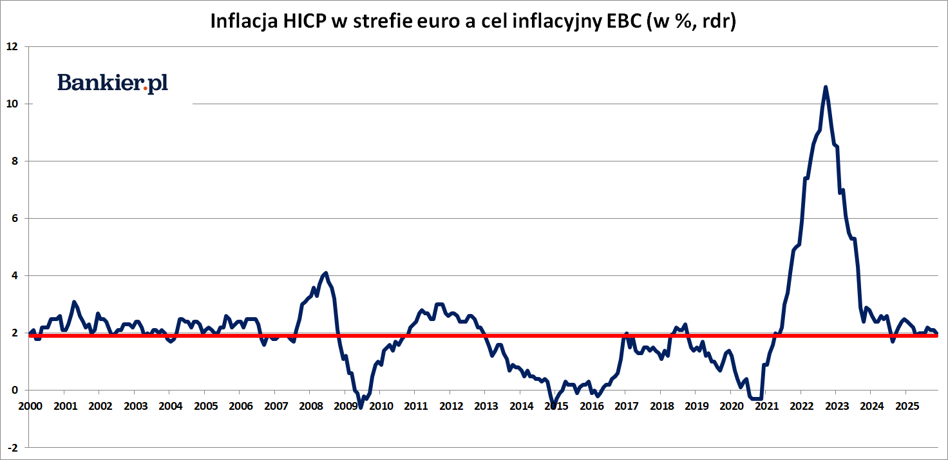
That means most of 2025 HICP inflation in the euro area remained close to the European Central Bank's 2 percent target. She was it a welcome change after the ECB had been unable to deliver on its “stable prices” mandate for the previous three years, meaning inflation lower but close to 2%. Let us add that this goal was implemented for only two months between July 2021 and April 2025.
However, HICP inflation even slightly above 2% means that real interest rates in the Eurozone (at least those calculated ex post) are no longer positive. After a series of cuts, the ECB has kept interest rates unchanged since June, with the deposit rate currently at 2.00%.
The ECB's 2% target is still exceeded in terms of core inflation, which decreased from 2.4% to 2.3% in December. Rising prices of unprocessed food also remained a problem, and in December in the Euro zone they were 4.2% more expensive than a year ago. Thanks to cheaper fuels, prices in the “energy” category dropped (-1.9% y/y). The price inflation of industrial goods remained very low (0.4% yoy) and the prices of services were still increasing too quickly (3.4% yoy).
We are therefore dealing with a situation where excessive inflationary pressure in the service and food sectors is accompanied by deflation of energy prices and very low inflation of industrial goods prices. However, it is enough for one anti-inflation element to fall out of this puzzle (e.g. energy prices) for HICP inflation in the Eurozone to be released again.