The large Lotru–Ciunget hydropower plant, an energy masterpiece hidden in the Carpathians. It was called the grandest in Europe


The Parâng Mountains are home to the most complex hydropower plant on the inland rivers in Romania, built in the 1960s and 1970s on the Lotrului valley and currently known mainly because of Lake Vidra, whose huge dam made of rock was built at almost 1,300 meters above sea level.
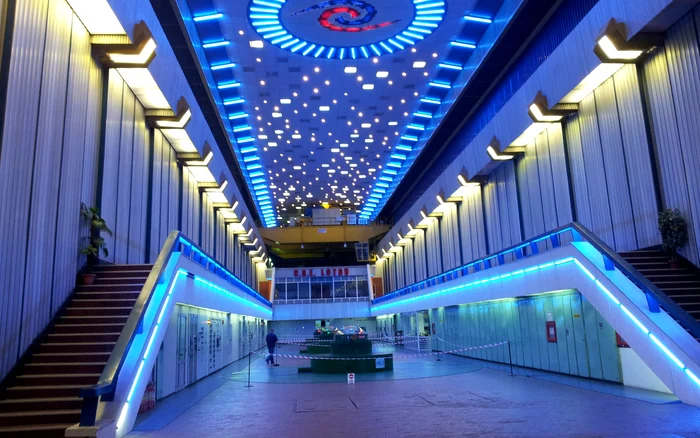
The interior of the Lotru plant. Photo: Hidroelectrica.
The Lotru River has its source in the caldera of the Gălcescu glacial lake in Parâng, at almost 2,000 meters, and, after crossing one of the most attractive mountainous lands in Romania, creeping along the foothills of Parâng, it flows into the Olt River, in the area of Brezoi.
The mountain region that completes the Lotru Valley is located on the border of Hunedoara, Sibiu, Alba, Vâlcea and Gorj counties and is crossed by two spectacular roads.
The most famous road is the Transalpina (National Road 67C, video), the road in Romania that reaches the highest altitude (2,145 meters, in Pasul Urdele), the link over the mountains between the Sibiu region and the south of Romania. National Road 7A connects, through the Parâng and Lotru Mountains, the cities of Petroșani (Hunedoara County) and Brezoi (Vâlcea County) and intersects with Transalpina at Obârsia Lotrului.
The Lotru River has a length of approximately 80 kilometers, but also a remarkable flow, of over 20 cubic meters per second, as well as a difference in altitude of over 1,600 meters, from the sources to the meeting with the Olt Valley. Its hydropower potential has been researched since the interwar years, and the development of Lotru was first sketched in 1933, by Professor Dorin Pavel, the founder of the Romanian school of hydropower, in the work “The General Plan of Hydropower Development in Romania”.
Romania's first large anchorage dam
The landscaping works on the Valea Lotrului began in the mid-1960s, at the same time as those on the Portile de Fier I Hydropower and Navigation System.
The Parâng project provided for a flurry of hydropower plants and facilities that were to have a total capacity of over 1,000 MW, summed up by several hydropower plants, the most important being Lotru – Ciunget, of 510 MW, fed by the Vidra lake, located at almost 1,300 meters above sea level, more than 800 meters above the hydropower plant.
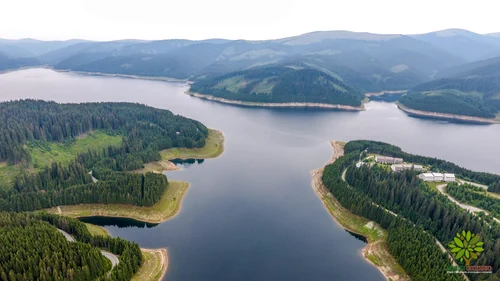
Image 1/13:
Vidra Voineasa resort in Vâlcea county aerial view Photo Water and its friends
The Vidra lake dam, built of rock, rises over 120 meters, and the surface of the reservoir exceeds 12 square kilometers. In addition to the main intake between the dam and the hydroelectric plant, the builders made more than 70 galleries and intakes for the secondary intakes, which totaled more than 120 kilometers.
“The three derivation systems total 125.4 km of secondary tunnels, 80 catchments of rivers, tributaries and streams. Including the main system, the entire Lotru development consists of 148 kilometers of tunnels, 81 dams and catchments, constituting one of the largest hydropower systems in the worldndial”, informed Hidrotehnica magazine, in 1972.
The underground plant at Ciunget included three aggregates, each composed of a turbine with a 167 MW generator and a 190 MVA, 15/220 kV transformer, identical to those at Portile de Fier, the specialists pointed out.
The new resorts on Valea Lotrului
In the first years after the start of development on Valea Lotrului, more than 8,000 workers were sent to the wild and inhospitable land of Parâng, which would soon be animated by more than 20 colonies. Some of the working-class neighborhoods on the Lotru Valley were to be transformed into mountain resorts, which, according to the plans of the Ceaușescu regime, could have even hosted an edition of the Winter Olympics in the following decades.
“Due to the fact that the Lotru Valley is oriented from east to west, being framed by four parallel mountains that strictly control the influences of the microclimate, the northern slopes of this valley present the phenomenon of long persistence of snow – about eight months a year – and the shape of the alpine plateaus, as well as the relief in general, ensures the organization of hundreds of kilometers of tourist slopes and for winter sports of all types of difficulty”. informed Contemporanul magazine in 1970.
Almost 300 kilometers of roads were laid out to the construction sites in the mountains, the electrical network also reached the wilderness, and in the alpine areas, where the temperatures dropped to minus 20 degrees Celsius in winter, the first buildings were established to accommodate the workers, which were then to be transformed into tourist complexes.
Voineasa, the first resort on the Lotru Valley, was established in the 60s, about 30 kilometers from Lake Vidra, and initially housed several thousand workers of the hydropower complex. The plans of the communist regime proposed to transform it into a climatic resort, with about 5,000 places to stay. Three other resorts were planned around the Vidra lake, Vidra, Alba and Mura, only the first of these being built in the end.
Two decades of transformations in Valea Lotrului
The works on the hydropower development on Valea Lotrului took place for almost two decades. The scheme of hydropower plants designed on Lotru included the Lotru – Ciunget hydropower plant, with an installed capacity of 510 MW, which came into operation in 1972, and other smaller hydropower plants, later built downstream, at Malaia and Brădișor, with a total installed capacity of 130 MW.
“The important share of the works was carried out in the period 1966-1982, with the commissioning of CHE Lotru in 1972 (hydro unit no. 1), CHE Malaia in 1978, CHE Brădișor in 1982, the energy pumping stations in the period 1977-1978, as well as the network of captures and secondary adductions in the period 1975-1978”, shows Hidroelectrica.
Dorin Pavel (1900–1979), the engineer who first designed the layout on Lotru, cataloged it as one of the hydropower masterpieces in Romania, along with the Izvorul Muntelui – Bicaz dam, the cascades of lakes and hydropower plants on Bistrita, the flood of hydropower plants on Argeș, which started with Lake Vidraru, and the Iron Gates I Hydropower and Navigation System.
“The Lotru system, on the river and the mountain tributaries, is the grandest scheme in Europe. Here the waters of 92 tributaries, with 150 km of galleries, were diverted to the Vidra lake of 300 million cubic meters, from which, with a drop of over 800 meters, into the Ciunget power plant. At Portile de Fier, as at Lotru, the 180 MVA transformers, built by Electroputere Craiova, are among the largest European aggregates”stated Dorin Pavel, in 1975.
In the 2000s, with the modernization of DN 67C and DN 7A, the tourist attractions around Lake Vidra returned to the attention of Romanians, and the recreational areas for winter tourism were developed through public and private investments.
From the shore of Lake Vidra, tourists can take the gondola to the Transalpina Ski Area, located at an altitude of 1,800 meters, and continue the ascent with the ski lift to the slopes of Vârful Bora, at an altitude of over 2,000 meters. In winter, however, access to the resort remains difficult, due to harsh weather conditions.
Near Lake Vidra, Lake Oașa (video), the Șureanu ski area and Transalpina are among the attractions of the mountain area in central Romania.