The biggest humanitarian disaster in the world. “We live like 100 years ago”


The UN and numerous humanitarian organizations call the situation in Yemen the largest humanitarian disaster in the world, comparable in scale to that of World War II. What's going on there?
Things that are hard to even imagine. Yemen is embroiled in the worst humanitarian crisis of our times. Already in 2018, the UN warned that 13 million people in Yemen were at risk of “the worst famine in the world in 100 years.” Since then, the situation has deteriorated dramatically.
More than 18 million Yemenis, almost half of the country's population, need urgent humanitarian aid, and more than 10 million are on the verge of famine. Yemen has probably experienced all the misfortunes you can imagine – primarily the civil war that has been tearing the country apart for 10 years, but also huge hunger, diseases and natural disasters that take away everything that the war did not take from people.
Since 2021, I have been working in the Ma'rib region in the north-east of Yemen. What I see there is hair-raising.
Together with the employees of the Polish Humanitarian Action, we are trying to help, but the situation is tragic, literally everything is missing. We live here like 100 years ago. And there are more and more people in need. 10 years ago, the Ma'rib province had approximately 300,000 inhabitants. inhabitants. Today there are over 2 million of them. With the resources we have, this means that many of them are simply sentenced to death.
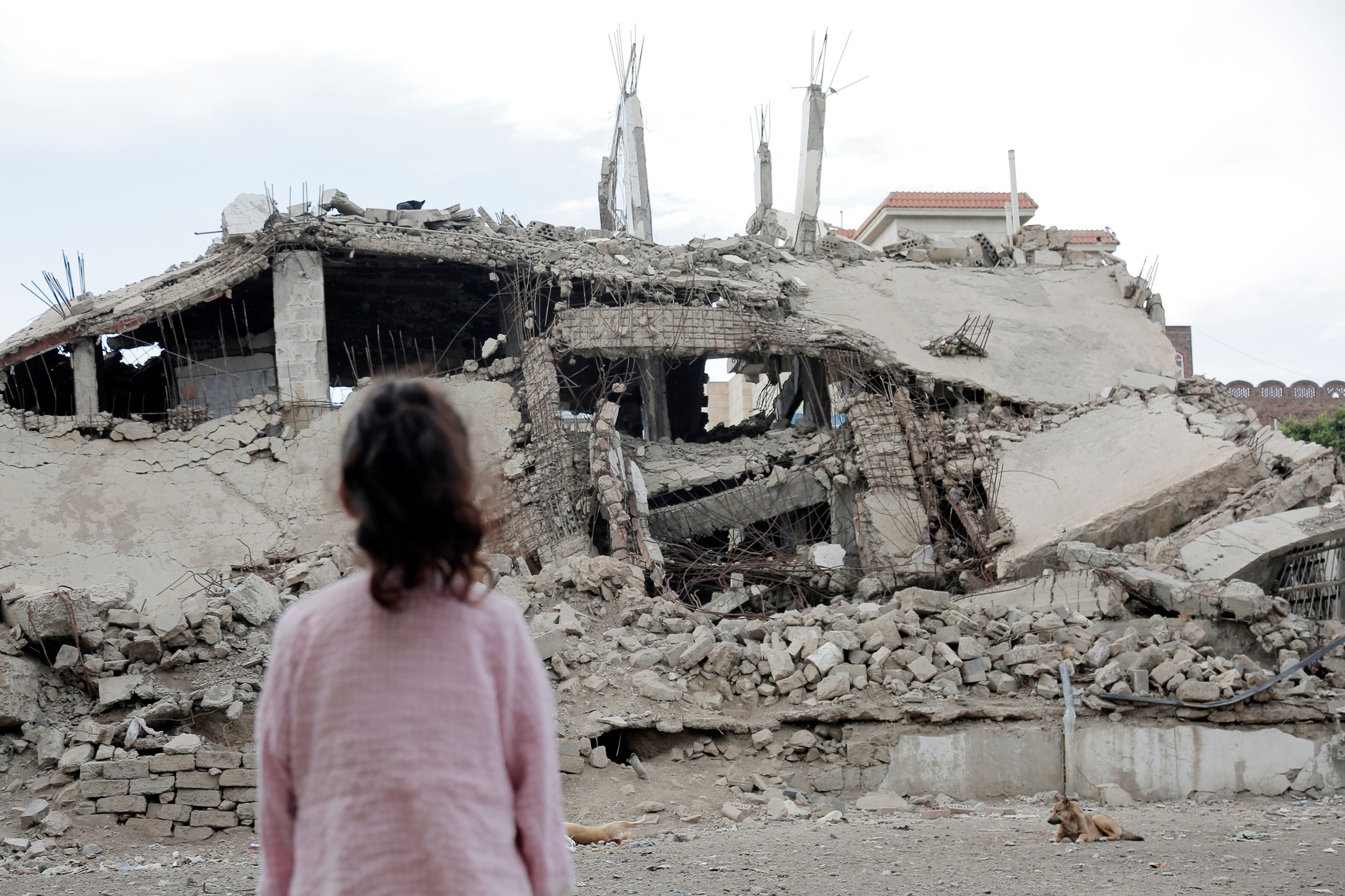
A girl looks at a building destroyed by airstrikes carried out by Saudi-led coalition warplanes ahead of the ninth anniversary of the conflict, March 24, 2024.Mohammed Hamoud / Contributor / Getty Images
I read the terrifying data from UNICEF – that one child dies every 10 minutes in Yemen.
At the height of the crisis, the UN also issued a report in which it provided such statistics. Terrifying. Today, thanks to limited but continuous interventions by international organizations and UN agencies, the situation has improved somewhat. However, it is still extremely critical – recent reports mention several children dying every day. This means that as we speak, several children will die.
Terrifying…
In Yemen, this has unfortunately become the norm. Pregnant women are malnourished, which of course negatively affects the development of children. When they are born, starving mothers have no or very little milk. As a result, these children face the effects of malnutrition from the first moments of their lives. The families there are generally large, Yemenis have six or seven children. Fathers cannot feed them all.
Is the problem just lack of food?
Also access to clean water. The water in the camps for forcibly displaced persons is mainly salty. You can't drink it, so Yemenis have to buy potable water, but it is expensive – one truck full of water costs about $20. [71,9 zł]. For Yemenis, this is a huge amount. They don't have that much money, so they rely on the help of companies involved in social activities or humanitarian organizations. Of course, we try to provide it, but we are not able to meet all needs.
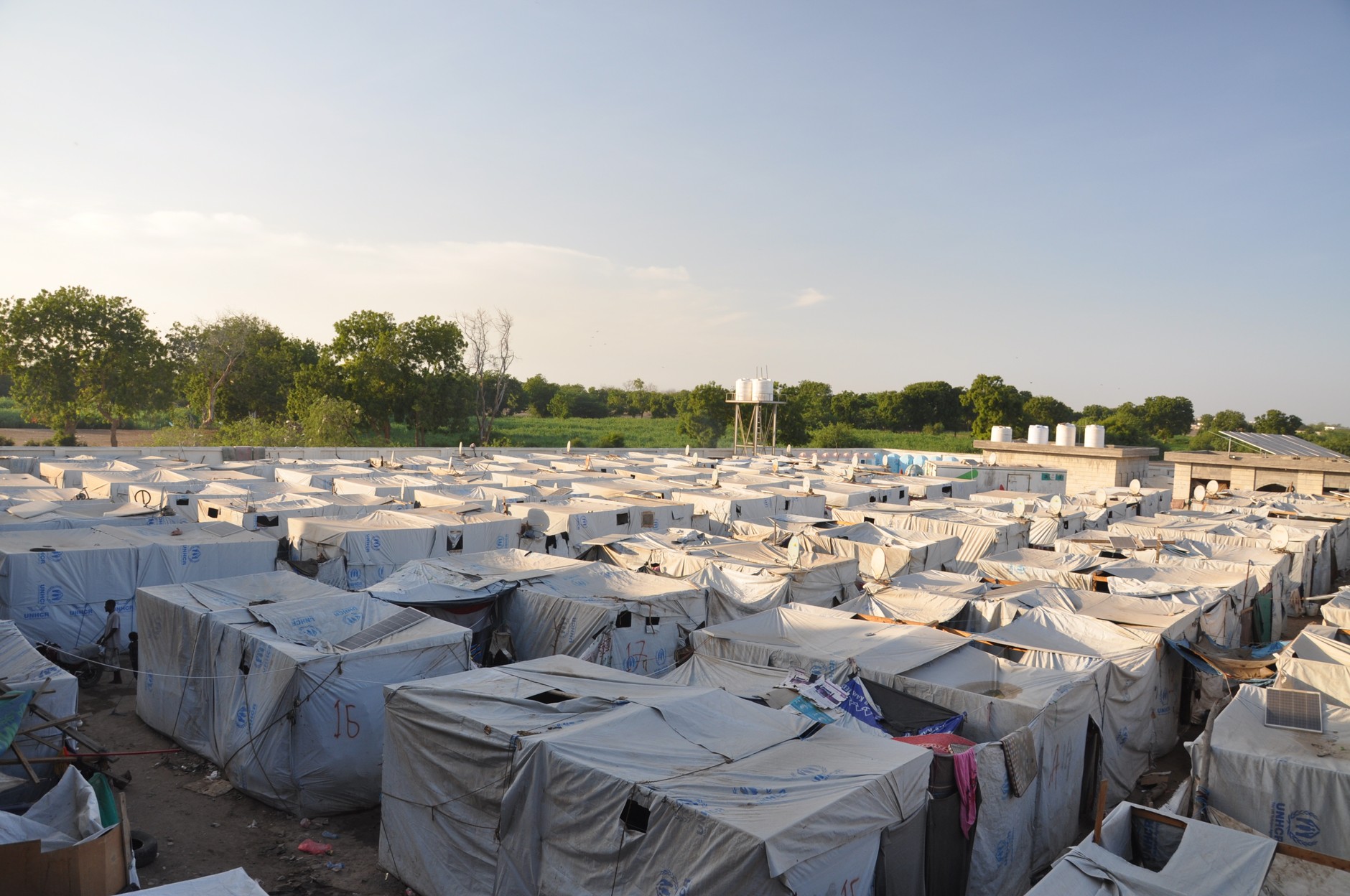
Tents where Yemenis live in the Ma'rib region in northeast YemenEDU Commerce Sp. z o. o
The issue of shelter is also very important – every person needs it to live with dignity. Many Yemenis cannot afford this luxury. Aid organizations distribute tents, but they are not very durable – especially during the disasters that hit the country. And these happen often because Yemen is one of the countries in the world most exposed to climate change. And one of the least prepared for them [z raportu organizacji Yemen Family Care Association wynika, że Jemen zajmuje pod tym względem 171. miejsce na 181 krajów].
The Ma'rib area where I work is largely sandy. So when heavy rain comes, the sand takes everything with it. All it takes is rain for an hour and everything disappears. This is the real tragedy of Yemen. Not only is the country torn apart by a bloody war, but there are also natural disasters that leave people in real poverty.
What do the neighboring countries say?
Saudi Arabia helps humanitarianly, but it is only a drop in the ocean of needs. Let us not forget that the war in Yemen is a proxy conflict between Saudi Arabia and Iran – these countries are fiercely fighting for influence in the region, using local groups to do so. The matter is further complicated by the tense situation in the region – Yemen has also suffered due to the increase in tensions between Iran and Israel. From Yemen, the Houthis fired on Israel, to which it responded by bombing Yemeni cities. Various groups and forces are therefore pursuing their interests and fighting among themselves for power, and Yemen suffers from this – mainly defenseless civilians.
You are there, you see human tragedies every day. What is the most difficult thing for you?
I find marriages of girls at a young age particularly moving. This happens all the time in Yemen. Families have no money, so they marry their daughters to older men.
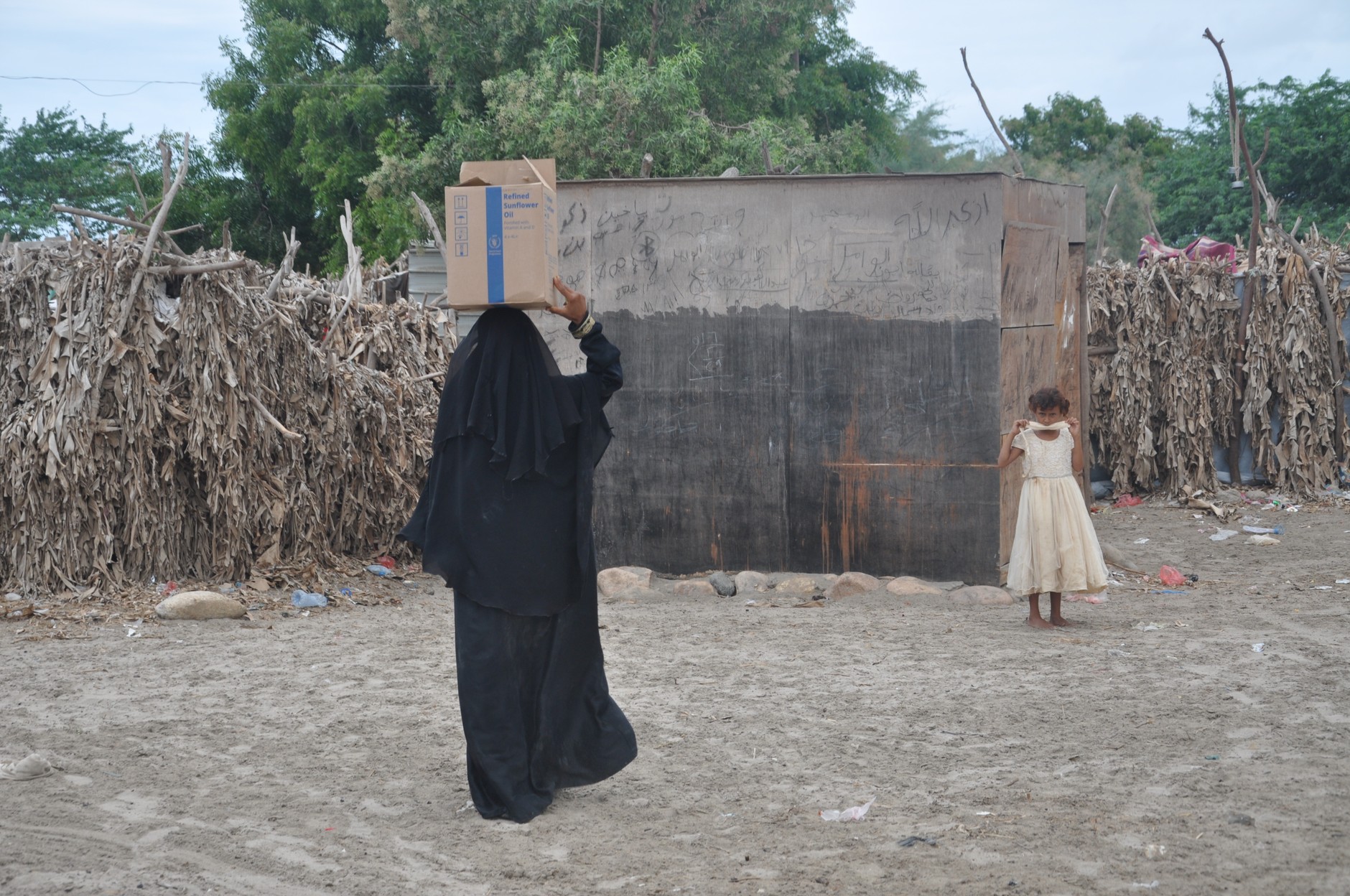
A woman from Yemen looking for food to feed her familyPolish Humanitarian Action
I once talked to a Yemeni, the head of the family, who had such plans. I tell him that his daughter is still a child, she is 10 years old, too early for marriage. He replies that she is destined to marry an older man – because he has many children and cannot afford to feed them all. She assumes that her daughter will be better off with her husband than with her parents – with no food or opportunities for education.
And it happened, the girl married me. But her husband did not agree to her taking up studies – because now she is a “woman” and is expecting a child. The baby will have a baby.
Terrifying.
Unfortunately, this is commonplace in Yemen. I also remember another story. A few months ago, Yemen was hit by a massive flood, causing catastrophic losses. A three-year-old boy was playing in front of one of the tents. Water flooded the cables and he was electrocuted. The boy lost his eyesight and still cannot see. How to comfort a child who has experienced such a tragedy?
The article continues below the video
I don't think there is an answer to this…
I can't find it either. And unfortunately, there are many such cases. However, the most tragic are probably those related to gender-based violence. I once talked to a woman who lost her husband and was left alone with her children. She lived with them in a tent, like many Yemenis in the region where I work. One time the power went out – such outages are common in Yemen. Night came. A man broke into her tent. She had no way to defend herself – it was dark, no one was around. A strange man attacked and raped her in front of her children. That's the scariest story I've ever heard. Because how can I help such a woman? Ask who attacked her? She doesn't know.
How do you deal with it?
It's hard to look at things like this. But I try to focus on what I'm doing. I visit these families, I try to help them and comfort them. Everything revolves around this. As employees or volunteers, we don't lead a normal life here – I haven't slept for three days because there is always something to do. And it's not just a matter of duty. We constantly think about the people we help and we feel responsible for them. We try to do what we can, but it doesn't always work.
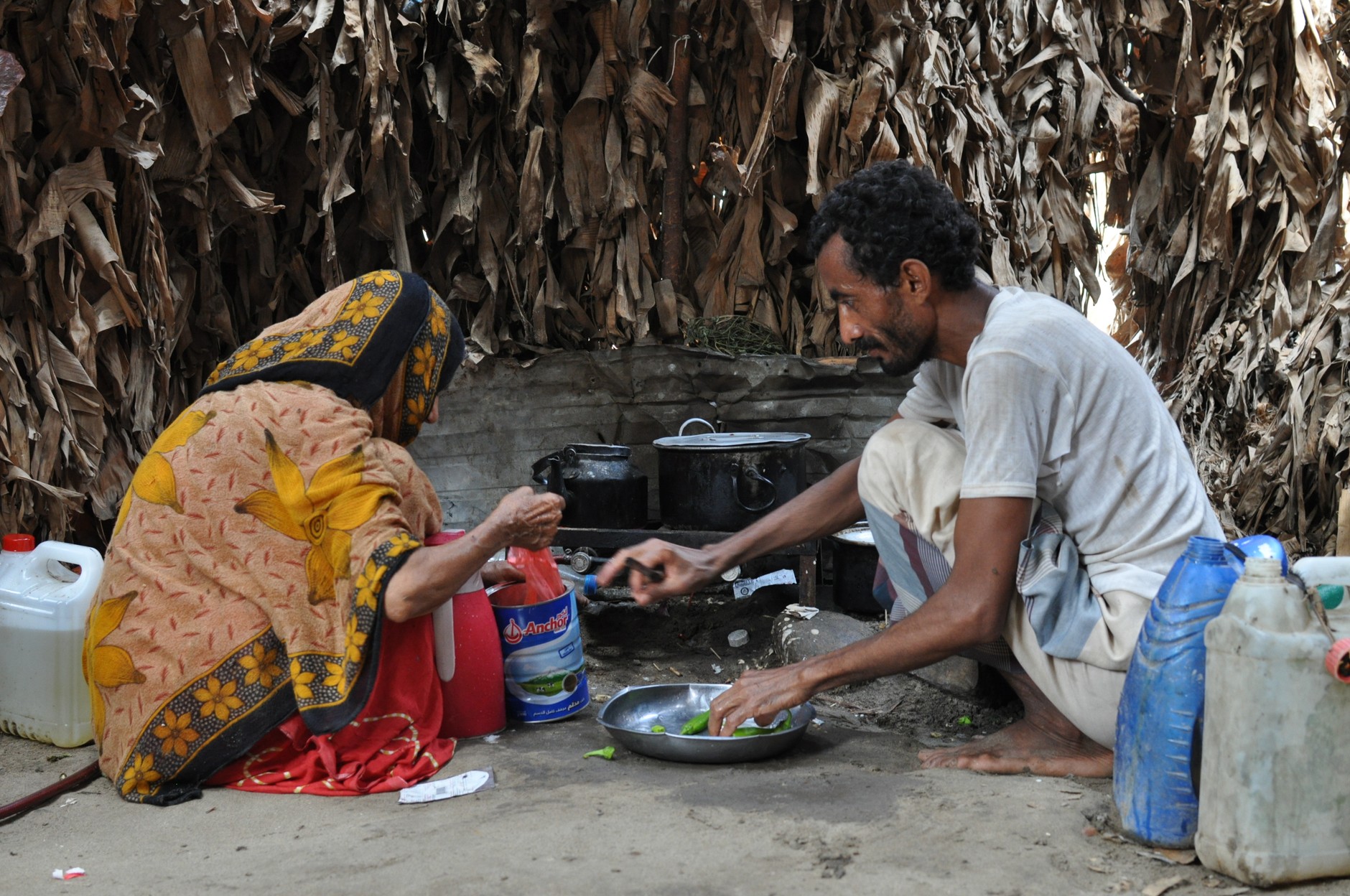
Yemenis preparing food in a makeshift wayPolish Humanitarian Action
The mother of the blind boy I mentioned keeps asking us to do our best to contact someone in Saudi Arabia – maybe they will give money and help. Yes, we can do it and we might even succeed, but the money won't restore his sight. This powerlessness is probably the worst.
Regardless, you continue to help.
Yes, I can't imagine it any other way. I want to do what I can for these families. I feel like I have to.
Do the people you help still hope that this war will end?
They have it, but they don't believe that anything good awaits them. Many people told me that the war would end one day, but their lives would not be the same as before. In the cities where they lived, they had an orderly life, they were relatively well off, some were even rich. But they had to escape and today they have nothing. They lost everything because of the war.
They can only count on help from humanitarian organizations.
After 10 years of war, only a few organizations remain in Yemen. The Polish Humanitarian Action, where I work, has been operating in this country since 2019, mainly in the Ma'rib region. From 2022, we run five camps for internally displaced people and the Al Saqet clinic. We supply water, medicines, dressings, laboratory reagents and necessary equipment. We also support, among others: financially – local medical staff and we take care of sanitary infrastructure – this is necessary due to the threat of a cholera epidemic. We try to help as comprehensively as possible, but this is only a drop in the ocean of needs.
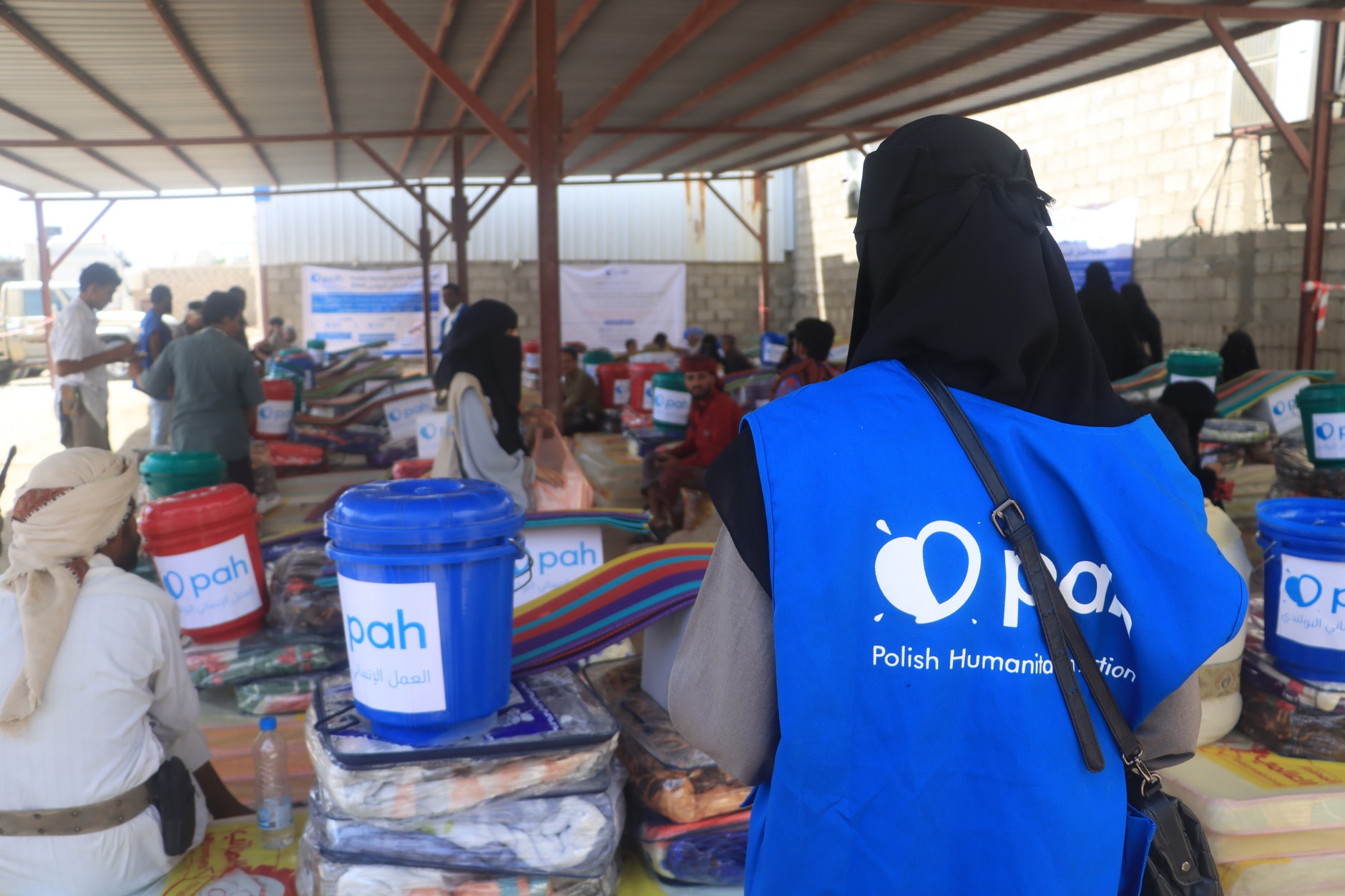
Employees of the Polish Humanitarian Action providing aid to the inhabitants of YemenPolish Humanitarian Action
What does Yemen need most right now?
Primarily food aid and health care. And shelter – not temporary, emergency, but solid, which will be resistant to weather disasters, but also provide protection against gender-based violence. We provide caravans – they have a door and a key, women can lock them and protect themselves and their children. Finally, we also need solid education – this is an aspect that aid organizations often ignore because it is not the first thing we need. But it is very important – without education there is no future. Yemen won't have it once this crazy war is over. That is why it is especially necessary to get the country back on its feet one day.
***
The conflict in Yemen, which escalated significantly in 2014, is one of the most complex and long-lasting contemporary crises in the Middle East. Its cause is a combination of political changes, historical traumas, regional situations and socio-economic challenges. Following political instability following the Arab Spring in 2011, armed clashes intensified and in 2015 a regional military coalition intervened to support the internationally recognized government.
Since then, many domestic and international actors have been involved in the conflict, leading to the fragmentation of power across the country. Key groups controlling various regions include the Houthi (Ansar Allah) movement in the north, the Southern Transitional Council (STC) in the south, the internationally recognized government of Yemen, and various tribal and local militias. The armed competition between them has serious humanitarian consequences, including widespread displacement, famine, infrastructure destruction and economic decline. Despite diplomatic efforts, including UN-led initiatives, a comprehensive and lasting solution has not yet been achieved.
PAH employees do not want to talk about this issue so as not to jeopardize their safety and risk being expelled from Yemen and thus losing the opportunity to help its inhabitants.
You can support the activities of the Polish Humanitarian Action in Yemen here:
https://www.pah.org.pl/gdzie-dzialamy/jemen/
https://www.pah.org.pl/wplac/?form=wspieram-dzialania-pah-pomoc-humanitarian-w-polsce-i-na-swiecie