The ills of the past threaten the future. Top infections that can reappear, including in children


The increasingly pronounced lack of interest of parents in immunizing children with vaccines from the national scheme will lead to the reappearance of potentially serious infectious diseases, draw the attention of doctors. Among them: diphtheria, whooping cough, polio, tuberculosis and more. Data from international reports on childhood vaccination continue to place Romania in the top European countries with low immunization rates. For the measles vaccine, for example, Romania recorded almost 80% of all measles cases in the EU, according to the OECD's Health at a Glance 2024 data.
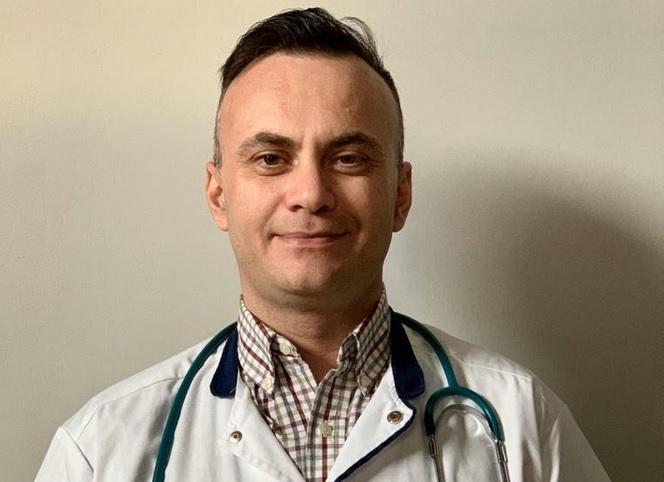
Dr. Adrian Marinescu, primary physician of Infectious Diseases, manager of the “Prof. Dr. Matei Balș” National Institute of Infectious Diseases in Bucharest, advocates vaccination as a life-saving method and makes some important clarifications regarding the cases of Hansen's disease (leprosy) identified in Cluj.
More and more parents seem to have put a barrier to vaccinating their children, opening the way to potentially fatal or disabling serious infectious diseases.
The ever-lower vaccination rates testify to this situation. Thus, in Romania, until the end of last month, the measles epidemic produced over 36,000 cases and 30 deaths, most of them in children, according to the data National Institute of Public HealthINSP.
The MMR (measles-mumps-rubella) vaccination average is below 70%, a worrying drop.
The report Health at a Glance: Europe 2024 of the OECD shows that Romania recorded 77.8% of all measles cases at the EU level. And it is not the only example.
“First of all, it should be understood that vaccination – as a principle of prevention – is the best measure by which complications from infectious diseases are not reached. It does not lead to death. Basically, throughout history, since we talk about the vaccine, this is exactly what we started from: namely that vaccines save lives”, emphasizes Dr. Adrian Marinescu, primary physician of Infectious Diseases, the manager National Institute of Infectious Diseases “Prof. Dr. Matei Balș” from Bucharest.
And we're not just talking about the MMR vaccine, but also about the other vaccines that, unfortunately, we've gotten to do less and less, adds the specialist.
Apart from smallpox which is really eradicated, adds Marinescu, other diseases are not, and the fact that they are rare does not mean that they are completely absent. “And I think the best example is related to Hansen's disease – that is, leprosy. This disease has also existed in recent years worldwide, it's true, in endemic areas in Africa, Asia, and Latin America. What reached Europe were imported cases, as is happening now with those cases from Cluj”, points out the infectious disease doctor.
“Leprosy is not easily transmitted”
It should be said at the outset that there is no targeted, dedicated vaccine against leprosy. There are data that the BCG vaccine may provide partial protection, but these data are incomplete and the vaccine in question clearly has nothing to do with leprosy as a target. “On the other hand, leprosy is not a disease that is easily transmitted. In order for it to be transmitted, prolonged and direct contact is needed, of people who live in the same house and who come into contact with each other. Then there is a major risk and more complicated situations can be reached in which there are many cases. But with us, there are only imported cases, with people who possibly stayed in the same house and had prolonged contact with those sick people who were also untreated”, says Dr. Marines Adriancu.
In fact, Hansen's disease – leprosy – is an infectious disease caused by bacteria Mycobacterium leprae, the disfiguring skin lesions being present on the face but not only. The disease can affect both adults and children, the treatment consisting in the administration of three types of antibiotics at the same time, over a long period – between 6 months and a year – depending on the form of the disease.
“The problem is when you have an underdiagnosis, when you don't end up with skin lesions and it's hard to put the diabostic. It is the situation where leprosy patients end up having symptoms years later. And here is actually the discussion, because, those cases, even if they are isolated, some of them are untreated. Unfortunately! And there is a risk of transmission at the level of a family outbreak”, explains Dr. Marinescu.
“Tuberculosis is a real problem”
The BCG vaccine protects against severe forms of tuberculosis, it is included in the national vaccination scheme, and yet tuberculosis remains a real problem in Romania, compared to other EU countries.
The major difference from leprosy would be that tuberculosis is transmitted very easily, through the respiratory tract, even if a bacterium is also responsible for its appearance – Mycobacterium tuberculosis. For his part, the treatment against tuberculosis is a long-term one, says Dr. Marinescu: “Tuberculosis is a disease present especially in vulnerable groups and which can be opportunistic. And then, for those who have a collapsed immune system – and, unfortunately, they are not in small numbers in Romania – it is a real risk. Because many of these people do not reach the doctor in time, they are not treated. So, our network of treatment against tuberculosis works very well, with provided you have a correct diagnosis. But if people don't get to the hospital for various reasons, unfortunately, they will represent a source for future outbreaks.” Plus, antibiotic treatment is long-term and the patient needs to follow it exactly in order to achieve the expected effect.
Among the infectious diseases, poliomyelitis is one of particular gravity due to the induced mortality, but also due to the motor handicaps it leaves for life, according to National Center for Surveillance and Control of Communicable Diseases.
The poliomyelitis virus is extremely contagious and is transmitted either through the fecal-oral route, by ingesting food and water contaminated with faecal matter in which the virus is present for a long time, or through the air, through droplets, the virus being also present in nasopharyngeal secretions. The most common source of infection is humans, especially children with latent infection, the so-called healthy carriers, according to the CNSCBT.
The most common form of the disease is the one without symptoms – 95% – but it can evolve in the proportion of 1-5% in the form of paralytic poliomyelitis or meningeal irritation.
The last case of poliomyelitis in Romania was registered in 1992. Even if the risk of poliomyelitis is not a major one in Romania at the moment, it must not be forgotten that in the conditions of a war on the border and massive movements of people, in a population that is not properly protected, it is very possible for new cases to appear. “And not just polio. We can also talk about diphtheria and any disease, in fact, that is not eradicated”, draws the attention of Dr. Adrian Marinescu.
In conclusion, the infectious disease doctor also says, we should not reinvent the wheel: “Because these vaccines saved us from serious public health problems. And, as I said at the beginning, many millions of lives were saved. So we should return to the principle of vaccination.”