The memories of a writer deported to Siberia when she was 7 years old: “We were put in the car without having the right to take anything from the house”


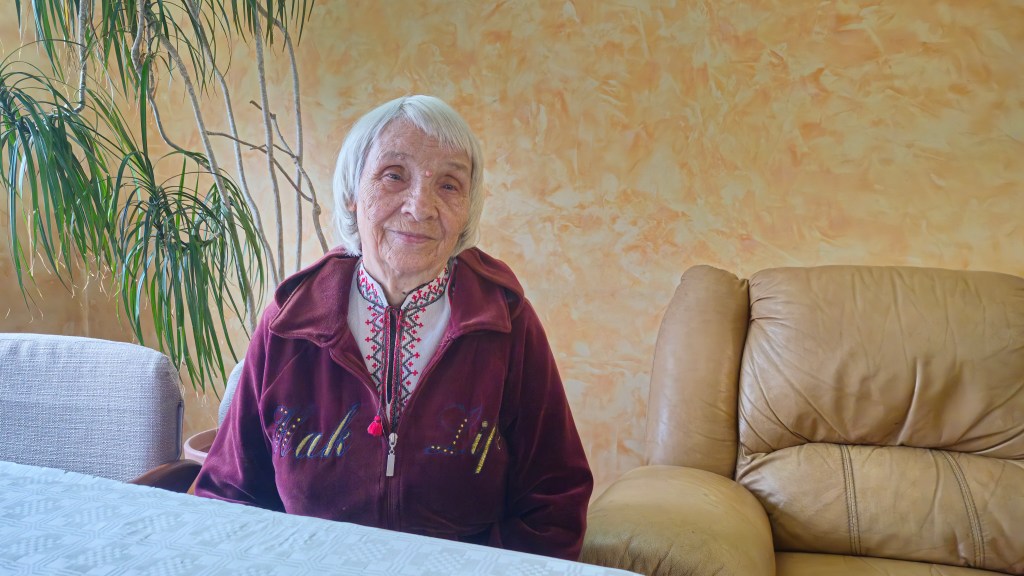
“I really wanted everyone to know, especially the youth. To find out the truth, what the Stalinist-Satanist regime was like,” says, as a sigh after a great effort, the writer Margareta Spînu Cemîrtan, who narrated her life in the Soviet gulag in books such as “Wolves. Memories from Siberia” and “Siberia from Home”. HotNews spoke with the author from the Republic of Moldova, on the occasion of the event “Deportations of Bessarabians – living testimonies”, organized by the Institute for the Investigation of the Crimes of Communism and the Memory of the Romanian Exile.
- At the age of seven, Margareta Spînu-Cemîrtan was put in a military car and deported to Siberia, together with her father, brother and grandmother. At the end of three weeks of “prison on wheels,” they arrived in an isolated hamlet, where winters reached minus 50 degrees and survival depended on a ration of wood, a stud of 200 horses, and the occasional theft of a handful of wheat.
The story of Margareta Spînu-Cemîrtan (83 years old) begins one day in 1949, on the outskirts of Mihăilenii Vechi village, Rășcani district, Bălți county, Republic of Moldova. She was seven years old and was working in the garden, and her older brother, along with his father, were making a haystack, as she now remembers. A military car stopped in front of the gate and the president of the Village Soviet got out of it, accompanied by two soldiers.
“My father was a peasant, a widower, he had no wealth, he did not play politics and he had not fought against the Russians in the war,” recounts Margareta Spînu-Cemîrtan.
The charge against his father was related to a “manufacturing scam”. In the 40s, his father had sold various things, small things, and for this reason, the Russians categorized him as a “merchant”.
The three family members were quickly put into the car without being allowed to take anything from the house. The military car also made a stop at the paternal grandmother's house, in the middle of the village. The grandfather had previously been arrested and sentenced to ten years, but without the relatives finding out what was the reason for which he had been imprisoned. Because of this, the burnica was also going to be deported.
The writer now remembers that the grandmother expected to be sent to Siberia: “Someone had warned her, I don't know who. She had taken pillows, quilts and so on from the house. We left without anything. Before she got into the car, the grandmother made a cross in the air and said to the neighbors gathered there: “Good people, forgive me if I did something wrong”.
“If anyone stood up, even a child, they would shoot in the air”
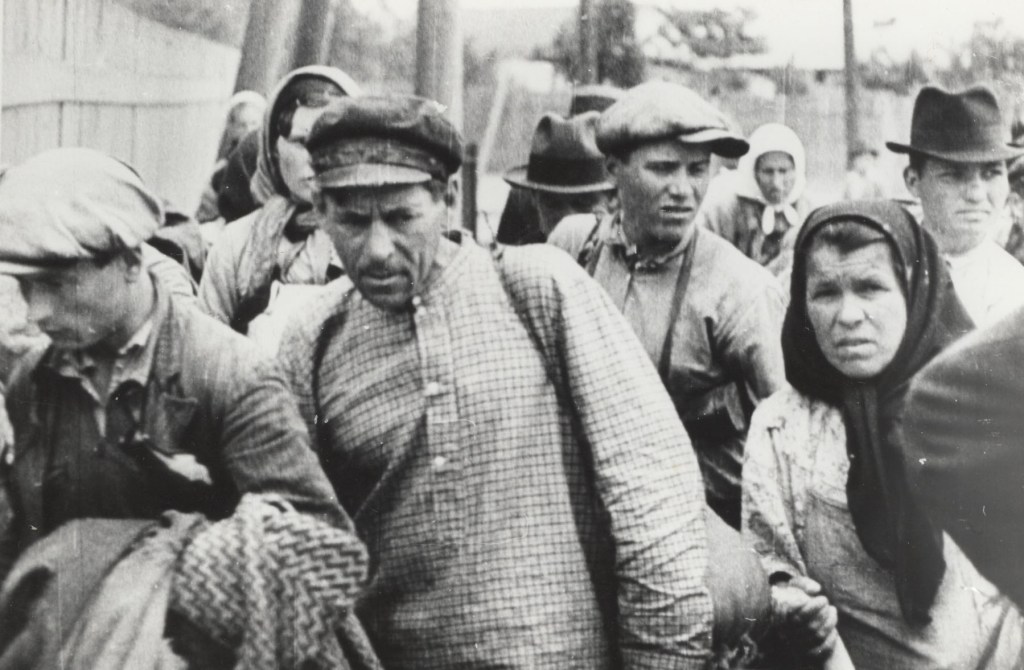
In all, four families from the village were loaded into the military car. The last stop was at Pămăteni railway station in Balti. They were kept here for almost half a day, without food or water, while the authorities continued to bring arrestees to the platform. Margareta Spînu-Cemîrtan remembers very well the image of the soldiers shooting in the air to intimidate those brought.
“It's something terrible that stuck in my mind. Screams, wails, shots in the air. They put everyone on the ground, and if someone stood up, even a child, they shot in the air,” says the writer.
In the evening, after the authorities gathered more people, they loaded them into cattle cars, with straw and dung on the floor, divided into two levels. The wagons had two barred windows, where the arrested would crowd to escape the heat and the foul smell.
A woman threw her baby into the river
Margareta Spînu-Cemîrtan tells that on the way they only got some salted fish to eat. Grandma had been more inspired and had taken with her a little over 20 kilos of salty, solid cheese that “you couldn't even stick a knife into”. Cheese was the main food they had on the way to Siberia.
The journey took three weeks. The only stop was at the Volga, when the wagons opened and the arrested were allowed to get off the wagons to get water from the river. The moment did not last long, for a young man, taking advantage of a moment of inattention on the part of the soldier guarding the wagon, jumped into the water and managed to escape, in spite of the fact that the soldiers fired after him.
As reprisals for the escape, the soldiers stopped letting the other prisoners, including Margareta Spînu-Cemîrtan, drink water. She says that one of the memories that marked her then was that of a woman with four children who threw her baby into the river through a hole in the wagon. He also remembers that an elderly woman died from the cold.
Arrival in Siberia
At the end of a difficult road, the deportees reached Siberia. Margareta Spînu-Cemîrtan's family was sent to a forest that the locals called “Orlov's estate”, a place with 15 houses.
“The Russians didn't know exactly what happened to Orlov either, because he had been arrested. Probably the Bolsheviks shot him.”
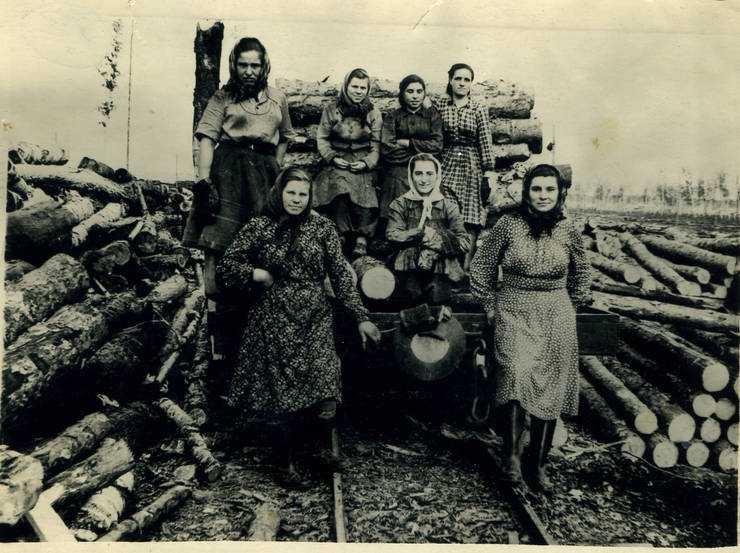
When she arrived in Siberia, the writer's family knew only one thing: that she would stay there forever, as they had been told. Deportees were placed in the homes of local residents. The writer's father had been forced to cut wood, being forced to do a certain norm in order to receive in return what he needed for survival. Constrained by the situation, the father was forced to take his 11-year-old son with him, to help him do the routine.
“He would give him a kilogram of wheat or something else. If he didn't do the norm, he didn't get anything,” remembers Margareta Spînu-Cemîrtan.
In winter they put their cattle in the house for fear of wolves
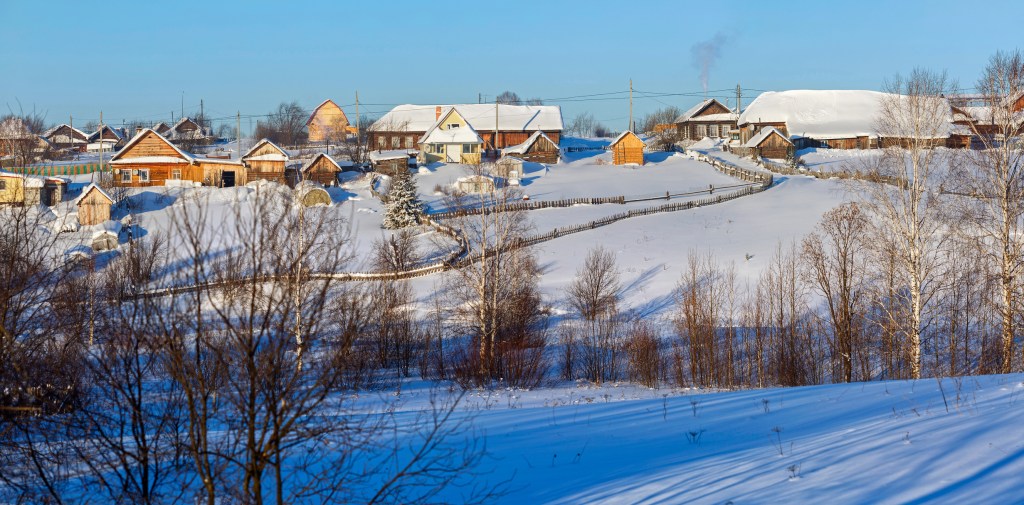
In Siberia, the hardest thing to bear are the very low temperatures, says the writer. The snow started falling in September and lasted until May. She tells that during this period the Russians put their cattle in the house, not because of the cold, but because of the fear of wolves. And when someone in the village died, the coffin was mostly covered with earth, because people couldn't dig in the frozen ground.
Margareta Spînu-Cemîrtan says that the winter period was, for her, a prison, because she had to stay in a room of nine square meters, having no clothes to go to school with.
In the first winter, all the deportees died. The writer says that the Moldavians had aubergine faces because of the cold, unlike the locals, who, because they had cows and goats, smeared their faces with butter to protect themselves from the cold.
“The military man came to my father with a gun and told him to go to work. My father replied that he didn't have the right clothes for the cold, and he told him that it didn't matter, because he came there to serve his sentence,” the writer remembers.
The father was saved by the grandmother who managed to get him clothes after bartering the things she had brought with her from home.
“The earth appeared!”
The arrival of spring, in May, remained imprinted in the writer's mind. When the snow started to melt, the Russians in the area where he lived would shout, as if at a celebration: “the earth has appeared.”
Margareta Spînu-Cemîrtan remembers that she used to walk from morning to night, sent by her grandmother, to collect mushrooms, weeds and everything else she could to cook. With the change of season, his father received a new assignment, delivered, as all orders were delivered, with a gun in sight: to take care of the 200-horse stud in the area.
During the first year spent in Siberia, the first major drama in the family's life took place. His brother stole a roll of wool from the local sheep farm in the hope that his grandmother would be able to make better clothes for the family. However, the authorities discovered the theft, her brother being reported by a Russian friend. He managed to escape by running to a stud but was caught and sentenced to four years in prison.
Father's arrest
Margareta Spînu-Cemîrtan tells that another tragedy followed for the family. “After my brother's arrest, I was starving, I had nothing left, the potatoes and milk were gone. One night, a Russian neighbor knocked on our window. She told me to call my father, that it was urgent. I heard what they were saying in Russian: she told him to go steal wheat, because the guard got drunk,” the writer recalls.
The father accepted and returned home with the stolen wheat. The next day, before dawn, the authorities came and arrested him. He was sentenced to ten years in prison.
Stalin's death, celebration in Siberia
A moment of joy for the deported Moldovans, the writer also recounts, was when they found out that Joseph Stalin, the leader of the Soviet Union, died in 1953. Margareta Spînu-Cemîrtan was at school, when the teacher entered the room and told them, crying, what had happened.
The moment was a turning point, because it also brought with it the opening of the authorities. However, shortly after, because the writer was only in the care of her grandmother, the authorities decided to send her to an orphanage located 120 kilometers from the Siberian village.
Three years after the death of the Soviet dictator, the family was allowed to leave Siberia. The first was the grandmother, followed by the writer's father and brother, released from prison. Being in an orphanage, she was adopted, with the consent of her newly freed father, by the extended family from her native village.
“In '56 we all returned from Siberia, one by one, as they let us go. But only the grandmother was allowed to return to her native village. The father and brother did not receive a residence visa, and without a visa you could not work. The brother went to the army in Siberia, for three and a half years, and the father went to the sugar factory in Dochia, as a fireman”, says the Bessarabian writer.
“It was heaven, now it's all empty”
When asked how she discovered her native village, seven years after the deportation, Margareta Spînu-Cemîrtan says that everything had changed. “When I was a child, the village was a paradise: gardens everywhere, each man had a hectare of sown wheat, grapes, corn, everything you need. Now everything was empty. Everything was taken out, everything was plowed and sown what the Russians wanted, what they needed for collectivization.”
After the fall of the communist regime, Margareta Spînu-Cemîrtan decided to tell her story, being encouraged by the writer Grigore Vieru.
“I definitely wanted everyone to know, especially the youth. I wanted them to know the truth, as it was in the Stalinist-Satanist regime. This was my goal. The young people should learn to have dignity, to guard justice and to be democrats. Dignity must definitely be preserved,” concluded the writer Margareta Spînu-Cemîrtan.