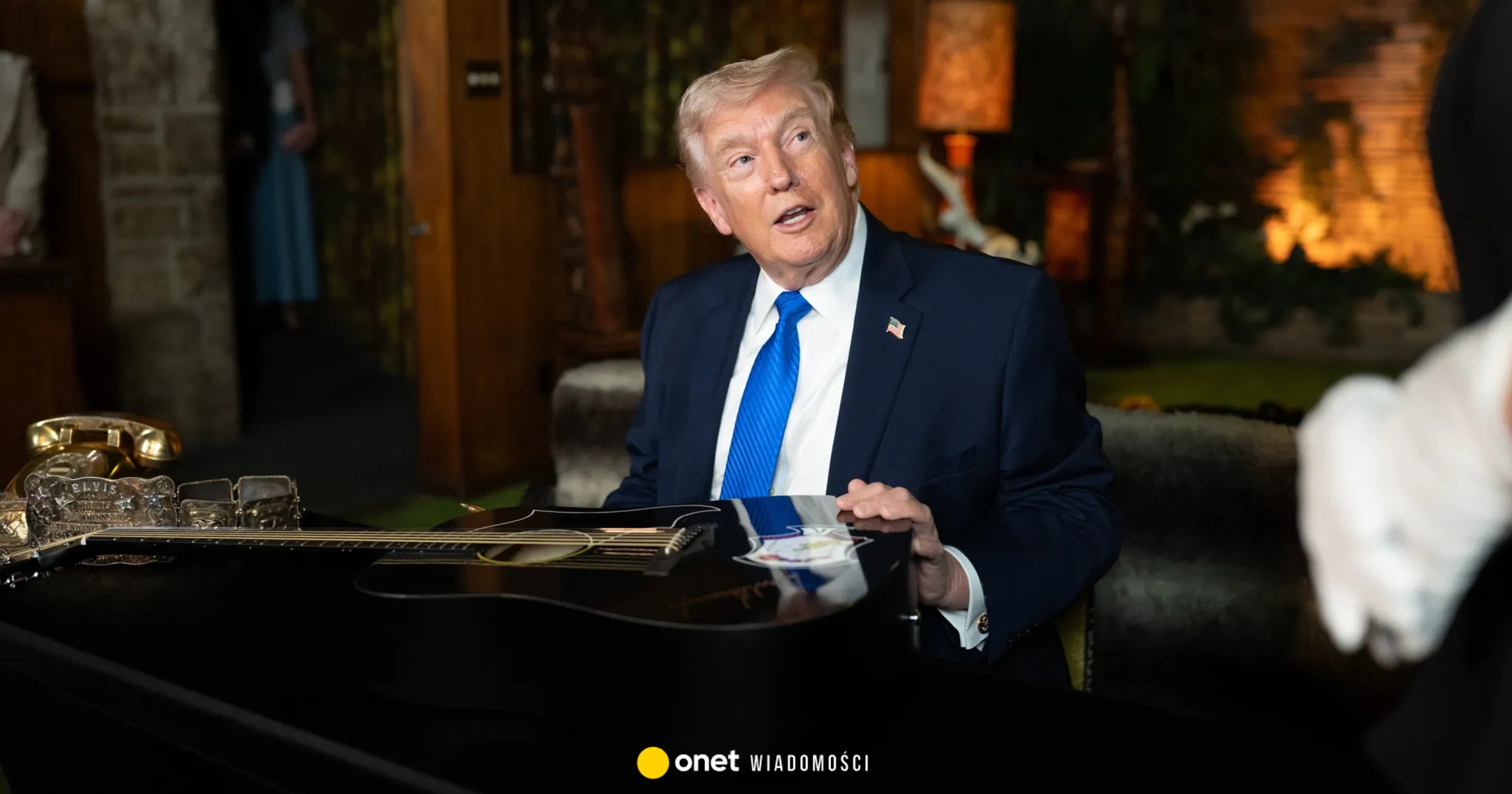
The curtain fell. Trump wants to divide the world into spheres of influence. Five predators


The Trump administration has been in power for less than a year, and many Europeans already feel like it's a never-ending nightmare. In recent weeks, governments on the continent have been frightened by Washington's clearly pro-Russian stance in negotiations to end Russia's war in Ukraine. This week, a new National Security Strategy (NSS) of the United States was introduced, which is clearly anti-European in nature.
Initially, the main assumptions of the NSS were not a big surprise to anyone. In the future, the United States wants to focus on competition with China and domination in its own backyard, i.e. the “Western Hemisphere”, and significantly limit its involvement in other regions.
“Our elites made a grave error in assessing America's willingness to bear forever global burdens that the American people did not perceive as being in the national interest. They allowed allies and partners to shift the costs of their defense onto the American people,” the NSS reads.
As it stands, it would just be an old and completely understandable chant about US allies needing to do more for their own security – if not for the part about Europe.
It contains a collection of stereotypes that seem to come directly from the cultural propaganda of the MAGA (Make America Great Again) movement.
According to them, the continent is not only in economic decline, but also “destroying” its own civilization. Europe's problems are “transnational organizations such as the EU that undermine political freedom and sovereignty, migration policies that are transforming the continent and causing conflict, censorship of free speech and repression of political opposition, falling birth rates, and loss of national identity and self-confidence.” According to the authors of the strategy, due to immigration policy, in a few decades most NATO members will not come from Europe.
— This is the first national security strategy of the MAGA movement. Rather than attacking Xi or Putin, the document's biggest criticism is aimed at globalist elites in the United States and especially in Europe, says Rebecca Lissner, who co-authored the Joe Biden administration's 2022 national security strategy.
The authors of the strategy also refer to the war in Ukraine. In this context, they portray European leaders as opponents of American peace efforts who do not meet their citizens' desires for peace and undermine the democratic process. To put it bluntly, according to this strategy, anyone who opposes Russia-friendly peace terms is a warmonger and an anti-democrat.
According to the NSS, the Trump administration wants to continue supporting “patriotic European parties” — that is, the populist right — and combat the perception that NATO is an alliance that can continually expand. No wonder the Kremlin clearly welcomed the new US security strategy.
The end of the historical order
Many experts saw this not only as another sign that Washington had changed sides in Russia's war against Ukraine, but also as evidence that it was interested in destabilizing Europe. The anti-European interpretation is confirmed by the Defense One report on the expanded, unpublished version of the US National Security Strategy. As the website notes, it includes countries such as Austria, Hungary, Italy and Poland. These are countries with which the United States “should work more intensively” to get them out of the EU.
The US goal appears to be to weaken and perhaps even divide the EU. After all, its economic power was a thorn in Trump's side during his first term. The division of the European community would enable the United States to force individual, and therefore weaker, European countries to make further concessions, for example in trade matters.
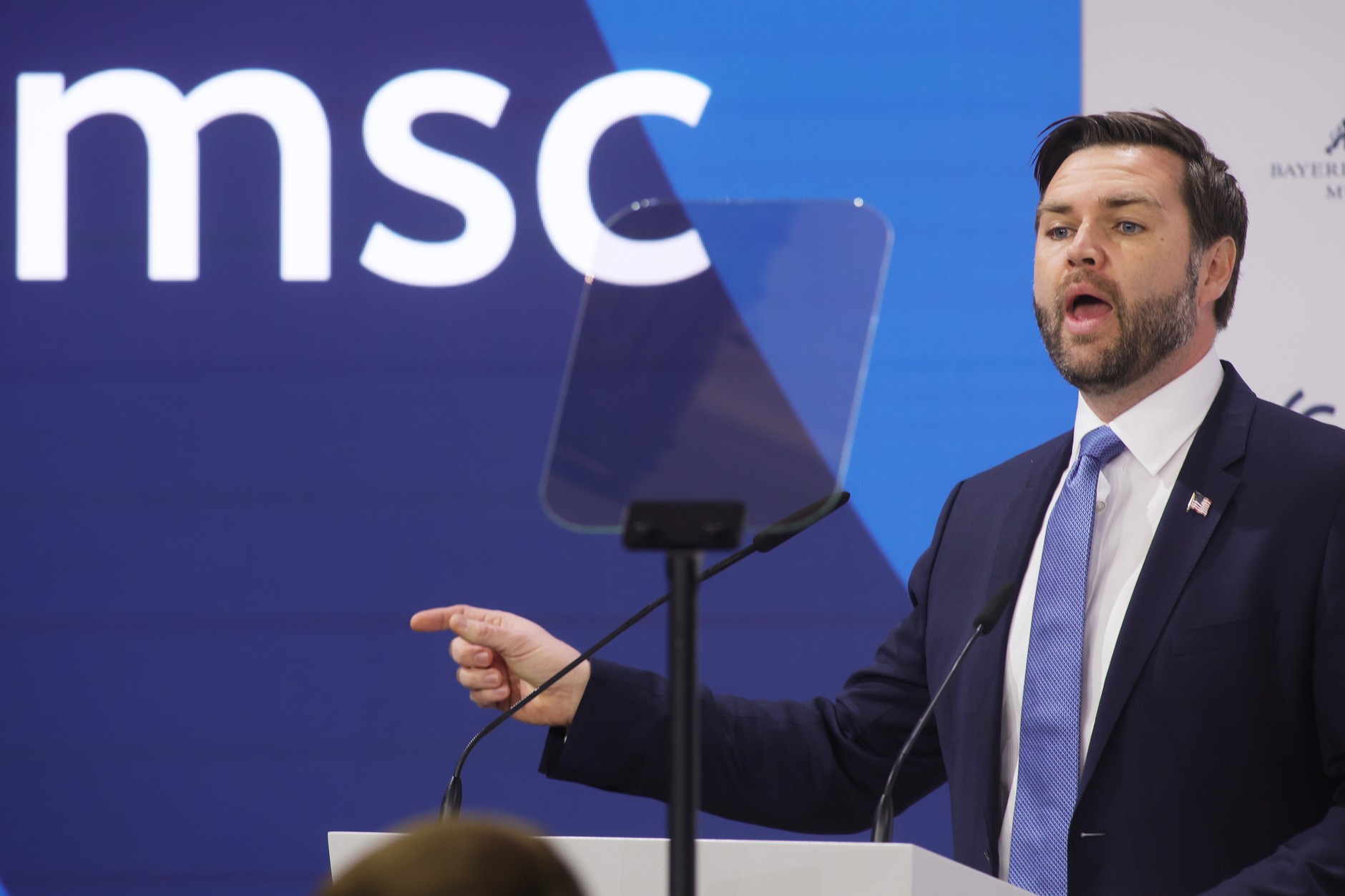
Vice President of the United States JD Vance speaking at the Munich Security Conference, February 14, 2025.Johannes Simon / Stringer / Getty Images
“From Vice President J.D. Vance's speech at the Munich Security Conference that disparaged Europe to the new national security strategy, the Trump administration presents a clear and coherent vision for Europe. The U.S. concept prioritizes Russian-American relations and attempts to pursue a 'divide and rule' strategy for the continent, with much of the dirty work being done by nationalists and far-right forces in Europe that are now supported as much by Moscow as Washington,” writes Italian foreign policy expert Nathalie Tocci in Foreign Policy magazine.
“It is high time for the continent to realize that it is, at best, alone when it comes to the Russia-Ukraine war and the security of the continent. And in the worst-case scenario, Europe now faces two adversaries: Russia in the east and Trump's United States in the west“- he adds.
In fact, the historic arrangement is coming to an end. For 70 years, the United States played the role of a benevolent hegemon in Europe. They supported the process of European integration because they were interested in stabilizing a region that had plunged the world into two world wars and in securing an area of freedom from the Soviet dictatorship. The US and its Western allies have built an empire based on consent, not coercion.
They extended a protective shield over Europe, but at the same time allowed Europeans to compete with the US on the market and operate on equal terms, instead of creating relations of economic exploitation like previous empires. This arrangement now makes Europe particularly vulnerable to Trump's actions. He no longer believes in the blessings of free trade. It sees the continent's military weakness as a means to weaken the EU's economic strength and gain unfair trade advantages for the US.
New spheres of influence
Trump “seems to hold the view that alliances are less pillars of a win-win order than elements of a racketeering mafia — and that it's high time the United States started reaping the rewards,” write political scientists Robert Kelly and Paul Poast in Foreign Affairs. The weaker and more divided Europe is, the more he has to gain.
— The time for security guarantees is over, notes Roderich Kiesewetter, a CDU foreign policy expert. — Washington currently treats us more like an annoying client state [kraj formalnie niezależny, ale w praktyce uzależniony i podporządkowany silniejszemu państwu]which has to pay tribute, or like an economic opponent who has to be kept in check.
In fact, Trump's security strategy means that the US is moving away from the role of a guarantor of a multilateral order of equal states and moving to the world of power politics in which great powers divide the world into spheres of influence. “The dominant influence of larger, wealthier and more powerful nations is a timeless truth of international relations,” reads the NSS. The unpublished version mentioned its creation group of countries (C 5) that would decide the fate of the world in the future. It included: the USA, China, Russia, Japan and India.
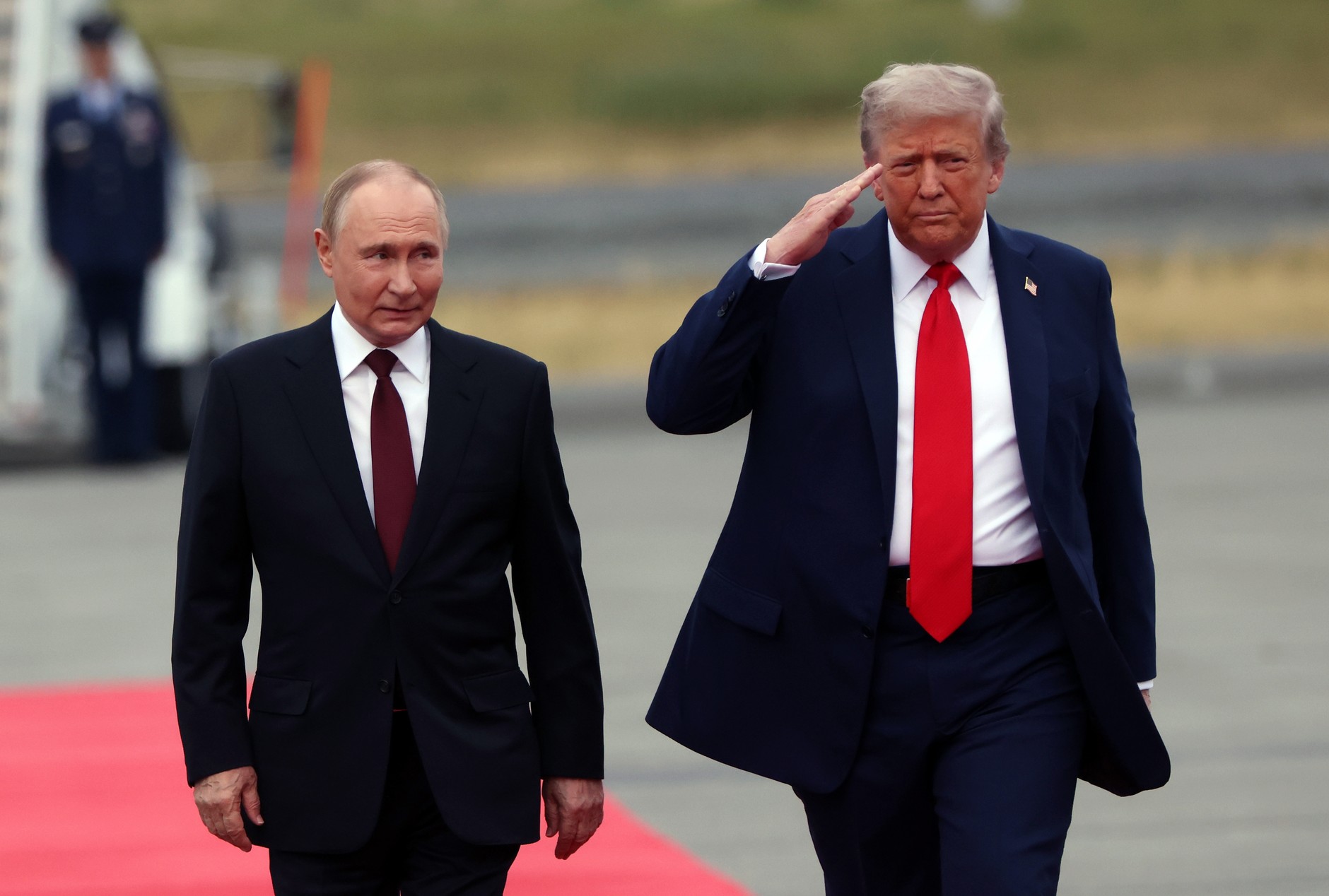
Vladimir Putin and Donald Trump in Alaska, August 15, 2025.Contributor/Contributor; Bloomberg/Contributor/Getty Images
In this world of great powers, Trump demands that the Americas be the exclusive sphere of US influence. To this end, he reactivates the Monroe Doctrine of 1823, according to which all influence of foreign powers in America should be severely limited. His claims on Danish Greenland stem from this way of thinking.
For Europe, this means that great powers – such as Russia and the United States – seek to divide them between spheres of influence on the old continent, without much participation from European nations or Russia's “near abroad” countries, such as Ukraine. The NSS mentions the need to “restore strategic stability with Russia.”
Some believe that the situation will not be that bad for Europe. – I share serious concerns, but not dramatic conclusions – says, for example, Wolfgang Ischinger, long-time chairman of the Munich Security Conference. — The United States needs us almost as much as we need the United States, he adds.
Trump one thing, Americans another
Others point out that the vast majority of Americans share neither the Trump administration's pro-Russian policy towards Ukraine nor its hostility towards NATO. According to the latest Reagan Institute survey, NATO's popularity among Americans has been growing over the past year. The number of people supporting arms supplies from the US to Ukraine also increased significantly – to 64%.
The vast majority of Americans still view Russia as their greatest enemy. The US Congress is also trying to intervene – the defense budget just adopted by the House of Representatives limits Trump's room for maneuver in reducing troops in Europe. Ultimately, however, it is the president who determines foreign policy guidelines. This week he again leveled sharp criticism at Europe, including calling European leaders “weak” in an interview with POLITICO.
This seems to be the problem: in a predatory world dominated by great powers, Europe's impression of weakness is disastrous. Perhaps now it is reaping the rewards of the fact that the European Commission accepted an unfair agreement in the customs dispute with the United States, and that NATO Secretary General Mark Rutte behaved in an excessively servile manner towards Trump. This seems to have only strengthened the impression in Washington of European weakness that could be exploited.
On the one hand, wealth and abundance, on the other hand, limited defense capacity – in previous centuries, such a state structure would have been an invitation to conquerors to take a piece of the fat booty. So far, the United States has protected European NATO countries from the Russian predator. Now Trump's USA is becoming a predator itself. If Europe wants to survive in this new world, it must transform its economic power into corresponding military power.
Few people doubt that Europe has the potential to become an independent military power. The question is – are Europeans and their political elites ready to change their priorities as radically as would be necessary for Europe to become a player equal to Russia, the US and China? And do old European bones still have enough willpower to write their own history, or will they accept that others will write it?