As the EU's largest emitter and economic power, Germany has played a pioneering role and assumed the strictest obligations [w ramach ESR, czyli Rozporządzenia w sprawie dzielenia się wysiłkiem. To główny element polityki klimatycznej UE, który określa cele redukcji emisji gazów cieplarnianych dla poszczególnych państw członkowskich]. However, current forecasts show that Berlin will significantly miss its high target: the German Environmental Protection Agency predicts that Germany will be short of a total of approximately 224 million tonnes of carbon dioxide equivalent in the years 2021–2030.
This deficit must be covered by purchasing emission allowances from other EU countries. According to current estimates, in 2030 Germany will have to pay from EUR 13 to 34 billion in penalties [55 do 144 mld zł]and according to some estimates, even EUR 90 billion [380 mld zł]which would correspond to an amount from 160 to over 1,000 euros [677 do 4230 zł] per capita. The federal government's council of climate experts criticized the lack of “a plan to fill this gap.”
All EU member states share a common target of reducing emissions by 40%. by 2030 compared to 2005. However, the EU sets individual targets for each country depending on its economic strength. Therefore, Germany, Denmark, Finland, Sweden and Luxembourg are expected to reduce their emissions the most by 2030 compared to 2005 – by 50%. Unlike other countries with the highest emissions burden, such as the Scandinavian countries and Luxembourg, Germany is one of the largest industrialized countries in the world, responsible for more than one fifth of the EU's total greenhouse gas emissions, making it structurally difficult to reduce carbon emissions.
Other Member States have negotiated better conditions. Comparable economies such as France and Italy have less stringent requirements; more than half of the 27 EU countries even have reduction targets [emisji] carbon dioxide at a level below 30%. Poorer this way [niż Niemcy] and energy-intensive countries can continue to generate relatively high emissions and even sell expensive emission allowances to Germany. Poland, Greece and Spain are already expecting billions of dollars in revenue from this.
Germany is not alone – according to current data, as many as 12 out of 27 EU countries may not achieve their climate goals under the ESR without additional measures. However, none of them is likely to differ from them as much as the Germans. Berlin is also at a disadvantage because the ESR mainly concerns transport, buildings, agriculture, waste and small industrial plants, i.e. large sources of emissions in everyday life and medium-sized enterprises (other sources of carbon emissions, such as power plants and large plants, are subject to a separate EU emissions trading system).
Germany must therefore bear many additional emission costs that do not occur in the “weaker” Member States. In practice, the EU method relieves, for example, the combustion engine industry in Eastern Europe at the expense of German standards. However, where German companies have already invested in efficiency and innovation, the EU awards almost no bonus points.
Unlike other countries, Germany has already invested heavily in building renovation and transportation, largely picking the “low-hanging fruit” – further large savings would be costly and difficult to achieve. However, it is in the transport and buildings sectors that gaps exist in achieving climate goals.
Germany ranks below the EU average in terms of energy consumption for heating, and German residential buildings are relatively well insulated and equipped with efficient heating systems.
As a transit country in Europe, Germany experiences intense road and rail traffic, which, in addition to direct benefits, also causes emissions. Since, according to ERS, they are calculated at the point of origin, Germany co-finances the transport of goods by trucks and trains that other trading partners “export”. In particular, freight transport through Germany generates emissions that weigh on Berlin's balance sheet, even though the goods are consumed abroad. Every journey counts towards your national emissions bill – Germany pays for the carbon emissions of other EU citizens.
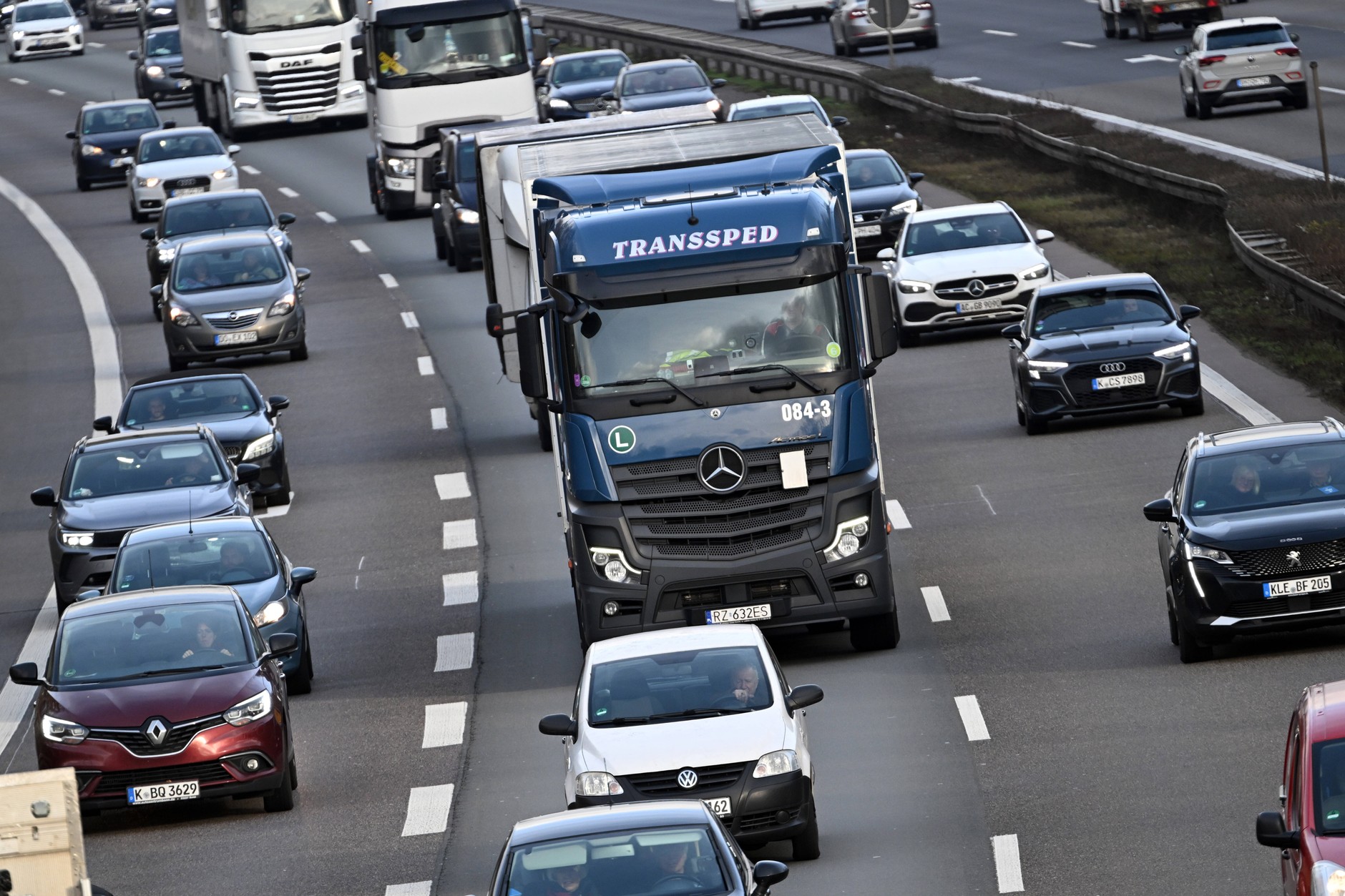
Passenger cars and trucks on the German motorway A1, Cologne, Germany, December 24, 2024.Federico Gambarini/dpa Provider: PAP/DPA / PAP
For these reasons, Germany must make extraordinary efforts to reach the EU average – at a price that weakens the domestic economy. Instead of promoting the creation of industrial value, large financial resources are allocated to compensation for excess allowances issued.
Billions of euros in fines or costly investments
By 2030 Germany must decide whether it will pay the fine or take costly action to catch up. To avoid billions of dollars in fines, Germany would have to take drastic measures: accelerate the renovation of residential buildings through thermal insulation, speed up the replacement of heating networks based on fossil fuels, increase heating energy prices, switch to electric cars, increase gasoline and diesel prices and taxes on non-electric cars, expand public transport, shift transport to rail – all extremely expensive measures to reduce carbon emissions. In addition, there would be forced restrictions in agriculture and industry.
Whatever German politicians decide, it will be costly for Germany: either they will pay huge fines amounting to billions of euros to their EU partners, or they will impose high mandatory spending and restrictions on their citizens and economy. Germany's negotiating position in the EU as a pioneer in the field of climate protection turns out to be an economic boomerang. Other EU governments are rubbing their hands because they either have to do less or may even benefit from clearing German emissions limits.