The story of the heroines who saved people from the wild nature. One of them was only 10 years old, and the other helped people until her last breath


A 10-year-old girl and a 24-year-old woman managed to save hundreds of lives from the unleashed nature, through dedication, sacrifice and attitude towards the subjects taught at school. One of them became a national heroine.
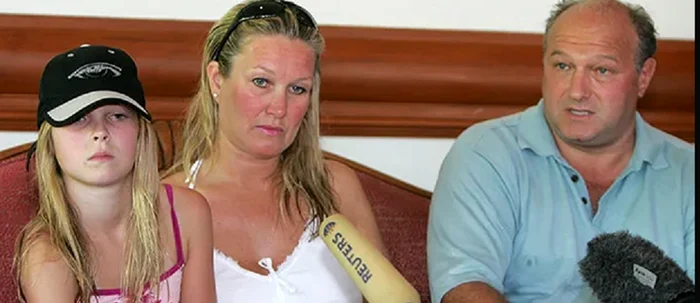
Tilly Smith (10 years old) with her parents PHOTO thesun.co.uk
Among the most devastating natural disasters that can strike human settlements are tsunamis. A tsunami is a tidal wave caused by earthquakes or strong submarine or coastal eruptions that propagates through the ocean at a speed of up to 700 km/h. Unlike ordinary waves, a tsunami affects the entire water column, having a low height offshore, but when it reaches the shore in areas of shallower water, its height increases, causing devastating floods and massive loss of life. According to the National Oceanic and Atmospheric Administration (NOAA), almost 3,000 tsunamis have been documented since 1610 BC. In the last 100 years, they have caused more than 260,000 deaths. Hundreds of lives, however, were saved from the colossal fury of the tsunami waters by a child and a young woman. It is about Tilly Smith, from Great Britain, and Miki Endo, a 24-year-old Japanese woman. The latter gave her life to save as many compatriots as possible, becoming a national heroine in the Land of the Rising Sun.
The kid who saved a hundred people because she was paying attention to class
In 2004, 10-year-old English girl Tilly Smith was on holiday in Thailand with her parents and her seven-year-old sister Holly. It was a festive time, with the British family wanting to spend their Christmas days on Phuket's Mai Khao beaches, a dream destination frequented by many foreign tourists. On the day after Christmas, around 8.30am, the Smiths were walking along Mai Khao Beach.
Neither they nor the more than a hundred tourists who were walking, swimming or kayaking had any way of knowing that in a few minutes one of the worst disasters in the Indian Ocean would occur, a cataclysm that would take the lives of more than 230,000 people. The only one who realized it was Tilly, the 10-year-old girl. And that's because she was paying attention in geography lessons. In one of the lessons taught by her teacher at Danes Hill School in Oxshott, Surrey, UK, she learned about tsunamis and especially how to recognize them. The teacher had shown them a video of a tsunami in Hawaii and she was captivated by that lesson. During the walk, Tilly began to notice with horror many of the warning signs she had learned about in geography class, related to the imminence of a killer tsunami wave.
“The sea receded and I noticed waves coming in but not coming out. The sea actually looked like it was boiling and full of foam. I kept thinking, 'I've seen this before, I've seen this somewhere'. I felt like something terrible was going to happen. I started shouting, 'Tsunami, there's going to be a tsunami.' Of course, they didn't know what I was talking about. At that moment I was completely panicked, I was shouting: “We have to get off, we have to run”said Tilly Smith for The Sun in 2014, 10 years after the incident. At first, nobody took notice of Tilly. He just looked like a child frightened by an imaginary cause. Holly, the younger sister, started to cry and the father went with her to comfort her. Tilly's insistence however led the girls' father to talk to a Japanese security guard at the hotel, people who know a lot about tsunamis.
Hearing the warning signs observed by Tilly, the Japanese realized that disaster was coming. Then the parents believed her. Together with the people from the hotel they quickly spread out and started shouting at the people gathering them from the beach to the higher places. In just a few minutes a huge wave of water hit the beach and the hotels. No one on the beach where the Smith family was was killed. They were saved by the 10-year-old girl who managed to identify in time the approach of the killer wave. She was nicknamed the “Angel of the Beach” and was considered a miracle baby. The disaster that also hit Thailand wreaked havoc across Southeast Asia, killing more than 230,000 people.
At the service of the citizens until the last breath
On March 11, 2011, seven years after the disaster in Southeast Asia that Tilly Smith witnessed, another tsunami would hit the Far East. This time, the coasts of Japan. About 16,000 people died that day along the coast of the Tohoku region, where huge waves wreaked havoc. Several cities and villages in Tohoku were destroyed and hundreds of thousands of people were left homeless. One of the hardest hit was Minamisanriku, a quiet port north of Sendai in northeastern Japan.
Due to the waves caused by the tsunami, the city was completely destroyed. About 900 locals were killed, but nearly 16,000 survived. The miracle was due to a 24-year-old woman who fought until her last breath to get everyone to safety. The heroine of the day was Miki Endo, and she was a radio operator and spotter with the city's disaster response team. The disaster began at 2:46 p.m., about 128 kilometers east in the Pacific along a fault buried deep beneath the ocean floor. A block of Earth's crust 450 kilometers long suddenly wobbled to the east, enough to give rise to the killer waves. The city's mayor, Jin Sato, had just finished a meeting at City Hall on the topic of natural disasters, just days before another earthquake had rocked the region.
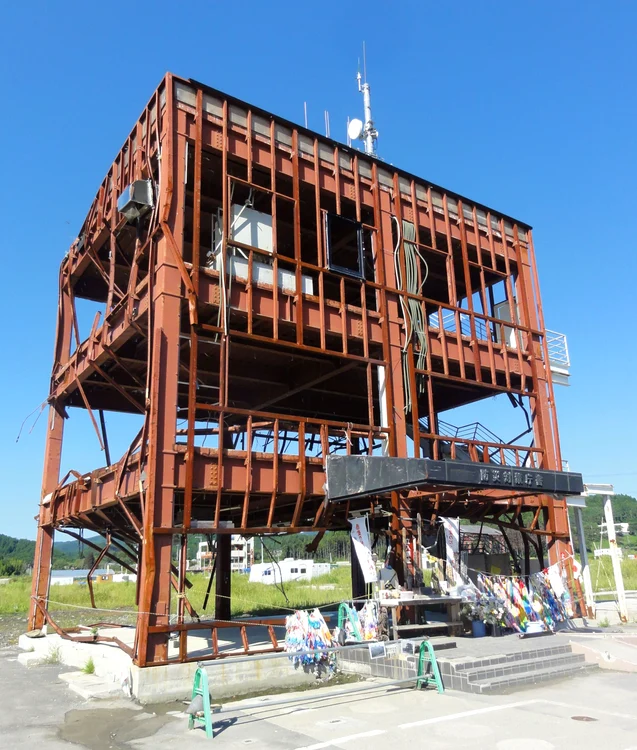
The building where Miki Endo died PHOTO wikipedia
The March 11 earthquake lasted five minutes and was felt over a wide area. Sato realized the danger and immediately alerted the emergency team which included Miki Endo. Along with 28 other employees, they immediately went up to the city's disaster preparedness center, a three-story metal structure building. Miki immediately settled into the microphone, while observing the movements of the sea. He immediately broadcast the warning through the amplifier stations asking the emergency people to head to higher ground. “Please move to higher ground!”the young Japanese woman's voice could be heard throughout the city. Miki stayed on post even as the wall of water came menacingly towards the harbor. He saw the waves overflow the city's five-and-a-half-meter high seawall and destroy the entire harbor. All the while he was telling people where to run and how to take shelter, where the dams had failed and what they had to do, with incredible calmness. In parallel, he quickly sent messages and contacted the evacuation centers to be prepared. The rest of the emergency committee members took refuge on the roof of the building. Miki Endo remained on the second floor in front of the microphone, continuing to deliver precise messages and keep people informed. He transmitted until his last breath.
The huge wave hit the building with incredible force. Miki Endo was killed on the spot. She had managed to save the lives of thousands of people who, thanks to her directions, knew what to do, what roads to avoid and where to go. The evacuation centers knew at every moment how to intervene. One survivor, Taeza Haga, told Endo's mother that the broadcast saved her life. “I heard your daughter's voice all the way. It guided me”the man specified. Miki Endo's body was only found on April 23, more than a month after the tragic incident. The earthquake that caused the giant tsunami had a magnitude of 9.0 and triggered waves that inundated more than 320 kilometers of coastline, triggering a nuclear disaster at the Fukushima plant. Almost a decade after the deadly tsunami of 2011, the small town of Minamisanriku has been rebuilt. The emergency building, or rather the metal skeleton that remains of it, has been preserved as a monument dedicated to Miki Endo's heroism and her sacrifice for the community.