What strategy does Russia pursue in foreign policy? “Chaos theory,” says political scientist Anton Barbașin


For a long time, Russia's approach to foreign policy was explained by the idea of multipolarity – the belief that the global dominance of the United States must be counterbalanced. However, this lens does not provide a complete explanation for Moscow's actions in recent years, including the outbreak of war in Ukraine and refusal to negotiate peace. Inside the intellectual circles close to the Kremlin, however, another paradigm gained ground: the so-called “Chaos Theory”, developed by experts associated with the Valdai Club.
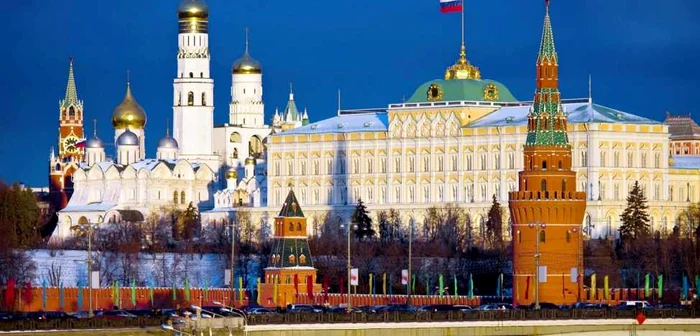
Inside the intellectual circles close to the Kremlin, “Chaos Theory” gained ground
In an analysis for the Riddle project, and picked up by the Russian publication Meduza, political scientist Anton Barbasin examines this vision and how it attempts to provide a coherent framework for Russia's foreign policy.
Essentials of “Chaos Theory”
According to authors close to the Valdai Club, chaos in international relations is a natural and inevitable phenomenon that follows the collapse of traditional power centers. In this interpretation, neither the old bipolarity has reappeared, nor has multipolarity produced generally accepted rules.
“The evolution of the international environment leads us to a configuration hitherto marginal in the debate – a world without poles, characterized by rapid changes, generalized competition and the decline of established institutions”note the authors of the Valdai report “Life in a crumbling world”.
Theorists talk about the end of the unipolar order, but also of post-Ialta or even post-Westphalian architecture. “The old system no longer exists. A new one has not yet taken shape and it is not clear what it should look like,” they state.
1. The first postulate: the old order can no longer be restored
From this perspective, the West – the main defender of the old system – will eventually be forced to accept that its maintenance is impossible. This finding would open up the space for negotiations on new forms of cooperation with Russia and with states outside the Western bloc.
The theory does not call for the accelerated destruction of old institutions, but argues that attempts at stabilization are ineffective and often counterproductive.
2. The second postulate: chaos cannot be controlled
According to the Valdai authors, the world has entered an era of unilateral decisions, where adaptability becomes more important than stability. In such an environment, states able to react quickly, adjust their interests and change the rules when necessary win.
“The priority is no longer the restoration of control, but operational security for states,” the authors emphasize.
3. The third postulate: “each for himself”
In this register, rigid alliances lose their relevance. Russia adapts its partnerships depending on the circumstances – from support for the Assad regime to flexibility of positions in Syria or how to manage tensions between Iran and Israel. The new agreements with North Korea are in the same spirit.
There are no permanent commitments; any position is negotiable if the balance of advantages changes.
4. The fourth postulate: the end of moral universalism
“Universalism and the idea of justice have ceased to exist,” theorists assert.
In this logic, morality is no longer a criterion of political decision. The consequence is the legitimization of support for authoritarian regimes or attacks on civilian infrastructure, including in Ukraine.
In the future international order, the authors say, there will be no “right side of history,” which removes any normative constraints.
Also in this direction is the idea of the “civilization state”, promoted by Vladimir Putin, according to which Russia must not conform to Western or Eastern rules, but to follow its own code, defined by the current leadership.
5. The fifth postulate: military force as a guarantee of survival
In Valdai's interpretation, the intensification of conflict is inevitable as the world reconfigures itself. Legal norms and international institutions will play an increasingly reduced role, and the resolution of disputes will depend on the military capacity of states.
The normalization of war – including discussions of the use of nuclear weapons – is presented as part of a new reality. “There is a belief that war is possible, the question is how losses are minimized,” the authors say.
Application of the theory in Russia's foreign policy
The documents, published annually at Valdai Club events attended by the Russian president, are designed to provide an ideological basis for the directions already taken by Moscow's foreign policy.
In this framework, the annexation of Crimea and the violation of international norms are no longer presented as decisions of the Russian leadership, but as natural consequences of global “chaos”.
The theory also suggests that in the new international reality, such actions could, over time, be accepted, and Western sanctions would end up being revised or reversed.
At the same time, the concept justifies the permanent militarization of society, the expansion of which is not only related to the war in Ukraine, but to the need to maintain internal security and resist Western influences.
In this sense, human rights and civil liberties are reinterpreted through the prism of the “national interest”, as defined by the current leadership.
“Chaos theory” serves three functions: it describes changes already occurring in foreign policy, it provides an intellectual justification for them, and it provides a flexible framework that allows adaptation to new situations without normative constraints.
Although it does not imply giving up all international structures – including the right of veto in the UN Security Council – this doctrine does not leave room for concessions regarding the objectives pursued by Russia, especially in Ukraine.
At the same time, Moscow will continue to promote the idea of a deep restructuring of the European and global security architecture, in line with the premises of “Chaos Theory”.