The hidden history of the village of Ioan de Hunedoara, swallowed by Lake Cinciș. “It was a kind of San Marino of Transylvania”

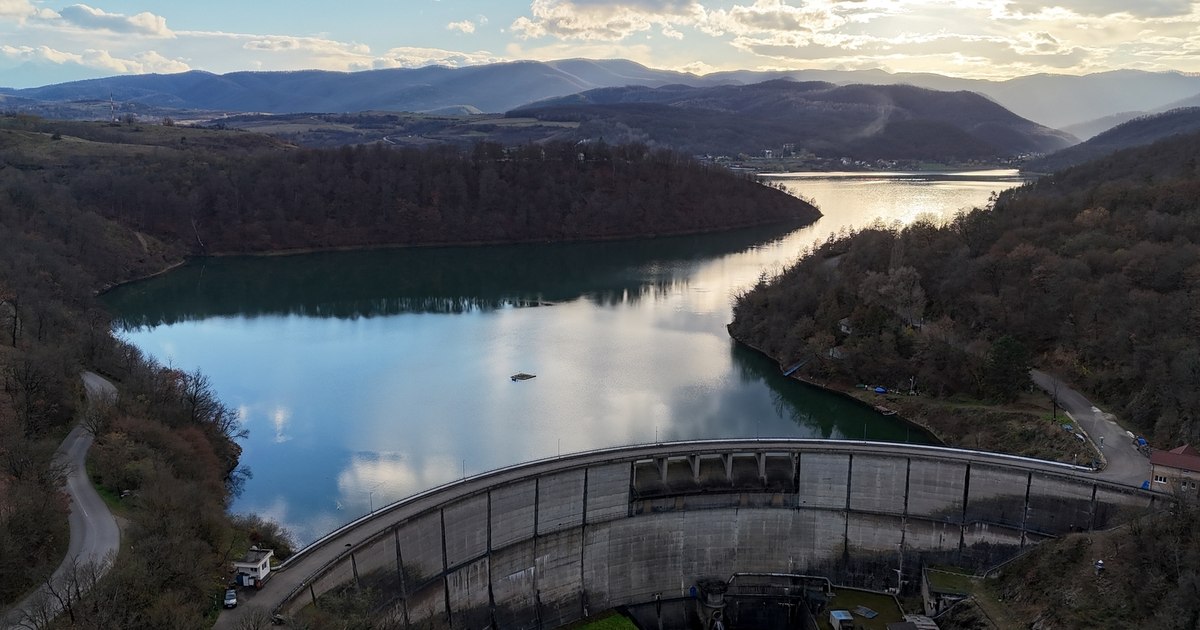
The medieval villages on the Cernei Valley, places where the Huniazi family lived, were swallowed by the waters of Lake Cinciș. Ancient testimonies have revealed their disturbing histories, but also accounts of their exceptional status.
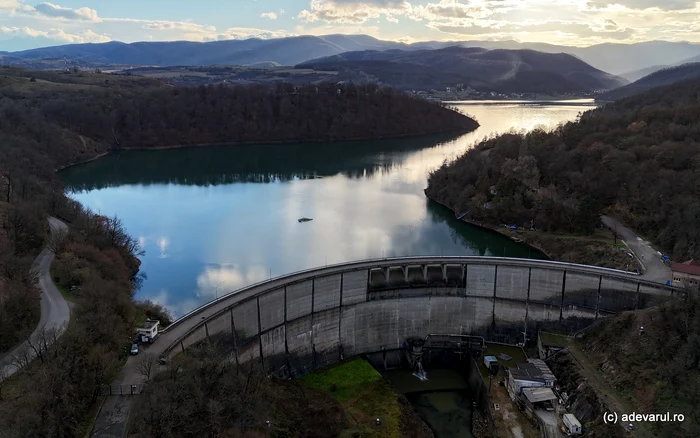
Lake Cinciș covers the hearths of Cinciș and Cerna villages. Photo: Daniel Guță
At the beginning of the 60s, the towns of Cinciș and Cerna, two of the oldest settlements in Transylvania, were swallowed by the waters of Lake Cinciș, designed to ensure the water supply of the city of Hunedoara and its steel plant.
The disappeared villages of Valea Cernei
In 1962, hundreds of families from the two villages on Valea Cernei and from the hamlets in their vicinity were displaced to make way for the new hydrotechnical reservoir. The people were moved to Hunedoara or to the new Cinciș-Cerna village, built in the same year on the Iuba hill, near the Cinciș dam, located 7-8 kilometers from Hunedoara.
Those who left the villages of Cinciș and Cerna had to leave behind generations-old hearths, medieval churches, ancient cemeteries, and along with the foresters' villages, the waters also covered the remains of several ancient settlements.
Several Roman “togati” statues and other artefacts were rescued from the waters, along with belongings of the old churches in the valley, one of them founded by the Hunids in the 15th century. The dramas experienced by the locals forced to leave their villages on Valea Cernei in a hurry, but also by those who lost their lives over time in the lake, the ancient and medieval ruins at the bottom of the water and the ancestral tombs abandoned here have inspired several legends.
“Many things were said about Lake Cincis: that it was haunted by the dead from the cemeteries swallowed by the water, that people drowned here every year, and the bodies never came to the surface, that animals did not come near to drink water from the lake, that there are snakes or dragons at its bottom. There were many fabrications about the lake, but the only curses could be those cast by people distressed by the communists, who forced them to leave their homesle”, recalled a local woman displaced from the old village of Cinciș, in the systematized locality of Cinciș-Cerna.
The village under the waters, place of public executions
Beyond the exaggerated stories of villages swallowed by water, Cincișul and Cerna have preserved a disturbing, lesser-known history. Both villages were founded by Romanian princes in the Middle Ages, the prince of Cinciș being mentioned in 1360 with the name Dan, and that of Cerna, in 1446, with the name Boda.
For centuries, Cincișul was the place where prisoners and criminals were executed, according to the scholars of the past centuries.
“On the road to Toplița is Csolnakos (nr. Cinciș), where the Csolnakossy family held for centuries the right of “pallos” (court right), received from Iancu de Hunedoara for his stepfather, Csolnakossy Jarizló (called Prince Jar by Romanian historians). Thanks to this privilege, the village was, until the end of the last century, a place of public executions”, informed the historian Weress Sándor in 1879.
He recalled that the village did not pay taxes, people's lawsuits were judged by the owner of the domain, and they did not appeal to the county, but directly to the Royal Board. Higher orders were only valid if the oldest member of the Csolnakossy family also placed his seal on them.
“A criminal taking refuge there could not be pursued by the county authorities without the permission of the Csolnakossy. In the time of the Huniads, Csolnakos was the center of a domain that included Hațeg, Dăbâca, Hășdău and Lingina (called Lenge viz in old documents)”, informed the publicist Weress Sándor in 1879.
Villages with ancient and medieval roots
And Cerna, the village neighboring Cinciș, had a special situation. Historians from the 19th century indicated that it had been given to the Cserna family by King Matthias Corvinus.
“The object of the royal gift is still today in the hands of the descendants, among whom Domokos is one of the rarest hospitable and sincere owners. Cerna includes Cerna-Parosza (nr. Păroasa) and Valea-Tolhárului (Valea Tâlharului). The first was founded by refugee families from Romania, and its inhabitants are even today the most honest and hardworking people in the entire Forest Land, many of them working at the coal burners of the state in Poiana Răchitelii”, showed the publicist in 1879.
Currently, the village of Lingina is called Izvoarele and is located on the southern shore of Lake Cinciș, and the old village of Păroasa is called Dealul Mic and is located on the northern shore. Both have about 100 inhabitants together.
The villages of Dăbâca and Hășdău are located higher up, on the Cerna valley, in the commune of Toplița. Valea Tâlharului was swallowed by the forest, along with other hamlets around Lake Cinciș.
The settlements on Valea Cernei in Hunedoara were inhabited in Antiquity, when the iron resources were exploited by Dacians and Romans.
In the Middle Ages, they belonged to the Huniaz family and relatives of John of Hunedoara, ennobled at the beginning of the 15th century by the king of Hungary.
The village where the story of the Huniazis began
Elisabeta Morszinai, the mother of Ioan de Hunedoara, lived here and would have been buried at the old church of Cinciș village, which ended up under the water.
“Elisabeta Morzsinai, after the death of her first husband, married Jariszló, the lord of the village of Chionakos (today Csolnakos), and bore him four sons. Benkő reproduces the deed of exemption that the voivode gave in Caransebeș in 1448, in favor of these half-relatives, as well as the Statute given to them in 1446, on the previous page: “To the nobles Dan, the son to the late Jariszló de Chionakos, as well as to Vojk, Petru and Ioan…” And the family of Csolnakos owns this estate – which the ancestor already had before the time of the voivode – with the coat of arms of the raven holding the ring and with that unparalleled exemption received from the voivode, to this day.” informed the scholar Ferenc Kazinczy in 1817.
Some Romanian historians also claimed that Elisabeta, left a widow, had married Prince Jar, who owned the Cincisului estate, and old documents informed about her privileges. A medieval legend revealed the love affair between King Sigismund of Luxembourg and John of Hunedoara's mother, which led to his birth.
The king of Hungary would have arrived in Transylvania with an army in 1392, to support voivode Mircea the Elder in the fight for the throne. The chronicler Gașpar Heltai recalled that he established his camp in the Streiului Valley, near Hațeg and Hunedoara, from where he gathered his troops from among the local people.
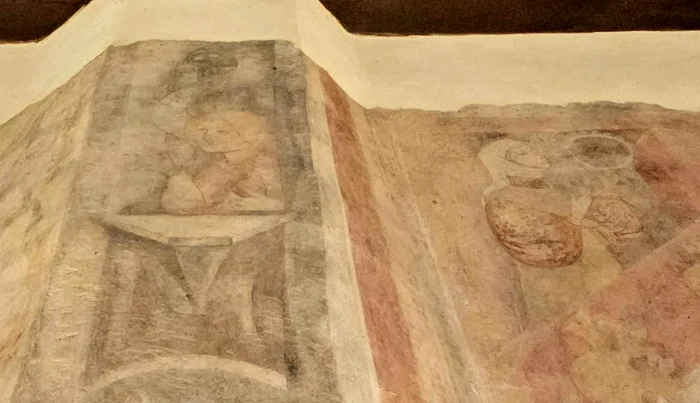
Ioan de Hunedoara and his mother, portrayed at the Corvinir castle. TRUTH
“Weary of the widow, the king began to ask his pages if they hadn't seen a beautiful woman or a girl there. They answered that they had seen a very beautiful girl with a rich boyar and that she had no match in many lands. The king sent people for the girl. When they brought her and appeared before the king in the evening, the girl spoke like this: “Great Lord, I am a noble girl from the race of Morzsina; if you want to join me, I will become pregnant with you. What will happen to me and my child after that?”“, informed the scholar
The king had promised him riches, ennoblement and higher ranks.
“Not even four months later, the king returned victorious and ordered the beautiful girl to be brought again. She said she was pregnant, and the king took a ring from her finger and gave it to Morzsina. He also gave her a letter, then sent it at great expense and with other promises, and he returned to Buda.” informed Gașpar Heltai, a century after the death of Ioan de Hunedoara, in 1456.
Elisabeta and her son Ioan arrived a few years later at the king's court, and he gave her an estate in the Hațeg lands, Gașpar Heltai recalled. The legend had previously been told by the chronicler Antonio Bonfinus, from the court of King Matthias Corvinus. The legend also mentions the coat of arms of the raven with a ring in its beak, given to the Huniaz when they were ennobled, but also kept by the Cholnoki clans from Cinciș and Nopcea from Șara Hategului.
“San Marino” of medieval Transylvania
Since the time of King Matia Corvin, for several centuries, the inhabitants of the village of Cinciș were exempted from paying any taxes, and the village was likened to a small republic, a “state within a state”, with respected privileges.
“The inhabitants of this village pay no tribute; they are not under the jurisdiction of the county; their criminal cases are tried before their lords of the land (for the village constitutes an independent jurisdiction), with right of appeal to the Royal Table (as in county trials). Royal orders have no power over them, unless the seal of the lords' elder brother of Csolnakos, as inspector (kneaz) of the place, is attached.”informed the historian József Benkő (1740–1814), citing the documents of the era.
“This village of Csolnakos is, in the heart of the body of Transylvania, a kind of San Marino of the whole country”concluded the scholar Ferenc Kazinczy, in 1817.