Rich Switzerland is a myth for the chosen few. “It's getting harder to make ends meet”


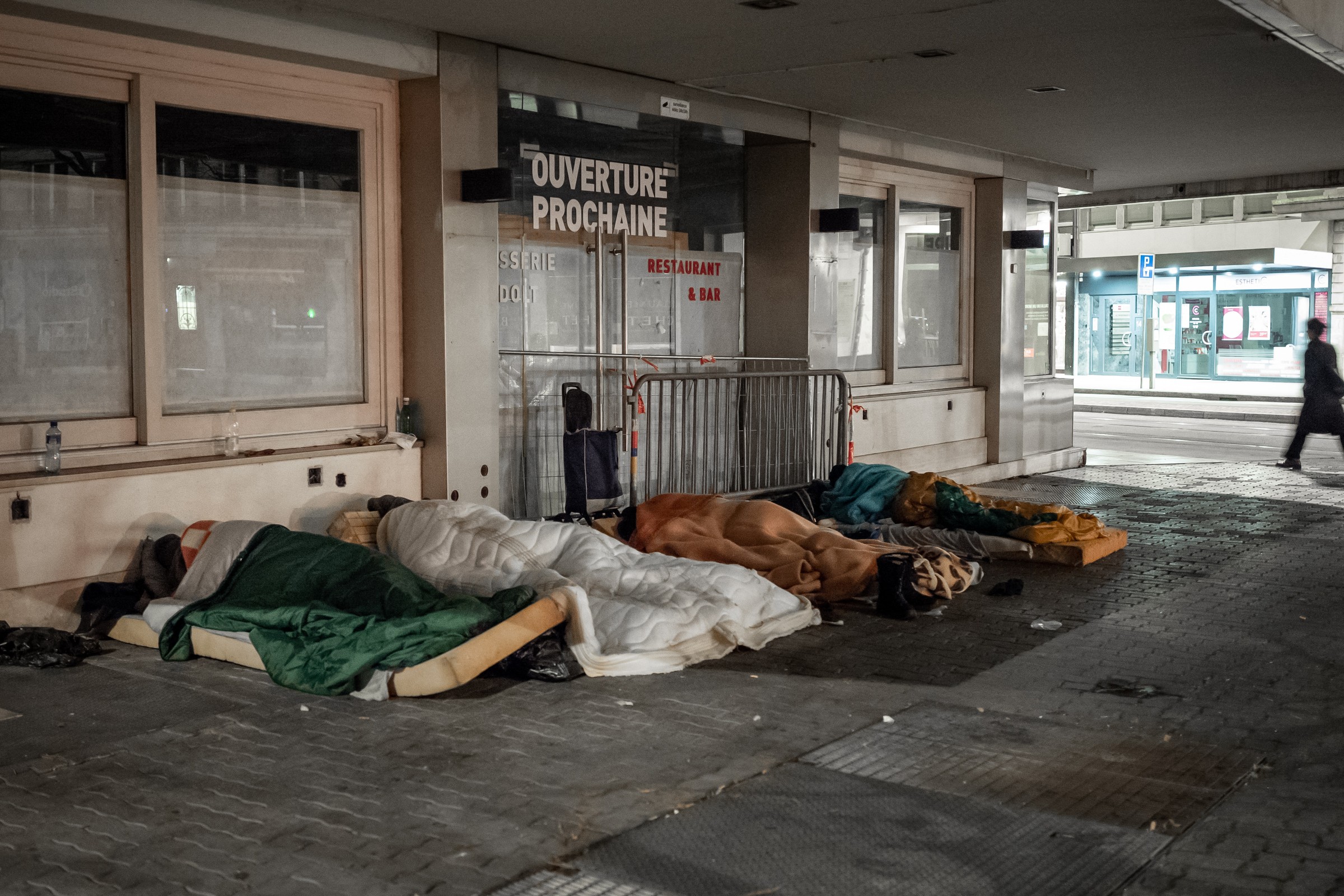
Education, health, housing, food, sanitation and water are categories that help measure children's exclusion. Lack of access to clean drinking water, inadequate health care and lack of education mean that millions of children around the world live in poverty. According to the new UNICEF annual report 417 million children are seriously discriminated against in at least two of these key areas.
This means that more than one in five children in low- and middle-income countries live in poverty.
What does child poverty mean?
If we look at Switzerland, most children and teenagers do not lack the necessary things to survive. However, poverty limits their right to an adequate standard of living and significantly hinders them from exercising their rights and developing their full potential.
Children and young people suffering from material poverty do not have the same opportunities and opportunities as other children and young people in Switzerland. This awareness applies to all areas of life and rights. The youngest have fewer opportunities for education, fewer opportunities for participation and involvement, often worse well-being, worse physical and mental health and a lower sense of security.
What causes child poverty?
The causes of child and family poverty in Switzerland are diverse. We all feel the rising costs of living (rising rent prices, health insurance premiums, etc.).
However, for low-income families, this burden is disproportionately high.
Moreover, reconciling work and family life in Switzerland remains a challenge. Compared to other countries, the country invests little in early years education, care and education (FBBE), which, incidentally, is an effective measure against poverty and can greatly promote equality of opportunity.
Another problem is the situation in which families with children do not use the social benefits they are entitled to. Social assistance benefits can generally alleviate the negative effects of poverty on children.
How does childhood poverty affect children's development?
These children have fewer opportunities for support in school education and, therefore, fewer opportunities to obtain higher education. This also affects their subsequent income. Maybe they don't have a suitable apartment to invite friends over, or they can't participate in other kids' trips and birthdays for financial reasons. This has a direct impact on their participation in social life, sense of belonging and making friends.
Is there an income threshold above which child poverty can be considered?
Yes. The relative poverty/at-risk-of-poverty rate refers to households with income below 60%. median. The absolute poverty rate is based on the minimum level of social existence and is consistent with SKOS guidelines. SKOS (Swiss Conference on Social Welfare) has defined when a person is affected by poverty and what the minimum subsistence level must be to enable minimal participation in society. In the case of a four-person household, this amount is currently 2,271 francs (approx. PLN 10,000).
How can this be prevented?
Action needs to be taken in various areas. For families suffering from relative poverty or whose income is slightly above the subsistence level (the so-called working poor), family-friendly structures and support beyond social benefits are crucial. A better work-life balance, more investment and better and nationally harmonized support benefits (e.g. family allowances, reductions in contributions) are still needed. For families in poverty who are entitled to social assistance, it would be important to remove obstacles to obtaining it.
How is it possible that there are poor children in such a rich country?
Prosperity has increased — but only for a few. The gap between the rich and the poor is widening. Many families in Switzerland are finding it increasingly difficult to make ends meet. For example, health insurance and rent costs rise equally for everyone, regardless of income. Low-income people in particular, who have not benefited equally from increased prosperity, are now massively affected by price increases. The state must create good framework conditions so that having children and starting a family does not involve the risk of poverty.
How to recognize if a child is affected by poverty?
This cannot be determined based on the child's appearance. However, we should be aware that with such a high poverty risk rate, the problem affects our entire society. In a class of 20 children, the teacher therefore has four children at risk of poverty. It's important to be aware of this – and what it means for children in their everyday lives.