On Monday, November 17, Ukraine secured one of its most important long-term defense commitments after Ukrainian President Volodymyr Zelensky and French President Emmanuel Macron signed in Paris 10-year security pact. It opens the way for Kiev to acquire the SAMP/T air defense system and other advanced types of weapons and technologies.
This agreement could dramatically change the balance of power over Ukraine and cause significant anxiety in Moscow. The new system is capable of intercepting even the most advanced Russian missiles.
The French-Italian SAMP/T system could fill one of the biggest holes in Ukrainian air defense. It would enable Ukrainians to shoot down Russian ballistic missiles without relying on supplies of American Patriot air defense systems, which often depend on the whims of the White House and the unstable political situation in the US.
The problem is production – manufacturers MBDA and Thales are only able to produce a few SAMP/T systems per year, while Ukraine needs dozens of them.
What exactly is SAMP/T?
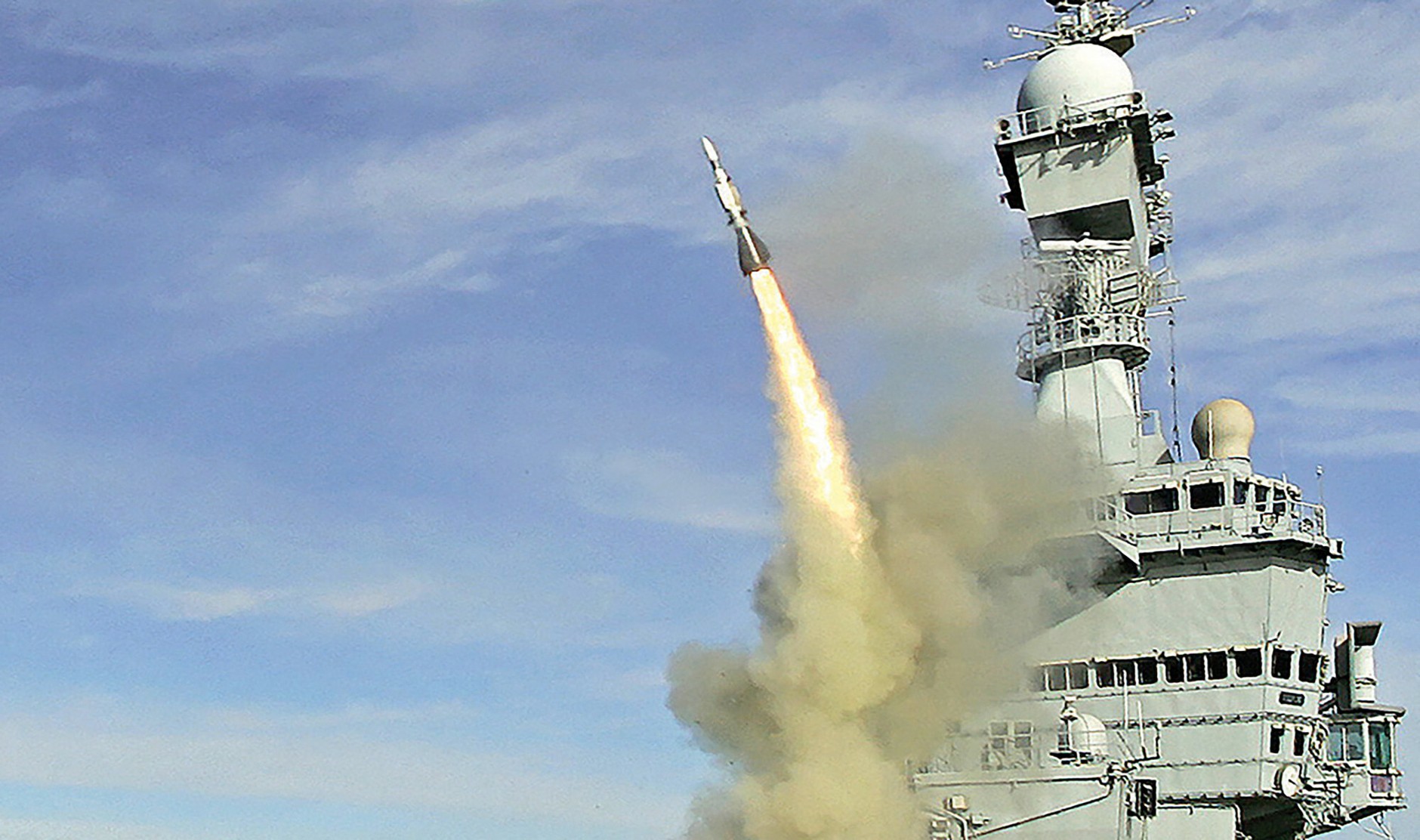
The SAMP/T system (Sol-Air Moyenne Portée/Terrestre) is a modern air defense system produced jointly by France and Italy. It uses Aster 30 missiles – very effective ammunition capable of shooting down both aircraft at long distances and ballistic missiles at short and medium distances.
Launch of an ASTER 30 missile from the aircraft carrier Charles de Gaulle. France, February 3, 2023ABACA/Abaca/East News / East News
Theoretically, the latest versions of the Aster 30 missile can intercept:
plane at a distance of approx. 150 km,
a medium-range ballistic missile – similar to those used by Russia to attack Ukraine – even from 600 km away,
large intercontinental ballistic missiles.
The most expensive Aster 30 missile costs approximately $2 million. (approx. PLN 8 million). The complete SAMP/T system – with radars, support vehicles, launchers and ammunition supplies – costs approximately USD 500 million (approx. PLN 2 billion).
What are the limitations of the SAMP/T system?
Two SAMP/T systems already operating in Ukraine and firing older versions of Aster 30 missiles had problems with hitting Russian ballistic missileswhich maneuvered during the flight to the target.
MBDA and Thales produce approximately 300 Aster 30 missiles per year. Meanwhile, during the largest Russian airstrikes, Ukrainians can fire up to 20 such rockets in one night. Since SAMP/T is the main air defense system of France and Italy, too intensive use of them in Ukraine risks exhausting the stock of missiles intended to defend their own airspace.
In addition, other countries – including Denmark and Singapore are also waiting in line for deliveries of SAMP/T and Aster 30 missiles.
The article continues below the video
SAMP/T vs. Patriot
The US Patriot air defense system was first introduced into service in the 1990s and has extensive combat experience behind it – this is its main advantage.
In terms of technical parameters Patriot can hit targets at higher altitudes than SAMP/Tbut is designed to fire two interceptor missiles at each incoming target.
The Patriot-launched interceptor, the PAC-3, costs about five times as much as the French-Italian Aster 30. The combat-ready U.S. system is about twice as expensive as the SAMP/T. The USA also produces approximately twice as many PAC-3 missiles as the Europeans produce Aster 30 missiles.
However, despite the technological advantage, many analysts emphasize that arms supplies from the US are not very predictable for Ukraine – the US administration has withdrawn from the promised deliveries at least three times, most recently in March. Ukraine has not yet faced similar delays from France or Italy, and the leaders of both countries said that deliveries will continue without any interruption.
Main conclusion
SAMP/T is the preferred candidate for Ukraine's primary air defense system – cheaper to operate, sufficiently effective and politically more predictable than the American Patriot.
Unfortunately, European production constraints mean that SAMP/T is widely deployed in Ukraine will most likely only be possible in a few years.
I’m Ashley Davis as an editor, I’m committed to upholding the highest standards of integrity and accuracy in every piece we publish. My work is driven by curiosity, a passion for truth, and a belief that journalism plays a crucial role in shaping public discourse. I strive to tell stories that not only inform but also inspire action and conversation.