“President Karol Nawrocki refused to nominate intelligence officers to the first officer rank and 46 judges to higher positions. How do you evaluate these decisions?” — this was the question asked to participants of the SW Research survey commissioned by rp.pl.
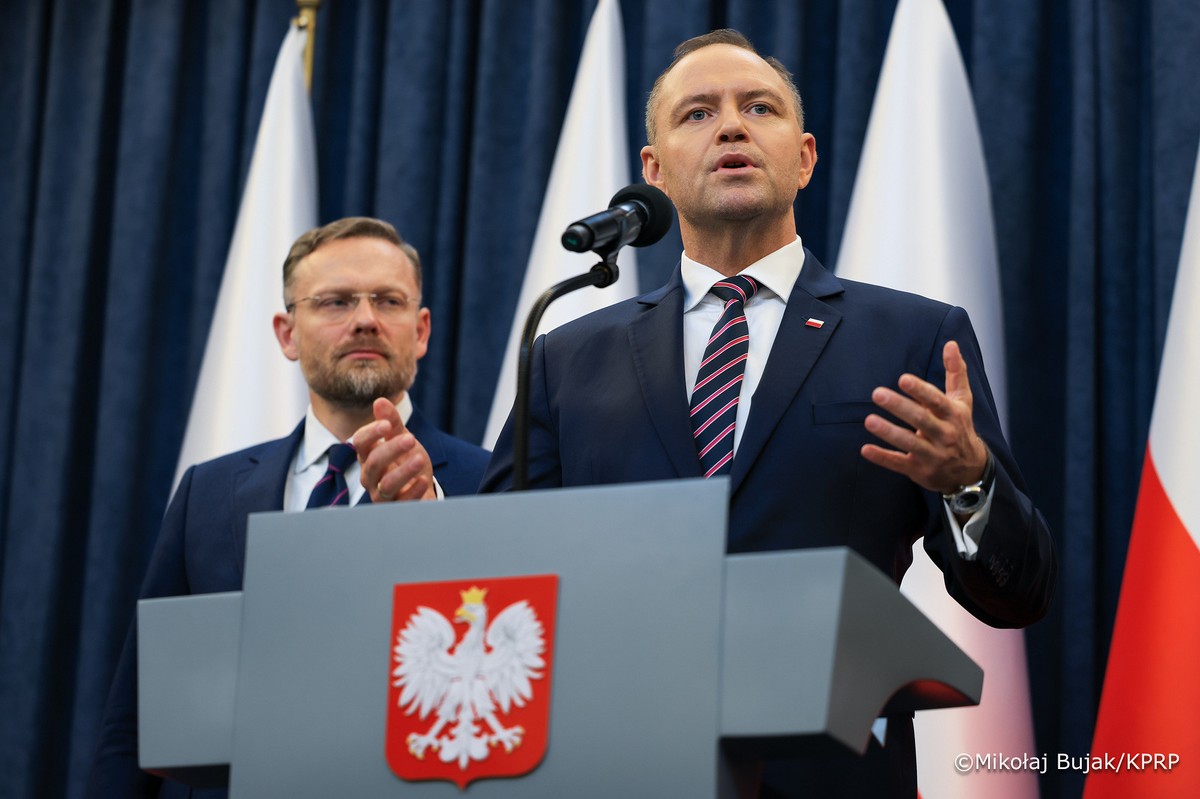
Let us recall that President Karol Nawrocki announced on Wednesday that he would not appoint 46 judges. In his statement, he emphasized that he did not intend to promote those judges who – in his opinion – questioned the current constitutional order in Poland. Nawrocki referred to the ruling of the Constitutional Tribunal from 2012, which gives the president the right to nominate judges and the ability to refuse to nominate them..
See also: The president blocks the promotion of judges. What about citizens' cases in courts? [ANALIZA]
Nawrocki also referred to the role of the Minister of Justice Waldemar Żurek, whom he accused of inciting judges to undermine the legal order in the country. According to the president, Minister Żurek is to encourage representatives of the justice system to act inconsistently with the Polish constitution.
During his speech, the president recalled that he had expressed a similar position in August, when he was sworn into office. Then he appealed to judges to avoid – as he put it – “crazies” inspired by the Minister of Justice.
Moreover, on November 7, Karol Nawrocki refused to sign nominations for the first officer rank for 136 intelligence officers. In response, the president explained that he made such a decision because “Donald Tusk decided that the heads of the secret services are prohibited from meeting the President of the Republic of Poland.” This is another edition of the competence and constitutional dispute between the government and the president.
See also: “The president cannot act arbitrarily.” The Ombudsman is harsh on the president's decision
Participants in the SW Research survey for rp.pl were asked how they assessed the president's refusal to nominate intelligence officers to the first officer rank and 46 judges to higher positions.
30.9% of respondents evaluate these decisions positively. respondents. 39.4% of respondents evaluate the president's actions negatively. respondents. 18.8 percent respondents have no opinion on this matter. 10.8 percent respondents declare that they have not heard about the case.
— Respondents over the age of fifty are much more likely to express a negative opinion on this subject (53%). People with higher education (44%) and those whose income ranges from PLN 5,000 to PLN 7,000 net (46%) disagree with the president's decision to a greater extent – comments Małgorzata Bodzon, senior project manager at SW Research, quoted by rp.pl.
Research methodology
The study was conducted by the research agency SW Research among users of the SW Panel online panel on November 12-13, 2025. The analysis covered a group of 800 Internet users over 18 years of age. The sample was selected in a random quota manner. The structure of the sample was adjusted using analytical weight to correspond to the structure of Poles over 18 years of age in terms of key characteristics related to the subject of the study. When constructing the weight, socio-demographic variables were taken into account.
A similar study, conducted by the Ariadna National Research Panel for WP, showed that 39 percent respondents agreed with President Nawrocki's position that he plays a decisive role in the judicial nomination process. Including 21 percent strongly agreed with her, and 18 percent rather, it supported her. In turn, 36 percent respondents do not share this viewwith 26 percent strongly disagree with it, and 10 percent expressed moderate opposition.