When children really need general anesthesia at the dentist. Answers from a renowned Romanian specialist in the field

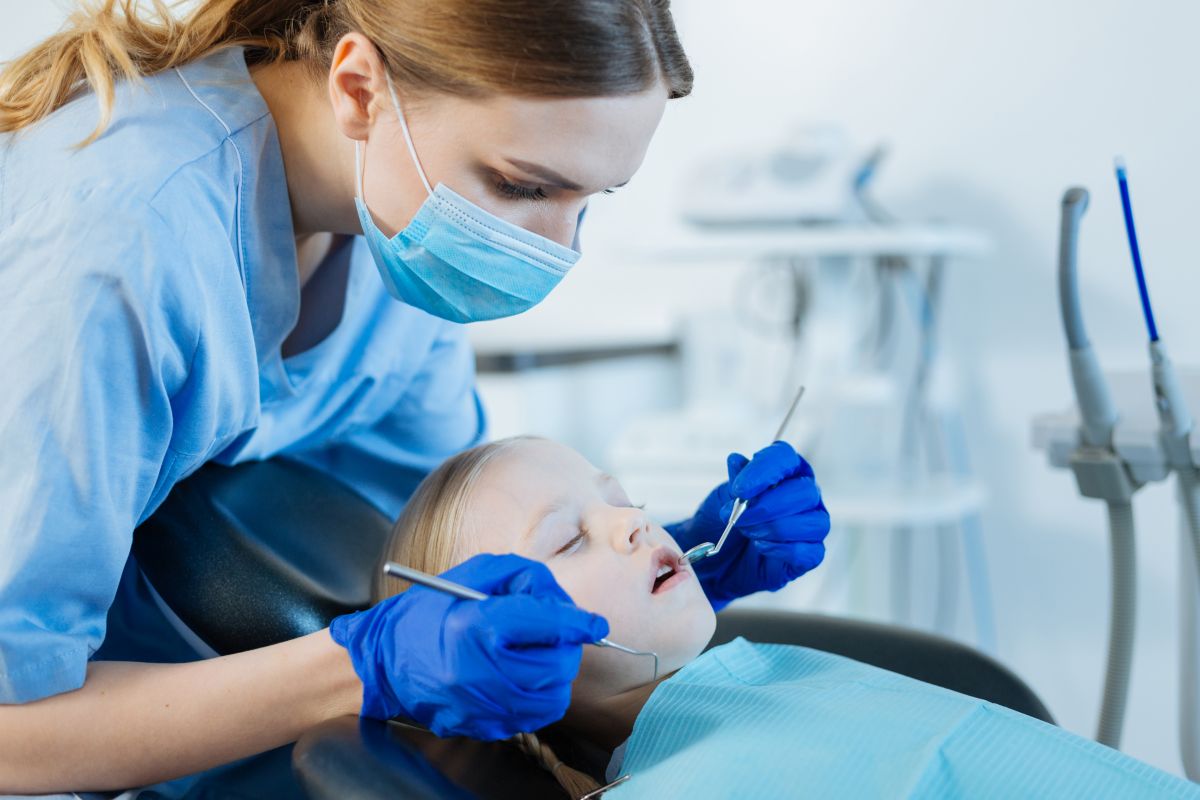
Is general anesthesia really needed at the dentist to solve children's cavities? Prof. Dr. Alexandru Bucur, head of the UMF Oro-Maxillo-Facial Surgery Clinic “Carol Davila explains in which situations the dentist has to resort to general anesthesia in the case of small children and where it should be performed.
The case of the 2-year-old girl who died after a general anesthetic at the dentist raised many questions about the usefulness of general anesthesia in the treatment of dental problems. Is general anesthesia really necessary at the dentist? Do we have alternatives to sedation with less risk for children? What can we do so that the visit to the dentist does not become bau-bau for the little ones?
Local anesthesia
Before getting to general anesthesia, there are two other options for little ones: local anesthesia and inhalation anesthesia. The first of them can be achieved by applying a gel or by injecting a substance in the area of the tooth on which the intervention is performed.
Local anesthesia is the simplest and safest, but children are not completely free from pain and discomfort during the treatment. When pain is not effectively controlled, visits to the dentist can create anxiety and even trauma for little ones. Childhood fear of the dentist often persists even into adulthood.
Inhalation: indications and contraindications
The second option, inhalation anesthesia, is performed with a mixture of oxygen and nitrous oxide that induces a state of relaxation. The child does not feel pain during the dental treatment, but he is awake and aware throughout this time, responds to stimuli and cooperates with the doctor. Sedation sets in just two to three minutes after inhaling the gas on the mask and disappears shortly after the gas administration is stopped.
Inhalation has no adverse effects and the only condition to benefit from it is that the little one does not have a cold – he must be able to breathe through his nose during the treatment. Because it is a mild form of sedation and has no adverse effects, this procedure seems the ideal solution for the dental treatments needed by children, with two conditions: they must accept the anesthesia mask and be able to have minimal collaboration with the doctor.
About general anesthesia at the dentist and when doctors resort to it, read more on Totuldespremame.ro.