The EU praises, but also warns. In a report on Kiev's progress published on Tuesday Brussels writes about “unprecedented reforms in Ukraine despite the war”but also about the “growing risk of erosion of democracy”.
This sentence is memorable. A country that fights for freedom and self-determination is suspected of undermining democracy in its own backyard. And that puts it in the spotlight a question that has long been masked by the noise of war: where does Ukraine really stand? Is President Volodimir Zelensky still a guarantor of democratic values, or are the warnings of his rival, Petro Poroshenko, about the creeping concentration of power confirmed?
In an interview with POLITICO, the former president openly warns: “While fighting Russian autocracy, we cannot afford to drift towards autocratic practices in our country.” In this light, the conflict in Kiev no longer seems to be just a dispute between two political opponents, but a fight for the democratic soul of a country in a state of emergency. Is Zelensky becoming an autocrat?
What is the state of Ukrainian democracy today?
Zelensky and the Ukrainian government are operating under martial law. This changes everything. Political competition is officially suspended and national elections cannot be held. Millions of Ukrainians live abroad, soldiers are at the front, and election campaigns are not considered acceptable.
Simultaneously a small Security Council decides on key issues, often without parliamentary debate. All this is understandable in war conditions, but it is not entirely justified. The EU states in the report that martial law “should not be understood as a license to interfere with the separation of powers and media freedom.” In other words: a state of emergency? Yes, but not without control.
Ukraine is not an autocracy. The most important evidence of this is the fact that opposition forces are at work. When the government tried over the summer to strip anti-corruption bodies of their powers and appoint loyal judges, people took to the streets. Non-governmental organizations such as the Anti-Corruption Action Center, investigative media such as Ukrainska Pravda and international partners exerted enormous pressure. The government had to withdraw. The courts also suspended decisions issued by the President's Office. It is this resistance – and its effect – that makes Ukraine fundamentally different from autocratic governments.
Nevertheless, it can be seen that power is becoming more and more concentrated around the president. Decision-making processes are driven by a small circle around Zelensky and himself the powerful head of the chancellery, Andriy Yermak. Governors, media executives, judges: many key positions are filled by loyalists.
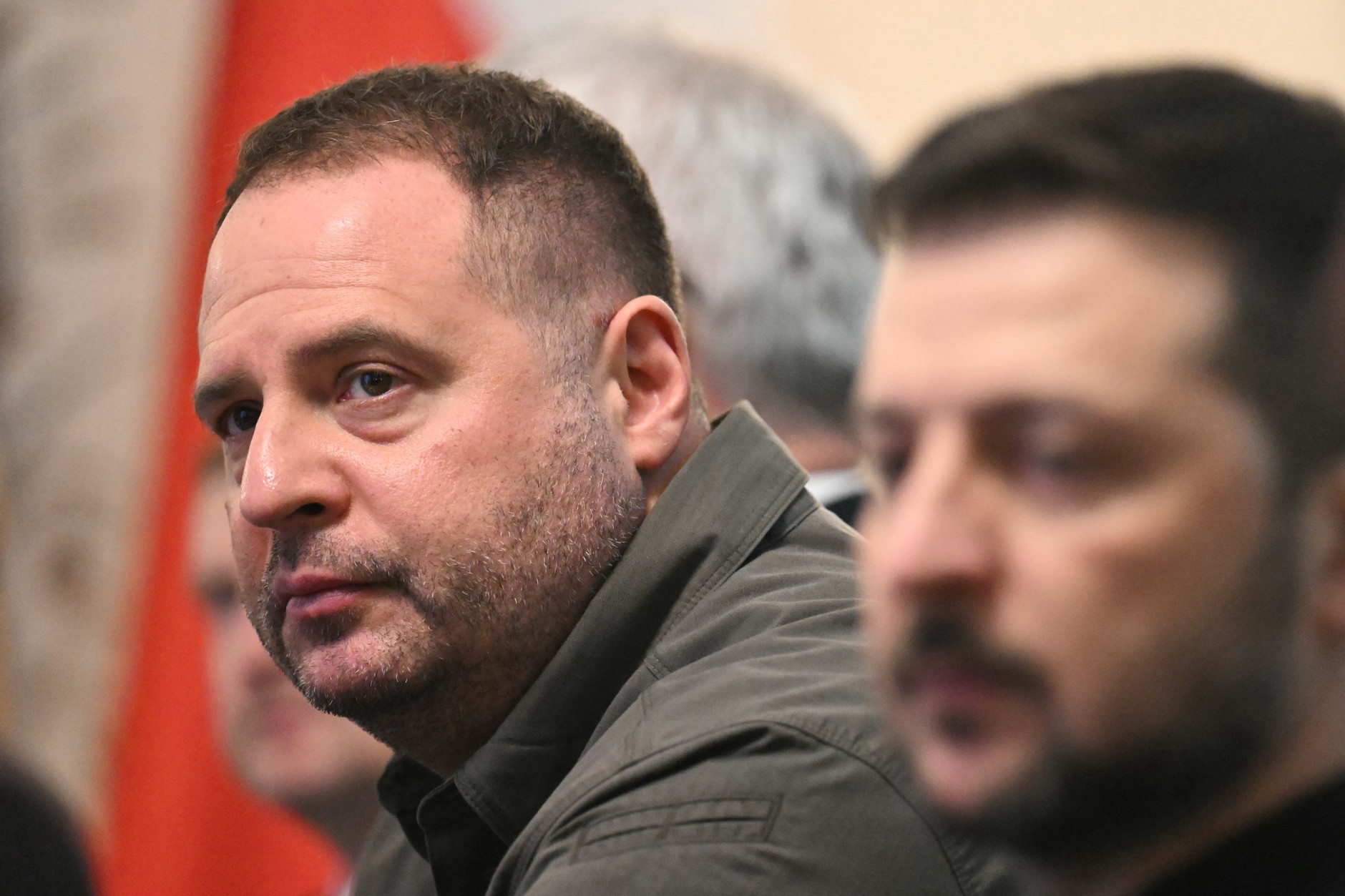
Andriy Yermak, head of the Chancellery of the President of Ukraine, and Volodymyr Zelensky. Warsaw, January 15, 2025Sergei GAPON / AFP / AFP
Critics such as former President Poroshenko are under investigation, cannot travel and speak of “targeted elimination of political opponents.” Zelensky denies these allegations and calls “responsibility during war”: they cannot afford “chaos, egos and personal power games.” Both perspectives describe the same development: a government that sees control as a survival strategy and an opposition that sees it as the beginning of an authoritarian reflex.
An important test for Ukraine, a country that is already under constant pressure
Ukraine is not on the brink of dictatorship. However, it is at a point where a state of emergency may become the new normal. Democracy is alive, but it is put to the test.
Ultimately, it all depends on two questions: Will elections, separation of powers, media freedom and political competition be fully restored after the war? And will Zelensky manage to wage war without defending his own power at the expense of democracy? This remains to be seen. For this purpose, Brussels formulated a measurable condition: only a state that defends “not only territorial but also institutional sovereignty” can become part of the EU.
Poroshenko's warnings and the EU report are there a test for a country that is simultaneously fighting for freedom, survival and credibility. So far, Zelensky has been both a symbol of resistance and the architect of the government that is increasingly organizing around him. Whether this will lead to stability or dependency will not be decided on the battlefield. This will be decided by the institutions that still exist and those that will have to be rebuilt after the war.