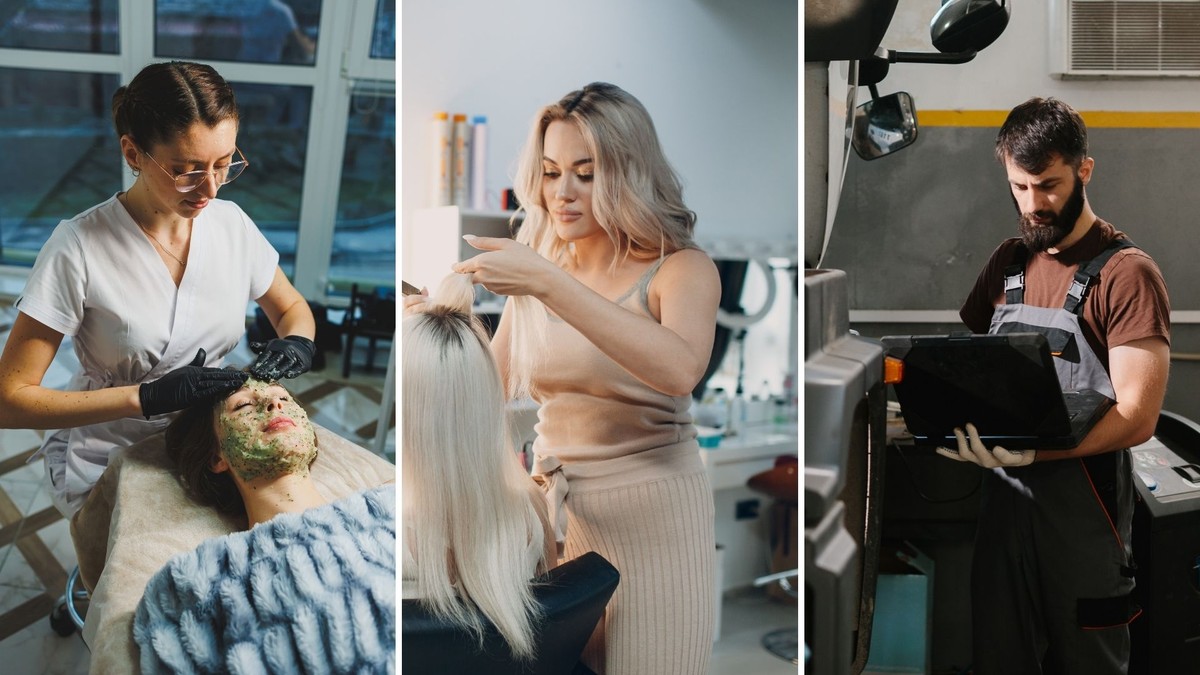
Karolina is a hairdresser in Warsaw. Not long ago, he and his partner had their own salon. — We opened half a year before the pandemic. It wasn't easy, he says. They received support to maintain their operations, but it was a drop in the ocean of needs. — Rent, materials, paints, equipment servicing, tools, including the most important ones, i.e scissors that cost up to five thousand. zlotys. They have to be extremely sharp to cut hair well, and when you use them every day for eight or ten hours, even with proper servicing, they wear out quickly.
A year ago, her partner made up her mind return to his hometown. Karolina wouldn't be able to maintain the salon in Warsaw on her own, so they sold it. His friend is not surprised. She has a cousin who stayed in a small town and runs her business there. — Agnieszka is also a hairdresser, her prices are the same as mine in Warsaw, but her occupancy rate is three times higher – says my interlocutor. — There are three of them working, they see clients from seven in the morning until eight in the evening. All dates are booked at least one month in advance. December has been full on the calendar for a long time. And that's it despite eight other salons in the area.
– She doesn't remember when she had a window. He's so busy that he doesn't accept any new clients, says Karolina with a bit of envy. How does she explain the fact that Agnieszka has the same prices as hairdressers in Warsaw? “In the countryside, people care more about their appearance,” he explains. There is no way to show up unprepared at the cemetery on November 1, or at a family celebration, or even at the office. Customers are permanent and loyal, says Karolina.
In addition, people starting a business can count on funding and various regional support programs – something that is much more difficult to obtain in large cities.
Read also: Booksy introduces a new service. The owner is targeting the American stock exchange
From your own showroom to renting a stand
If Karolina's partner had not backed out, they might have managed to keep the salon. Today, when she rents a space in another salon, her monthly costs are about PLN 4,000. PLN: materials consume PLN 1.8 – 3 thousand. PLN, accounting PLN 250, tax approximately PLN 400-500. In addition, of course, there is the ZUS contribution. — When we had a salon, the rent alone was PLN 2,500. PLN, plus electricity and water – another PLN 2,000. If we wanted to employ a female employee, we would have to take into account the cost of five or six thousand zlotys to ZUS. Now I rent a position and have much fewer obligations, recalls Karolina. However, smaller liabilities do not mean low costs. — I have to go to training regularly to stay up to date. It costs from five hundred to five thousand zlotys.
Beata, Karolina's friend from the industry, also had her own hairdressing salon in Warsaw. During the pandemic, she was lucky – the landlord allowed her to pay only about PLN 800 (electricity and utilities) instead of the full rent. However, after the pandemic, the rent increased to PLN 6,000. PLN per month. Now Beata, like Karolina, rents a space. She has two daughters to support, so she works from eight in the morning to ten at night, covered in physical therapy tapes. “My spine can't take it,” he says shortly.
These are not isolated cases. More and more entrepreneurs from the beauty industry are giving up their own salons in favor of renting positions. Less risk, lower fixed costs.
Everyone on activities
Ewa works in the film industry. She and her colleagues stretch cables on film sets – they all run their own businesses. It wasn't their choice – production companies simply don't offer jobs.
The problem arises when there are breaks in production, holidays or downtime between projects. Then they have parking benefits, but they have to pay ZUS. — About 2 thousand PLN per month, even if I don't have an order, says Ewa.
Employees being pushed into self-employment is a common problem. For companies it means savings, for “entrepreneurs” – uncertainty and constant costs.
Tomasz, a 46-year-old mechanic, repairs construction machines – compactors, lifts, engines. In a good month, he earned about PLN 20,000. zlotys. Half of this amount was consumed by taxes and contributions. – Out of twenty thousand, ten thousand remained. I practically worked for the state, he recalls. — The last straw came when my son got an ear infection and no facility in the district would accept us because they had no places or no doctor. We went privately. Then I thought, “Why the hell am I paying all this?” He finally suspended his business activity. Now he works on single jobs. — I can't count on retirement anyway – he says.
Read also: A decline in the labor market. The biggest declines were among the self-employed
Retired combination
Entrepreneurs are looking for all ways to reduce costs. — Some people, such as a beautician I know, run their business from home, which significantly reduces costs. Others start businesses for their parents, who are already retired – explains Karolina.
There are retirees running a business exempt from the obligation to pay pension, disability and accident insurance contributions. They can pay them voluntarily. In practice, this means savings of approximately PLN 1.5 thousand. PLN per month compared to the entrepreneur's full ZUS, which amounts to approximately PLN 1,774 (without sickness contribution).
Pensioners may also, under certain conditions, be exempt from health insurance contributions – if they have a pension does not exceed the minimum wagea operating revenues do not exceed 50%. the lowest pension.
— And this way, formally, the business is run by a pensioner, but someone else actually works. Everyone does it because otherwise it's simply not profitable, says one of my interlocutors.
How have premiums increased and what will change from January?
In 2019, ZUS for an entrepreneur amounted to PLN 1,246.92 per month, and including voluntary health insurance – PLN 1,316.97. In 2025, full ZUS (with sickness insurance) amounts to PLN 1,773.96 per month, and without sick leave – PLN 1,646.47. The preferential ZUS amount is PLN 408.60 without sick leave or approximately PLN 442.90 with sick leave. In addition, there is a health insurance premium.
The health insurance contribution in 2025 depends on the form of taxation. On the tax card it is PLN 314.96 per month (the basis is 75% of the minimum wage), and on the lump sum – from PLN 461.66 to PLN 1,384.97 depending on the income threshold
From January 1, 2026, health insurance contributions will be calculated at 100%. minimum wage (PLN 4,806), and not 75% as in 2025. The planned reduction in health insurance contributions was vetoed by President Andrzej Duda.
For people starting a business who benefit from preferential ZUS, costs will also increase – by approximately PLN 70 per month. This means that the preferential ZUS in 2026 will probably exceed PLN 500 per month, and the full one – about PLN 2,050.
Read also: The government will not reduce health insurance premiums. Entrepreneurs count their losses
“People will mess around”
Further increases in contributions may mean difficult decisions for entrepreneurs. Looking for ways to do creative accounting? Suspend activities? Or maybe just close the company? – If there are further increases, even more people will start thinking or simply close their businesses – summarizes Karolina. – And you are surprised that the gray zone is growing – adds Tomasz.