Millions of low-income Americans are losing access to food assistance as the nation's largest anti-hunger program is suspended for the first time.
Congress failed to reopen the government before funding for the Supplemental Nutrition Assistance Program (SNAP) ran out. A federal judge at the last minute ordered the Trump administration to use emergency funds to cover food aid costs for November, but even that wasn't enough to prevent benefits from immediately expiring. According to officials, their resumption may take several weeks.
“I have directed our lawyers to ask the court for clarification on how we can legally fund SNAP as quickly as possible. … Even if we receive immediate guidance, unfortunately there will be a delay while states obtain funds,” President Donald Trump wrote on social media Friday evening. “If the court issues appropriate legal guidance, I will have the honor of providing funding.”
He blamed the opposition for this problem. “Democrats should stop this charade of hurting people for their own political purposes and reopen the government immediately,” he wrote.
For now, states, food banks and nonprofits are scrambling to make up for the loss of key federal funds ahead of Thanksgiving. However, this is only a temporary solution.
– The situation will deteriorate quickly John Thune, the Senate majority leader, told reporters this week.
“It will not be a legal decision, but a political one”
The unprecedented pause in benefits shows how difficult it is for Washington to find agreement on issues that were previously subject to bipartisan agreement, from food aid to health care. The SNAP program benefits almost 42 million peoplehas always been funded during government shutdowns, including during Trump's first term.
“I don't know if I can describe the level of anxiety for a family not knowing if they will be able to put food on the table,” said Democratic Sen. Ben Ray Lujan. His home state, New Mexico, has the highest SNAP participation rate in the nation. More than one-fifth of Americans living there use it.
Trump administration officials say they do not have the authority to use emergency funds for SNAP and that they do not have enough funds to cover the November benefit amount, which is an estimated $9 billion. (PLN 33 billion). It is unclear whether officials will appeal Friday's ruling ordering them to pay out the funds.
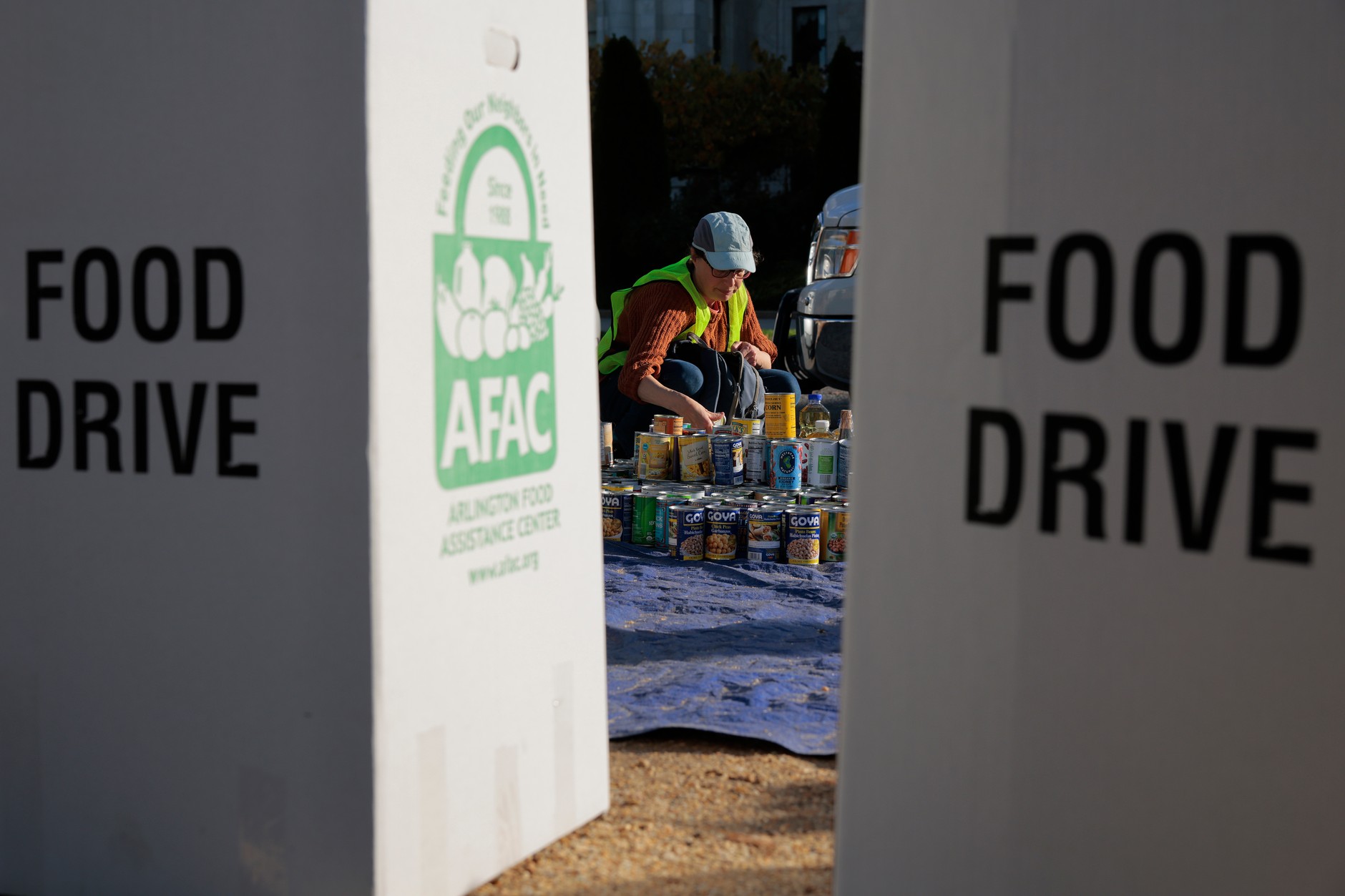
Volunteers sort non-perishable items during a food drive outside the U.S. Department of Agriculture building, Washington, October 30, 2025.Chip Somodevilla / Getty Images
Even if they comply with a court order, It will take days, and in some states even weeks, to deliver SNAP benefits to low-income Americans — the administration has not set up a system to disburse some of the funds since the government shutdown a month ago.
– The sooner the United States Department of Agriculture [USDA] will do the right thing and obey the law, the sooner [uczestnicy programu] they will receive benefits. But because of his intransigence, there could be a delay of several days, Sen. Amy Klobuchar said after Friday's court decision.
— I think we know that the courts have a clear position on this issue. If the department decides to appeal and does not provide benefits, it will not be a legal decision but a political one, she added.
“42 million Americans will go without food”
The effects of the expiration of food aid will affect both Republican and Democratic states. Just over half of all SNAP beneficiaries live in states that supported Trump in last year's presidential election.
More than 20 Democratic state officials — including from California, Massachusetts, Kansas and Kentucky — are suing the Trump administration over the expiration of benefits in separate legal proceedings. Republican officials are placing the blame on congressional Democrats, accusing them of continuing to block stopgap funding that includes SNAP funding.
“Due to U.S. Senate Democrats blocking passage of the funding bill … SNAP benefits that many Nebraska families and children rely on are not available in November,” Republican Gov. Jim Pillen said in a statement posted on his state's SNAP administration website. “This closure was completely avoidable. We are calling on members [Senatu] to pass the funding bill and stop exploiting Nebraska's most vulnerable residents for political purposes,” he added.
The article continues below the video
SNAP provides low-income people with an average of $177. (PLN 652.7) per month in the form of food benefits.
Several states have stepped up and dug into their own resources to donate hundreds of thousands of dollars — in some cases millions — to food banks and offer other nutritional assistance. Virginia, Louisiana, and New York have declared states of emergency for the SNAP program. However, their budgets will cover only a fraction of the funding they have received over the past 60 years. And the Trump administration has given states no promise of reimbursement.
— 42 million Americans will go without food said Sen. Josh Hawley, who, like Lujan, was trying to push through a separate SNAP funding bill before its Nov. 1 expiration. — The longer this goes on, the worse the situation becomes.
“I never thought I would find myself in such a difficult situation”
Pausing SNAP does not happen in a vacuum. Federal funding for the Special Nutrition Program for Women, Infants and Children is also running out. This means that families with small children will have difficulty accessing formula milk and everyday groceries. There is a risk that Head Start centers, which provide children with several nutritious meals, will have to close across the country.
In recent years, the need for nutritional assistance has increased dramatically in the United States. Rising food price inflation and the overall increase in the cost of living have made it difficult for low-income families to purchase basic necessities. However, with his “One Big Beautiful Bill”, Trump intends to limit spending on social security programs and reduce funding for food banks and nonprofit organizations across the country.
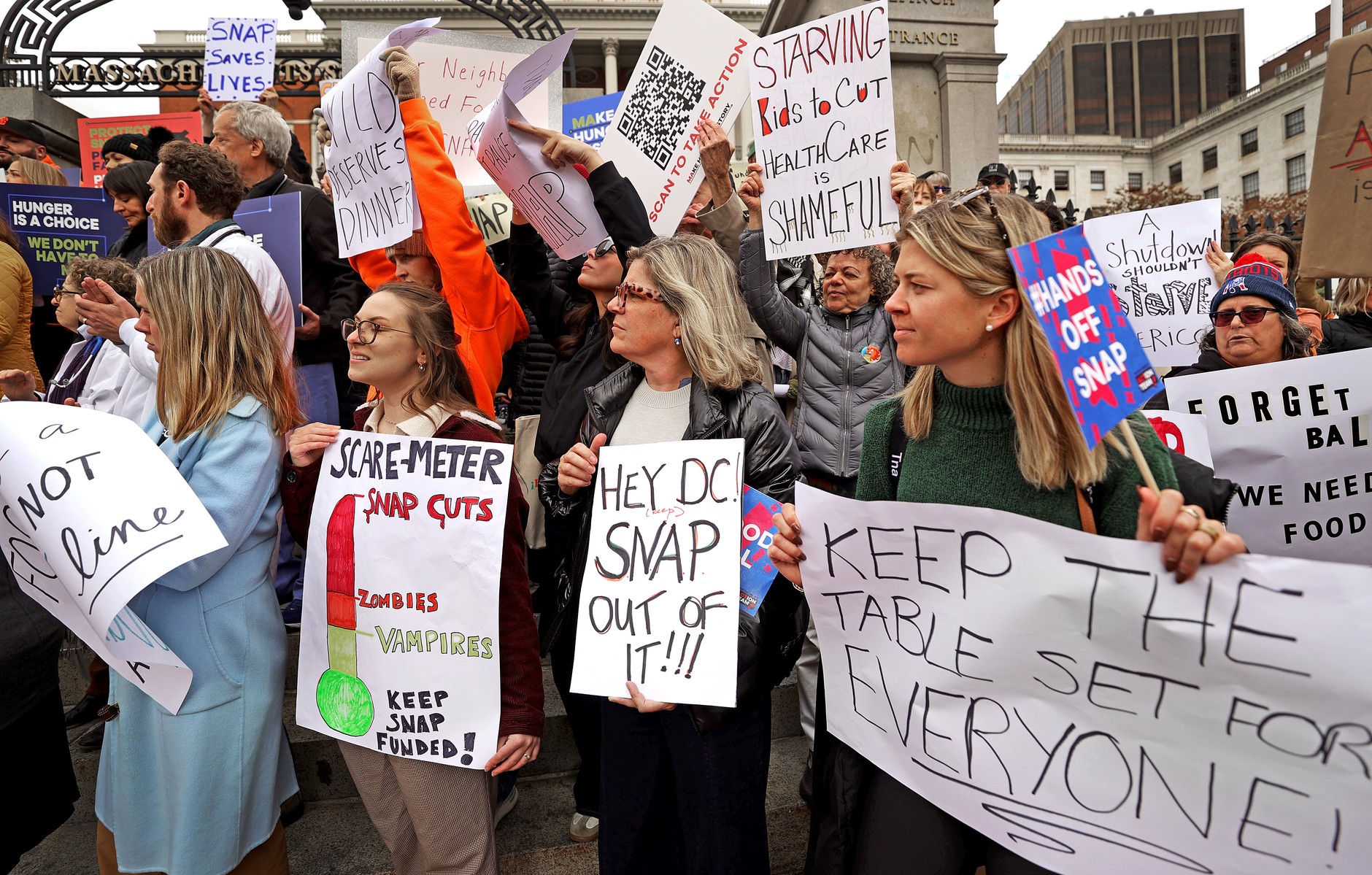
Rally in support of SNAP in Washington, DC, October 28, 2025.Boston Globe/Contributor/Getty Images
George Matysik, executive director of the Philadelphia-area food bank, called it “a transition from partial blackout to total darkness.” Earlier this year, his organization's budget was reduced by 20 percent. due to loss of federal funds. At the same time in the last two weeks the number of new families seeking help at its food banks increased twelvefold.
“Our own federal government is making this decision to harm its citizens, especially working-class people,” he said.
Nonprofit organizations such as the Capital Area Food Bank have set up several food distribution sites in the Washington, DC area aimed at thousands of federal workers who have not been paid for a month or have lost their jobs.
A Department of Defense employee who visited the Virginia distribution site said anonymously that it was the first time she turned to a food bank for help.
“I'm usually the one who makes the donations,” she said. — But the roles were reversed. I never thought I would find myself in such a difficult situation.
I’m Ashley Davis as an editor, I’m committed to upholding the highest standards of integrity and accuracy in every piece we publish. My work is driven by curiosity, a passion for truth, and a belief that journalism plays a crucial role in shaping public discourse. I strive to tell stories that not only inform but also inspire action and conversation.